About this artwork
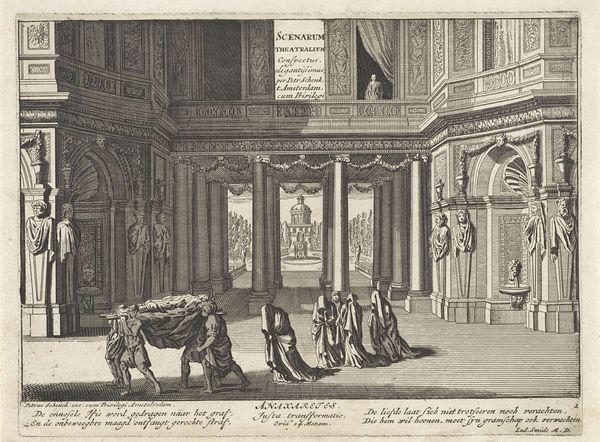
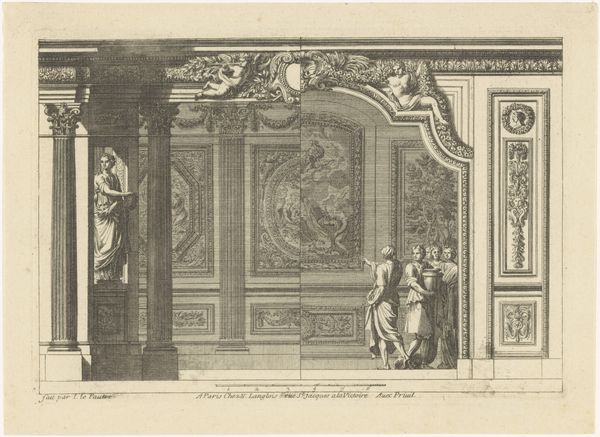
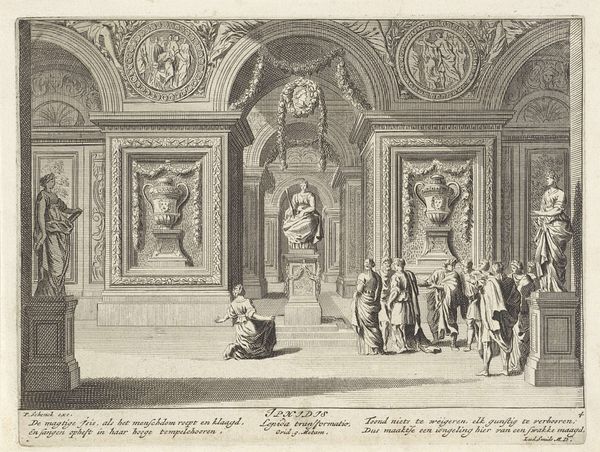
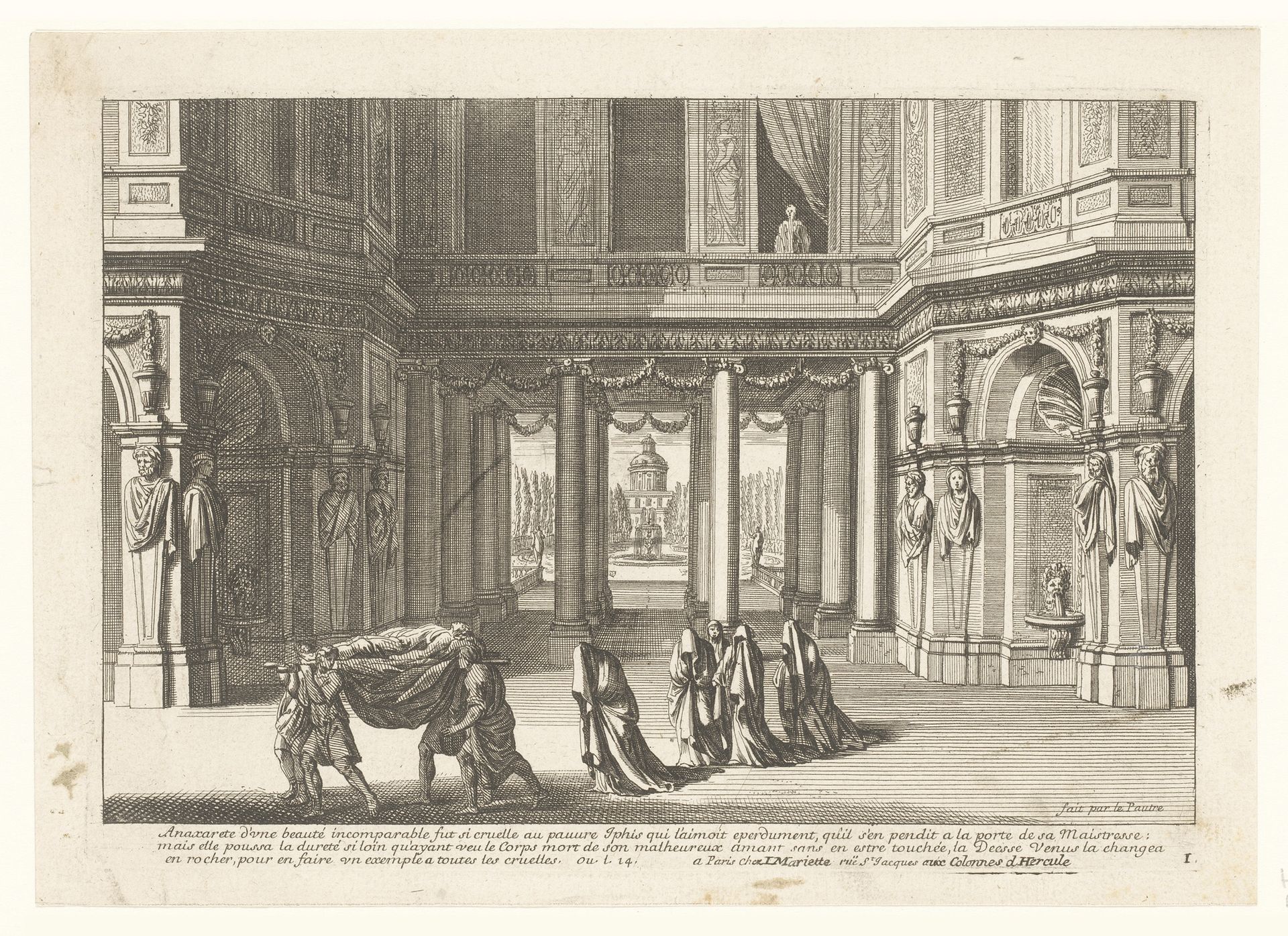
This engraving by Jean Lepautre depicts a scene of profound cruelty and transformation. Dominating the architecture are solemn statues, each draped and gazing impassively, standing as mute witnesses to human suffering. Statues, of course, are not known for their sensitivity. The tragic tale of Anaxarete and Iphis echoes through time, evoking the ancient Greek myth. Anaxarete, cold-hearted, drives Iphis to suicide. Witnessing the procession carrying his body, she remains unmoved and is thus turned to stone by Venus. This petrification is a potent symbol, recurring throughout art history. Remember the figures in Pompeii frozen in their final moments by Vesuvius’s eruption, or even the Gorgon Medusa, whose gaze could turn men to stone. This motif taps into a deep-seated fear: the loss of self, of emotion, of humanity. Here, the hard, unyielding stone becomes a mirror reflecting the consequences of emotional detachment, an image of the psychological defense of being 'stonewalled' when confronting one's actions. These images, regardless of era, capture humanity's struggle with empathy and the fear of emotional desensitization.

Artwork details
- Medium
- engraving
- Dimensions
- height 162 mm, width 232 mm
- Location
- Rijksmuseum
- Copyright
- Rijks Museum: Open Domain
Tags
Comments
Share your thoughts
About this artwork
This engraving by Jean Lepautre depicts a scene of profound cruelty and transformation. Dominating the architecture are solemn statues, each draped and gazing impassively, standing as mute witnesses to human suffering. Statues, of course, are not known for their sensitivity. The tragic tale of Anaxarete and Iphis echoes through time, evoking the ancient Greek myth. Anaxarete, cold-hearted, drives Iphis to suicide. Witnessing the procession carrying his body, she remains unmoved and is thus turned to stone by Venus. This petrification is a potent symbol, recurring throughout art history. Remember the figures in Pompeii frozen in their final moments by Vesuvius’s eruption, or even the Gorgon Medusa, whose gaze could turn men to stone. This motif taps into a deep-seated fear: the loss of self, of emotion, of humanity. Here, the hard, unyielding stone becomes a mirror reflecting the consequences of emotional detachment, an image of the psychological defense of being 'stonewalled' when confronting one's actions. These images, regardless of era, capture humanity's struggle with empathy and the fear of emotional desensitization.
Comments
Share your thoughts