About this artwork
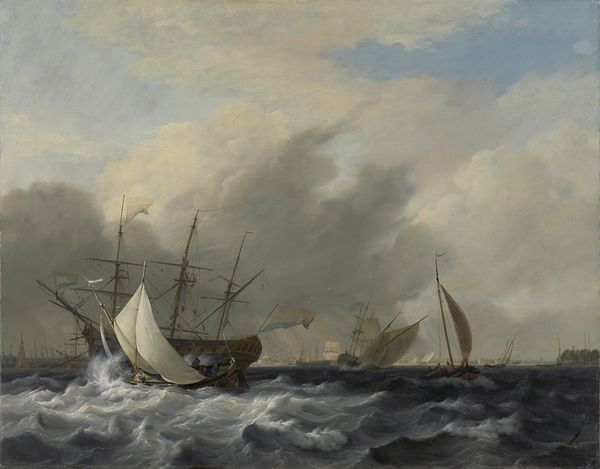
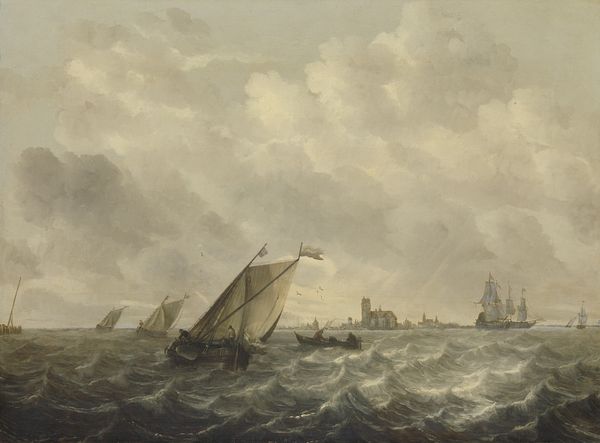
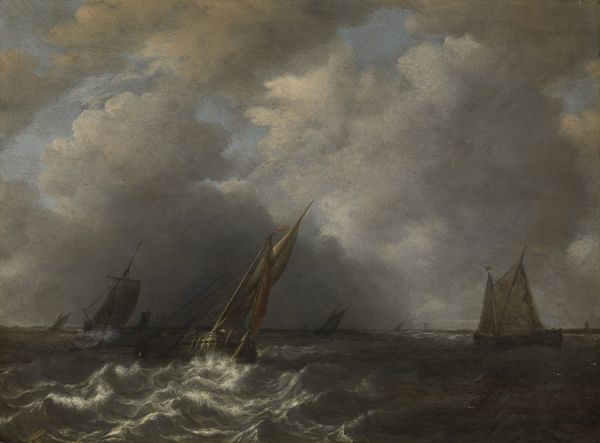
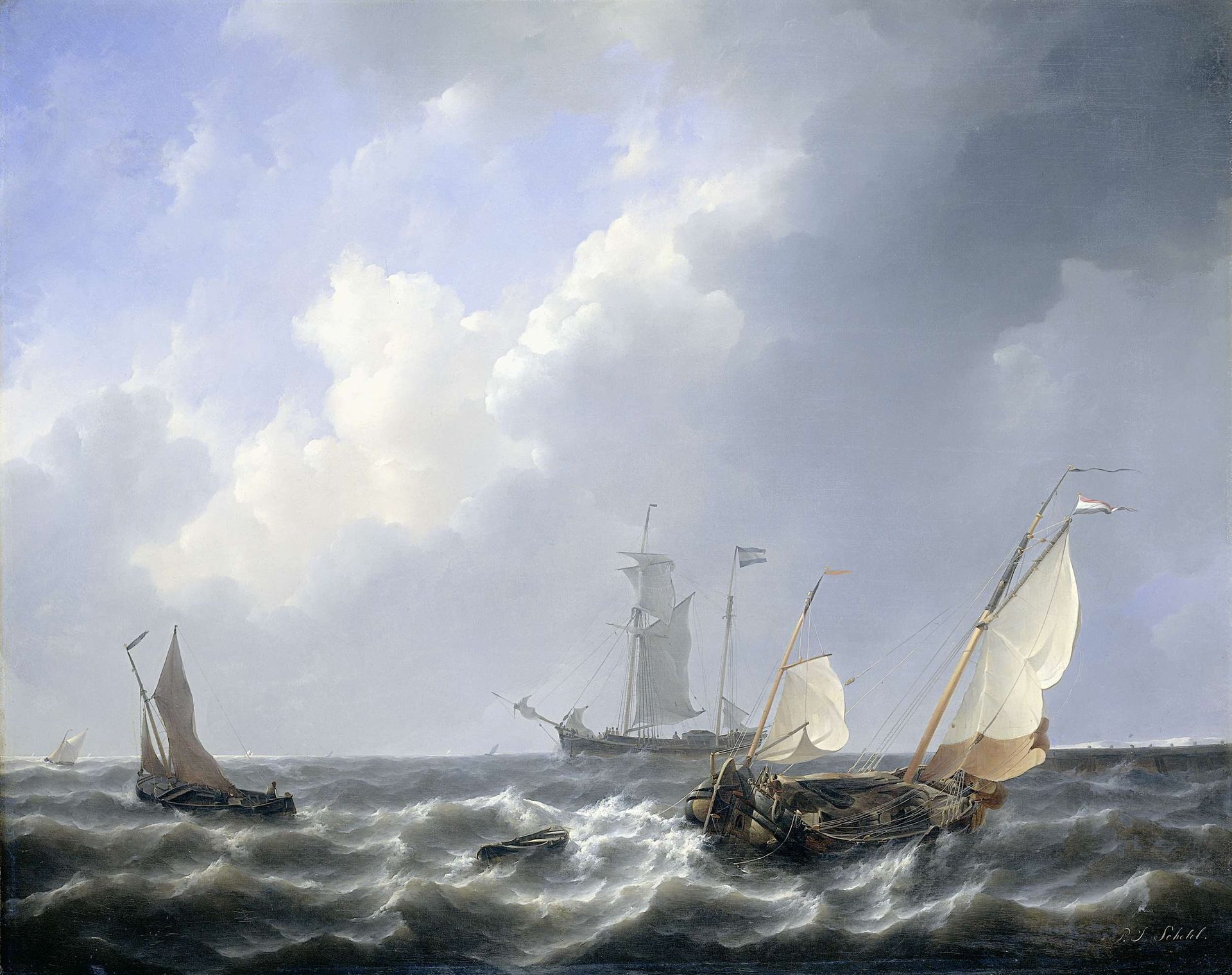
Petrus Johannes Schotel painted this seascape from the Zeeland Waters near the Island of Schouwen with oil on canvas. The artwork reflects the long-standing maritime tradition of the Netherlands and the crucial role of the sea in Dutch history, economy, and national identity. In the 19th century, seascapes were particularly popular, as they resonated with a sense of national pride and the romanticism of nature. Schotel's painting captures the drama and power of the sea, with turbulent waves and a dynamic sky. The detailed rendering of the ships suggests an interest in maritime accuracy, reflecting the importance of seafaring in Dutch society. The choice of this subject reflects the artistic conventions and cultural values of the time, appealing to a growing middle class with an interest in landscape and marine painting. To fully understand the significance of this work, we can consult historical archives and studies of Dutch maritime history and art. This helps us understand how the image interacts with the social and institutional context in which it was created and displayed.
Seascape from the Zeeland Waters, near the Island of Schouwen
1825 - 1827

Petrus Johannes Schotel
1808 - 1865Location
RijksmuseumArtwork details
- Medium
- painting, oil-paint
- Dimensions
- height 73.1 cm, width 91.1 cm, thickness 2.9 cm, depth 11.9 cm
- Location
- Rijksmuseum
- Copyright
- Rijks Museum: Open Domain
Tags
Comments
Share your thoughts
About this artwork
Petrus Johannes Schotel painted this seascape from the Zeeland Waters near the Island of Schouwen with oil on canvas. The artwork reflects the long-standing maritime tradition of the Netherlands and the crucial role of the sea in Dutch history, economy, and national identity. In the 19th century, seascapes were particularly popular, as they resonated with a sense of national pride and the romanticism of nature. Schotel's painting captures the drama and power of the sea, with turbulent waves and a dynamic sky. The detailed rendering of the ships suggests an interest in maritime accuracy, reflecting the importance of seafaring in Dutch society. The choice of this subject reflects the artistic conventions and cultural values of the time, appealing to a growing middle class with an interest in landscape and marine painting. To fully understand the significance of this work, we can consult historical archives and studies of Dutch maritime history and art. This helps us understand how the image interacts with the social and institutional context in which it was created and displayed.
Comments
Share your thoughts