About this artwork
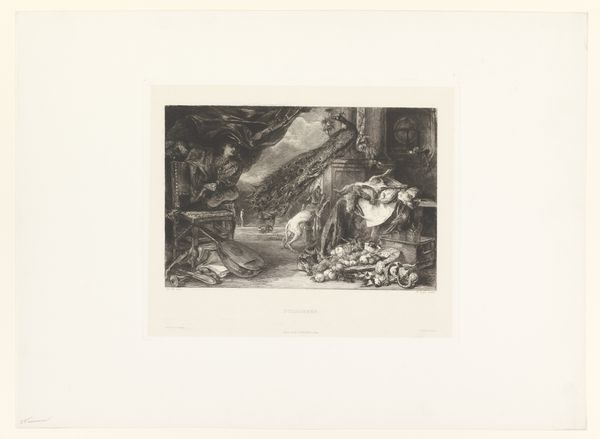
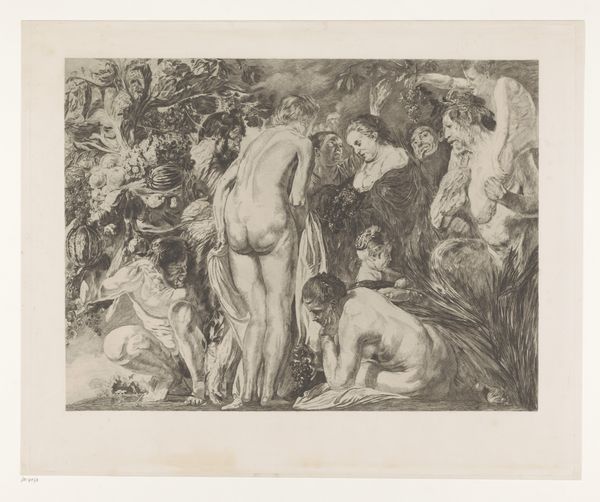
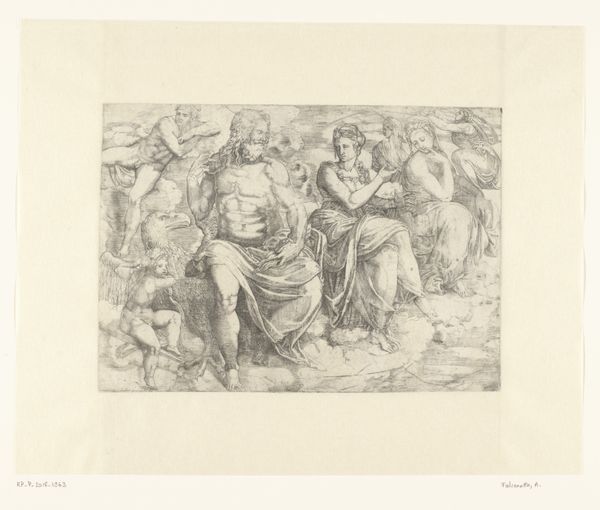
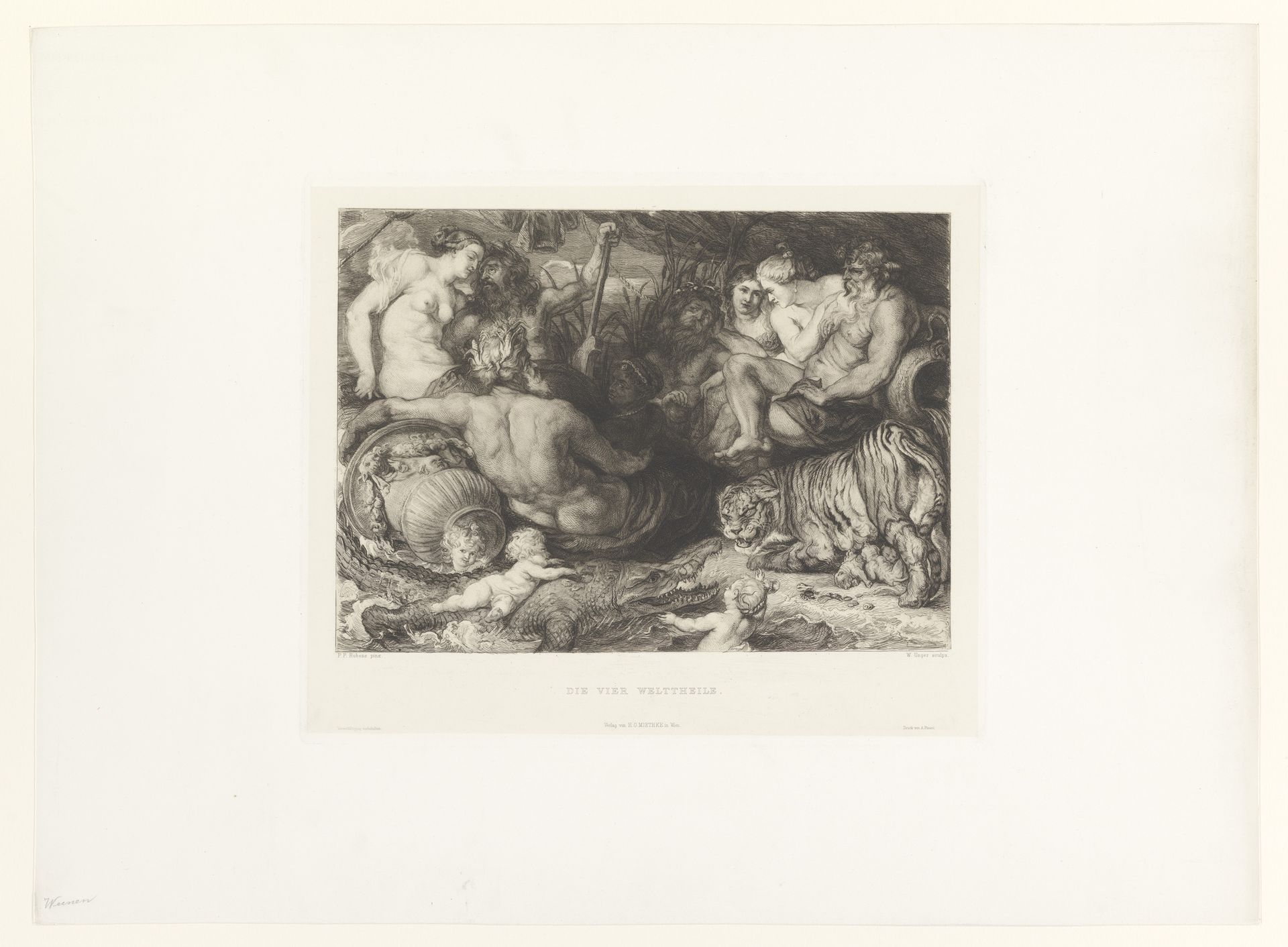
William Unger crafted this piece, "Personifications of the Four Continents," using etching. The allegorical figures representing the continents are rich in symbolism. We see Europa, Asia, Africa, and America embodied through classical figures and their associated elements. Note the tiger, a symbol of Asia, recurring in art from ancient mosaics to Delacroix's paintings. The cornucopia, often associated with abundance and fertility, appears as a classical symbol of prosperity. It reminds me of its usage in ancient Roman art, where it signified the empire’s wealth and bounty. This symbol has evolved, reappearing in various forms, yet its core association with prosperity remains. It’s fascinating how Unger engages with these symbols, tapping into our collective memory. This evokes emotions connected to our understanding of history and culture on a subconscious level, inviting a deeply ingrained sense of familiarity and recognition. These symbols create a cyclical progression, where the past continuously informs the present, shaping our interpretation.
Personificaties van de vier werelddelen
1861 - 1889

William Unger
1837 - 1932Location
RijksmuseumArtwork details
- Dimensions
- height 306 mm, width 367 mm
- Location
- Rijksmuseum
- Copyright
- Rijks Museum: Open Domain
Comments
Be the first to share your thoughts about this work.
About this artwork
William Unger crafted this piece, "Personifications of the Four Continents," using etching. The allegorical figures representing the continents are rich in symbolism. We see Europa, Asia, Africa, and America embodied through classical figures and their associated elements. Note the tiger, a symbol of Asia, recurring in art from ancient mosaics to Delacroix's paintings. The cornucopia, often associated with abundance and fertility, appears as a classical symbol of prosperity. It reminds me of its usage in ancient Roman art, where it signified the empire’s wealth and bounty. This symbol has evolved, reappearing in various forms, yet its core association with prosperity remains. It’s fascinating how Unger engages with these symbols, tapping into our collective memory. This evokes emotions connected to our understanding of history and culture on a subconscious level, inviting a deeply ingrained sense of familiarity and recognition. These symbols create a cyclical progression, where the past continuously informs the present, shaping our interpretation.
Comments
Be the first to share your thoughts about this work.