About this artwork
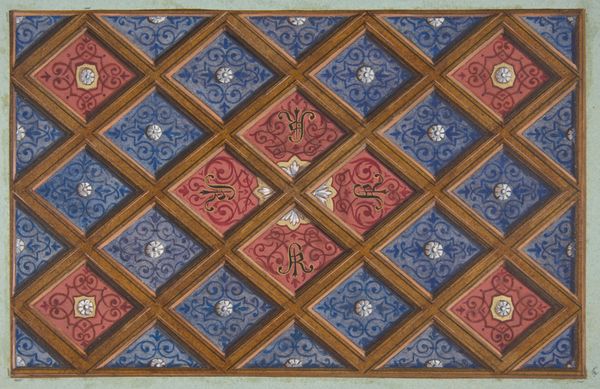
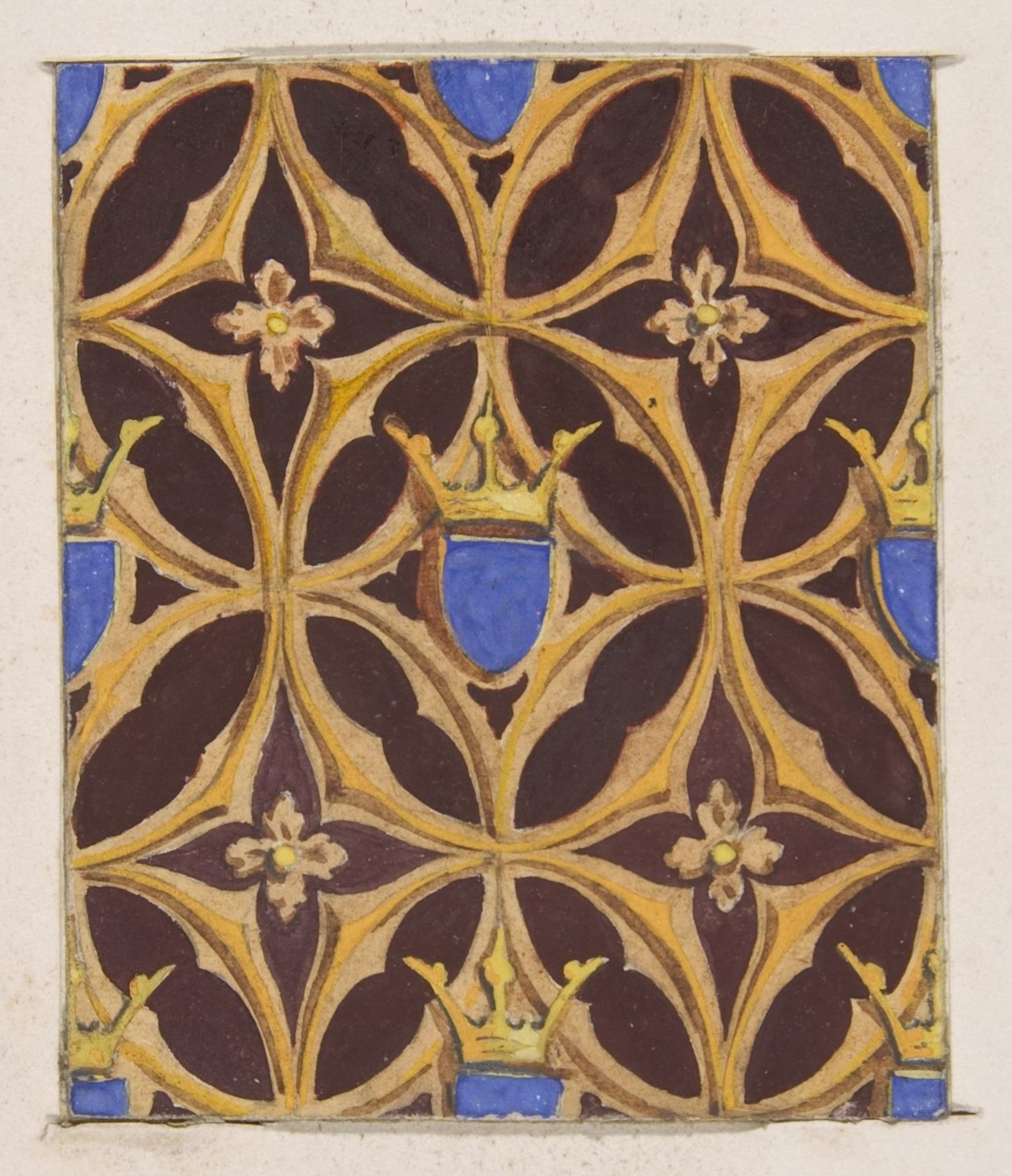
This is Jules-Edmond-Charles Lachaise’s wallpaper design, made with watercolor, graphite, and ink. When we think of wallpaper, it’s usually as a mass-produced item, churned out for a consumer market. But this is a handmade design, full of care. The artist has meticulously rendered the pattern of shields, crowns, and stylized floral motifs. The deep blue and gold evoke royalty, and the brown, which fills the negative space, forms the darker outlines that make the brighter colors pop. Consider the labor involved here: each line drawn, each area of color carefully laid down. While this design could be industrially reproduced, its origin is in an intimate act of making. In its own way, this small artwork challenges our traditional notions of design and craft, labor and aesthetics, inviting us to value the skill involved in its creation, even if it was intended for mass production.
Design for wallpaper featuring blue shields surmouted by crowns
1830 - 1897

Jules-Edmond-Charles Lachaise
1897
The Metropolitan Museum of Art
Metropolitan Museum of Art, New York, NYArtwork details
- Medium
- drawing
- Dimensions
- Overall: 12 3/8 x 9 7/16 in. (31.4 x 24 cm) image: 2 5/8 x 2 3/16 in. (6.7 x 5.5 cm)
- Location
- Metropolitan Museum of Art, New York, NY
- Copyright
- Public Domain
Tags
Comments
Share your thoughts
About this artwork
This is Jules-Edmond-Charles Lachaise’s wallpaper design, made with watercolor, graphite, and ink. When we think of wallpaper, it’s usually as a mass-produced item, churned out for a consumer market. But this is a handmade design, full of care. The artist has meticulously rendered the pattern of shields, crowns, and stylized floral motifs. The deep blue and gold evoke royalty, and the brown, which fills the negative space, forms the darker outlines that make the brighter colors pop. Consider the labor involved here: each line drawn, each area of color carefully laid down. While this design could be industrially reproduced, its origin is in an intimate act of making. In its own way, this small artwork challenges our traditional notions of design and craft, labor and aesthetics, inviting us to value the skill involved in its creation, even if it was intended for mass production.
Comments
Share your thoughts