About this artwork
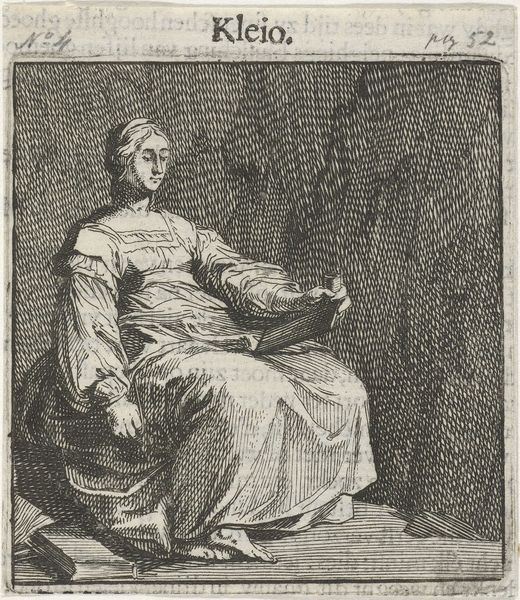
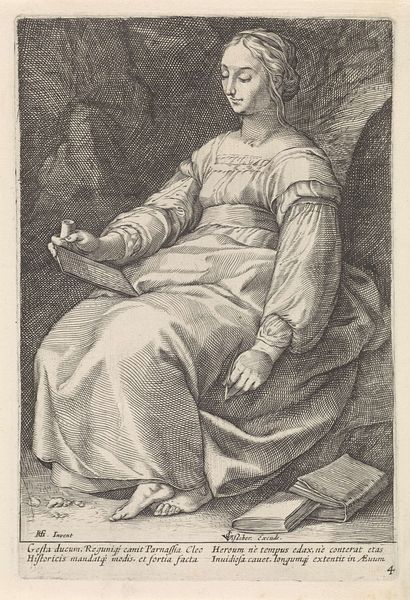
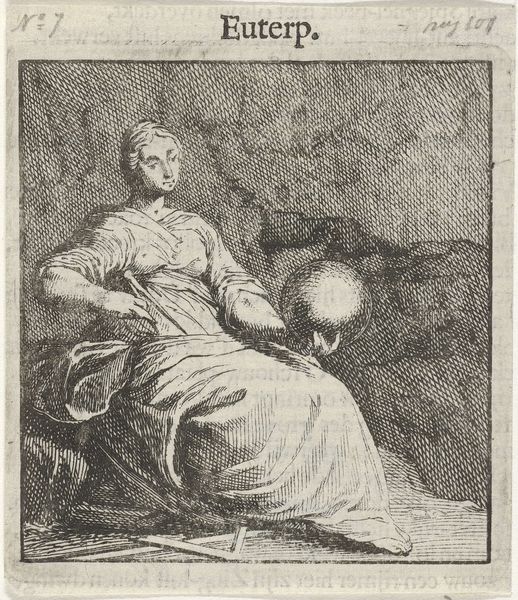
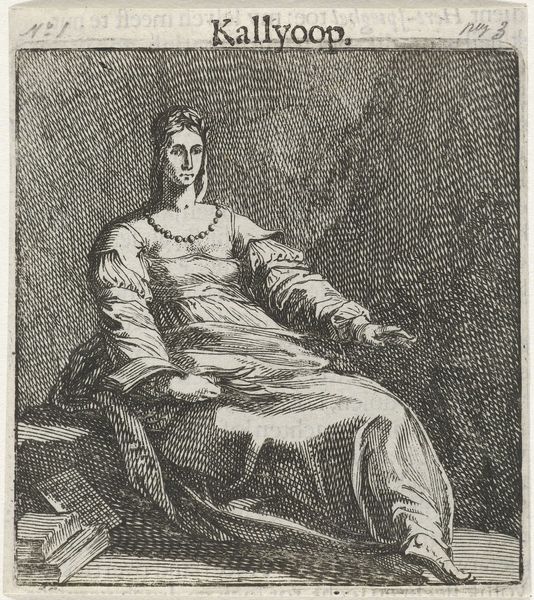
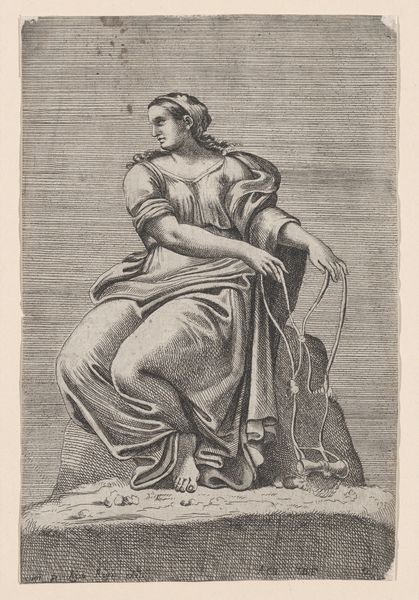
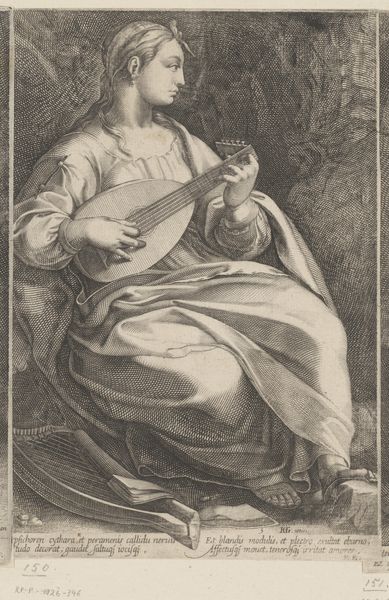
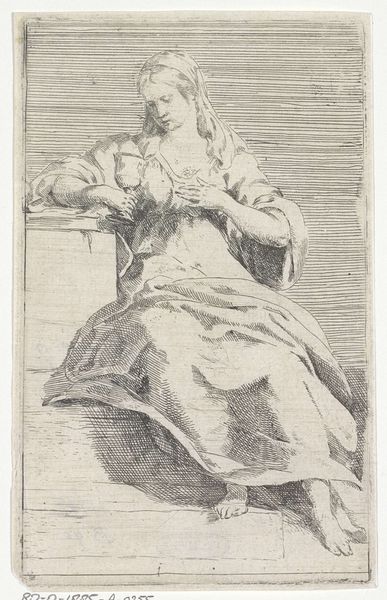
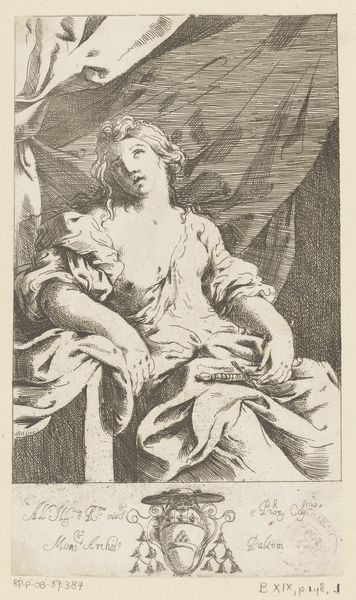
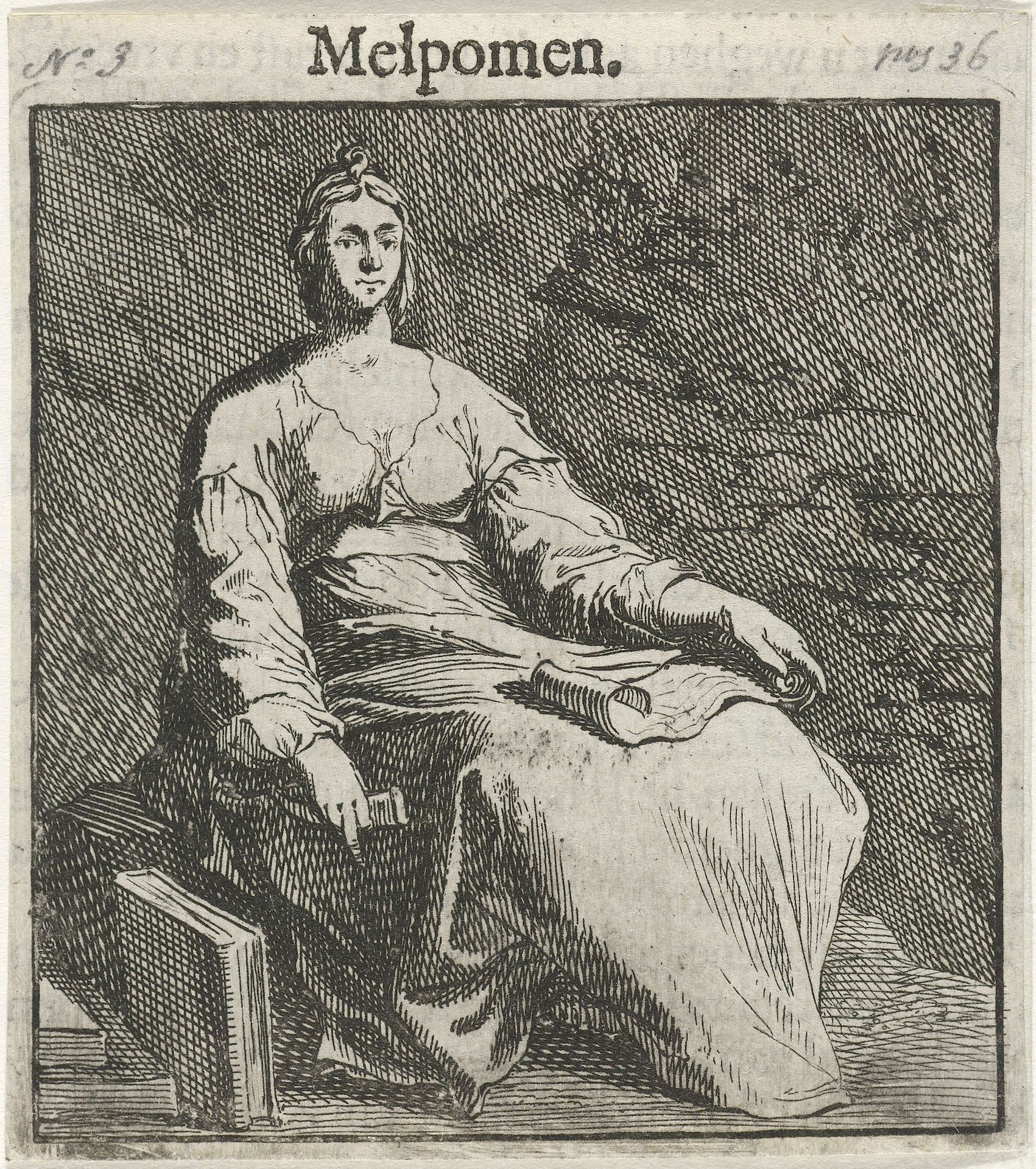
Pieter Nolpe created this engraving, titled "Melpomene," likely in the early to mid-17th century. The image, rendered in delicate lines, features Melpomene, the muse of tragedy, seated with symbolic objects around her. Notice the composition of the image, with the subject centrally positioned and framed by a dense, cross-hatched background. Nolpe uses line and texture to create a sense of depth and volume. The muse's drapery is described with a fine network of lines, while the objects such as the book and scroll are carefully rendered to enhance their symbolic value. By employing these formal elements, Nolpe invites viewers to contemplate the role of tragedy in human experience. The structured and deliberate composition speaks to the rationalism of the era, even as the subject matter delves into the realms of emotion. As such, the piece uses carefully constructed artistic language to engage in larger philosophical ideas.

Artwork details
- Medium
- print, engraving
- Dimensions
- height 71 mm, width 66 mm
- Location
- Rijksmuseum
- Copyright
- Rijks Museum: Open Domain
Tags
portrait
baroque
pen sketch
pencil sketch
old engraving style
figuration
engraving
Comments
Be the first to share your thoughts about this work.
About this artwork
Pieter Nolpe created this engraving, titled "Melpomene," likely in the early to mid-17th century. The image, rendered in delicate lines, features Melpomene, the muse of tragedy, seated with symbolic objects around her. Notice the composition of the image, with the subject centrally positioned and framed by a dense, cross-hatched background. Nolpe uses line and texture to create a sense of depth and volume. The muse's drapery is described with a fine network of lines, while the objects such as the book and scroll are carefully rendered to enhance their symbolic value. By employing these formal elements, Nolpe invites viewers to contemplate the role of tragedy in human experience. The structured and deliberate composition speaks to the rationalism of the era, even as the subject matter delves into the realms of emotion. As such, the piece uses carefully constructed artistic language to engage in larger philosophical ideas.
Comments
Be the first to share your thoughts about this work.