About this artwork
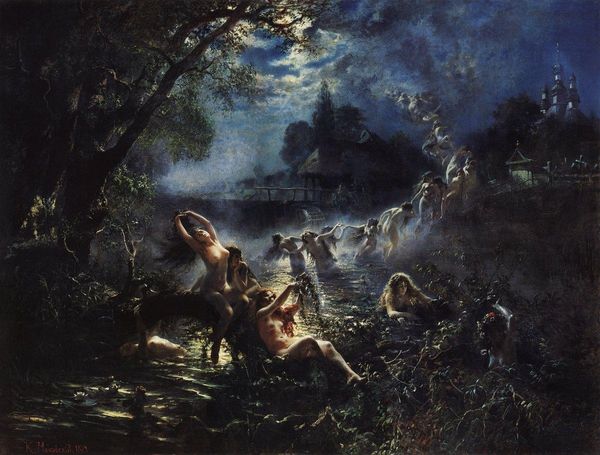
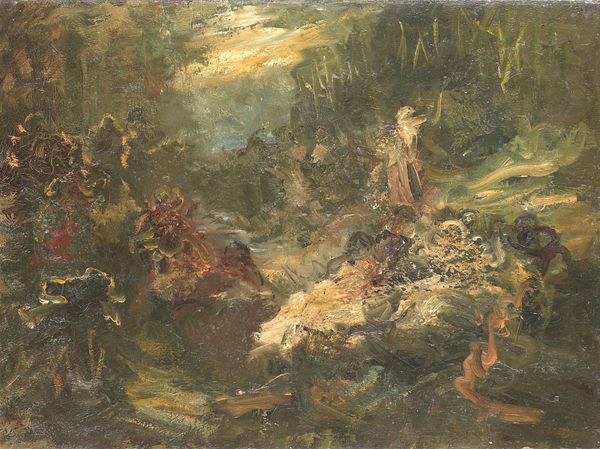
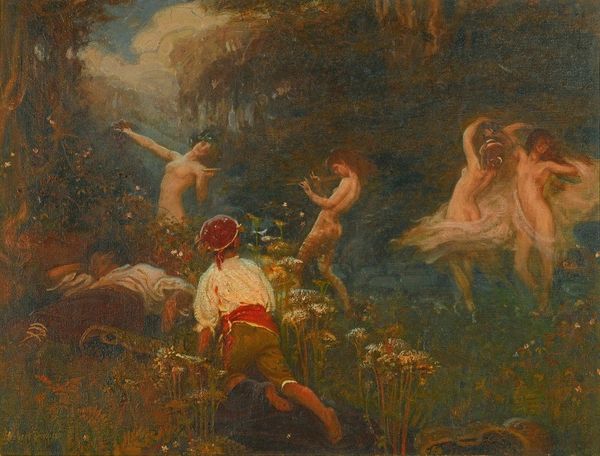
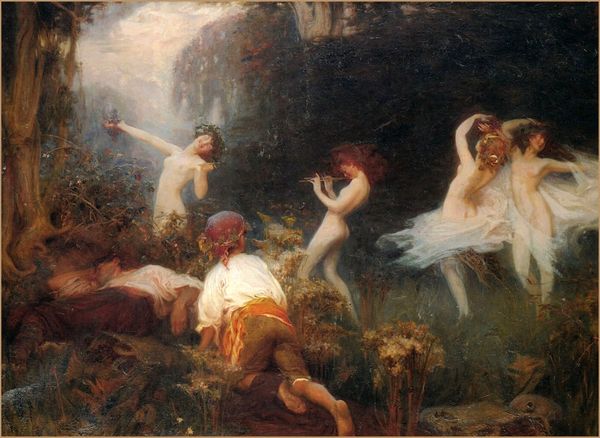
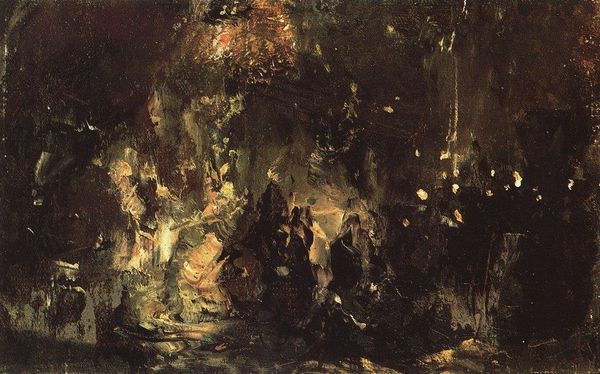
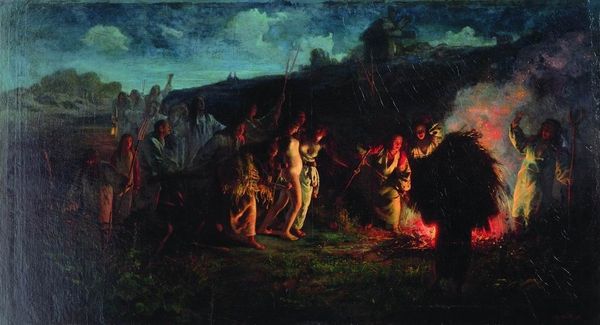
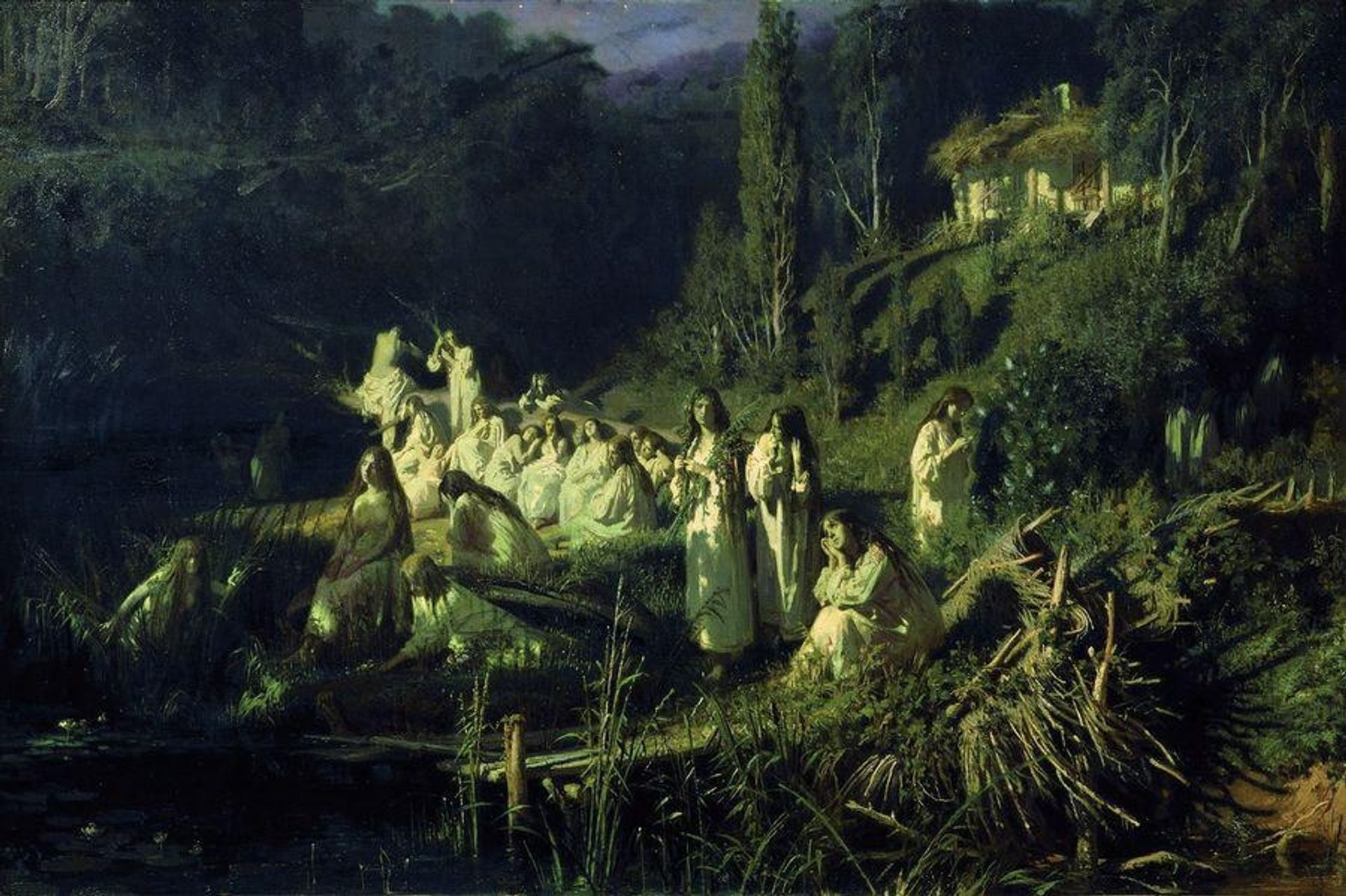
Ivan Kramskoy painted ‘Mermaids’ in oil on canvas in Russia sometime before his death in 1887. Kramskoy's choice of subject matter suggests some critique of the institutions of art. The artist was a leading figure in the Peredvizhniki movement. This group of Russian realist artists formed as a protest against academic restrictions. Kramskoy and his contemporaries sought to depict the lives of ordinary people and explore themes of social injustice. This painting, however, presents a scene from folklore: the rusalki, or mermaids, of Slavic myth. These spirits of drowned women inhabit a liminal space between life and death. Their ghostly presence challenges the clear boundaries between the natural and supernatural realms. The painting creates meaning through its visual codes, such as the mermaids' pale skin and ethereal forms. These elements evoke both beauty and a sense of unease. To understand this work better, one might consult folklore studies, historical accounts of peasant life, and critical analyses of Russian art from the 19th century. In the end, ‘Mermaids’ reminds us that the meaning of art is always contingent on its social and institutional context.
Mermaids
1871


Artwork details
- Dimensions
- 88 x 132 cm
- Location
- Tretyakov Gallery, Moscow, Russia
- Copyright
- Public domain
Comments
Be the first to share your thoughts about this work.
About this artwork
Ivan Kramskoy painted ‘Mermaids’ in oil on canvas in Russia sometime before his death in 1887. Kramskoy's choice of subject matter suggests some critique of the institutions of art. The artist was a leading figure in the Peredvizhniki movement. This group of Russian realist artists formed as a protest against academic restrictions. Kramskoy and his contemporaries sought to depict the lives of ordinary people and explore themes of social injustice. This painting, however, presents a scene from folklore: the rusalki, or mermaids, of Slavic myth. These spirits of drowned women inhabit a liminal space between life and death. Their ghostly presence challenges the clear boundaries between the natural and supernatural realms. The painting creates meaning through its visual codes, such as the mermaids' pale skin and ethereal forms. These elements evoke both beauty and a sense of unease. To understand this work better, one might consult folklore studies, historical accounts of peasant life, and critical analyses of Russian art from the 19th century. In the end, ‘Mermaids’ reminds us that the meaning of art is always contingent on its social and institutional context.
Comments
Be the first to share your thoughts about this work.