About this artwork
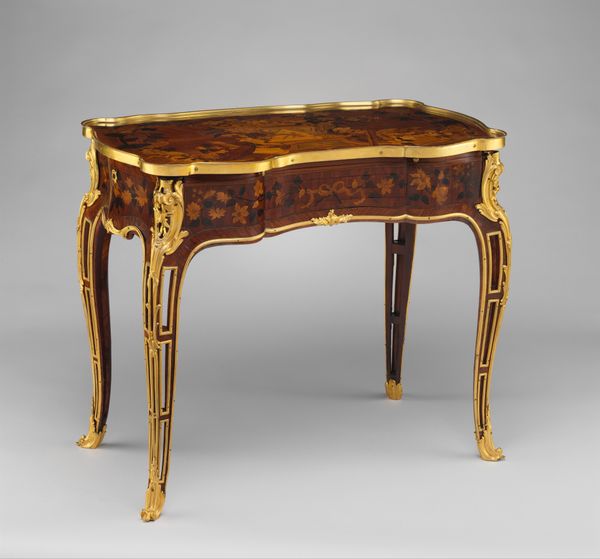
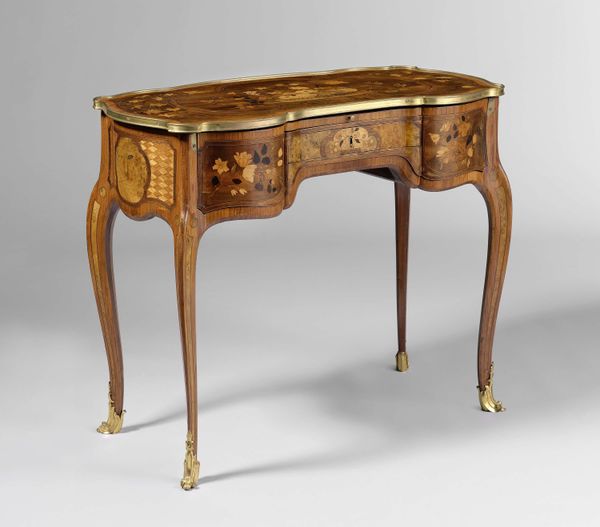
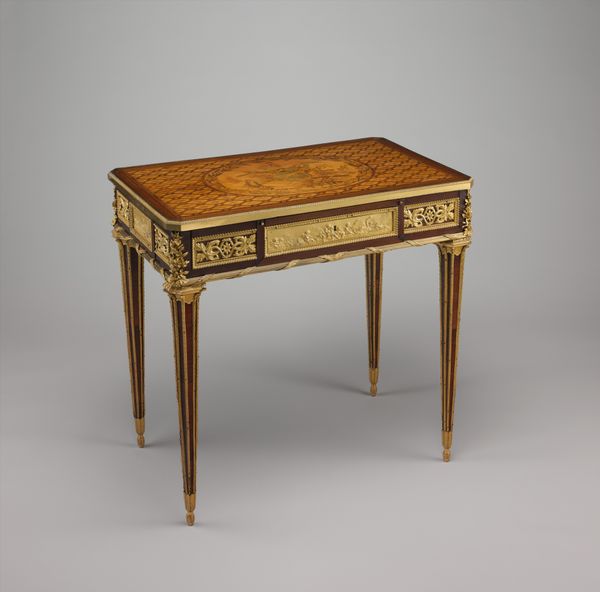
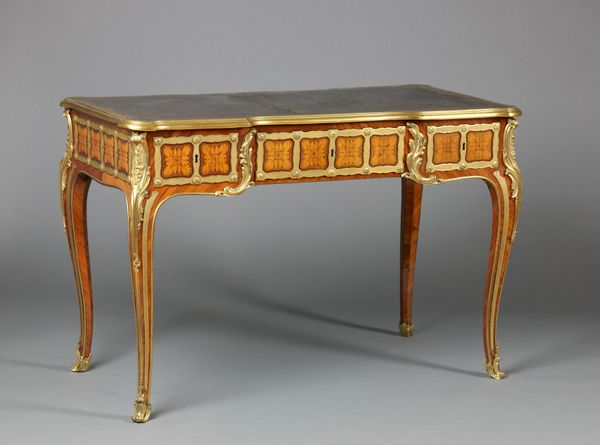
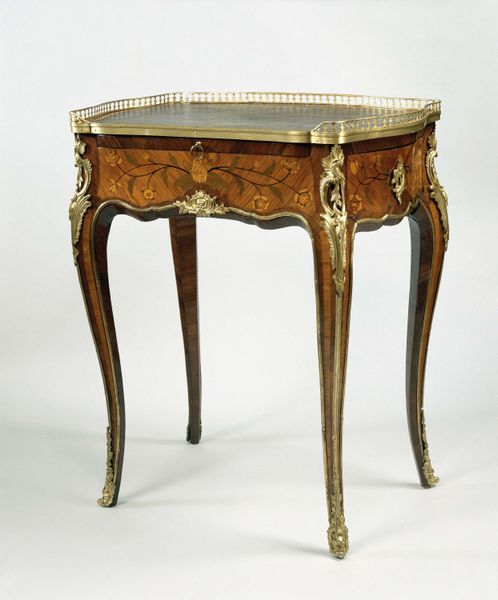
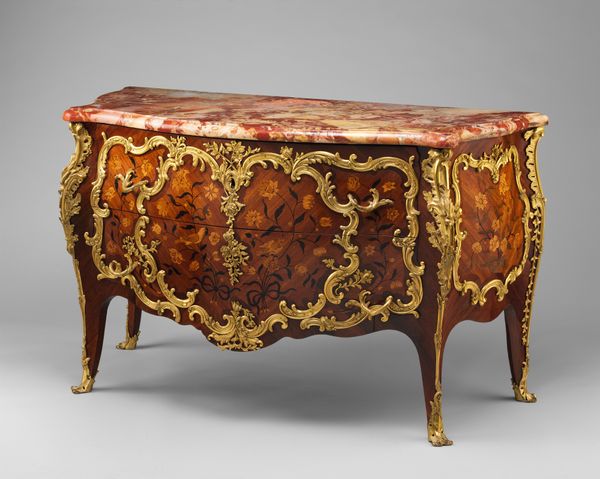
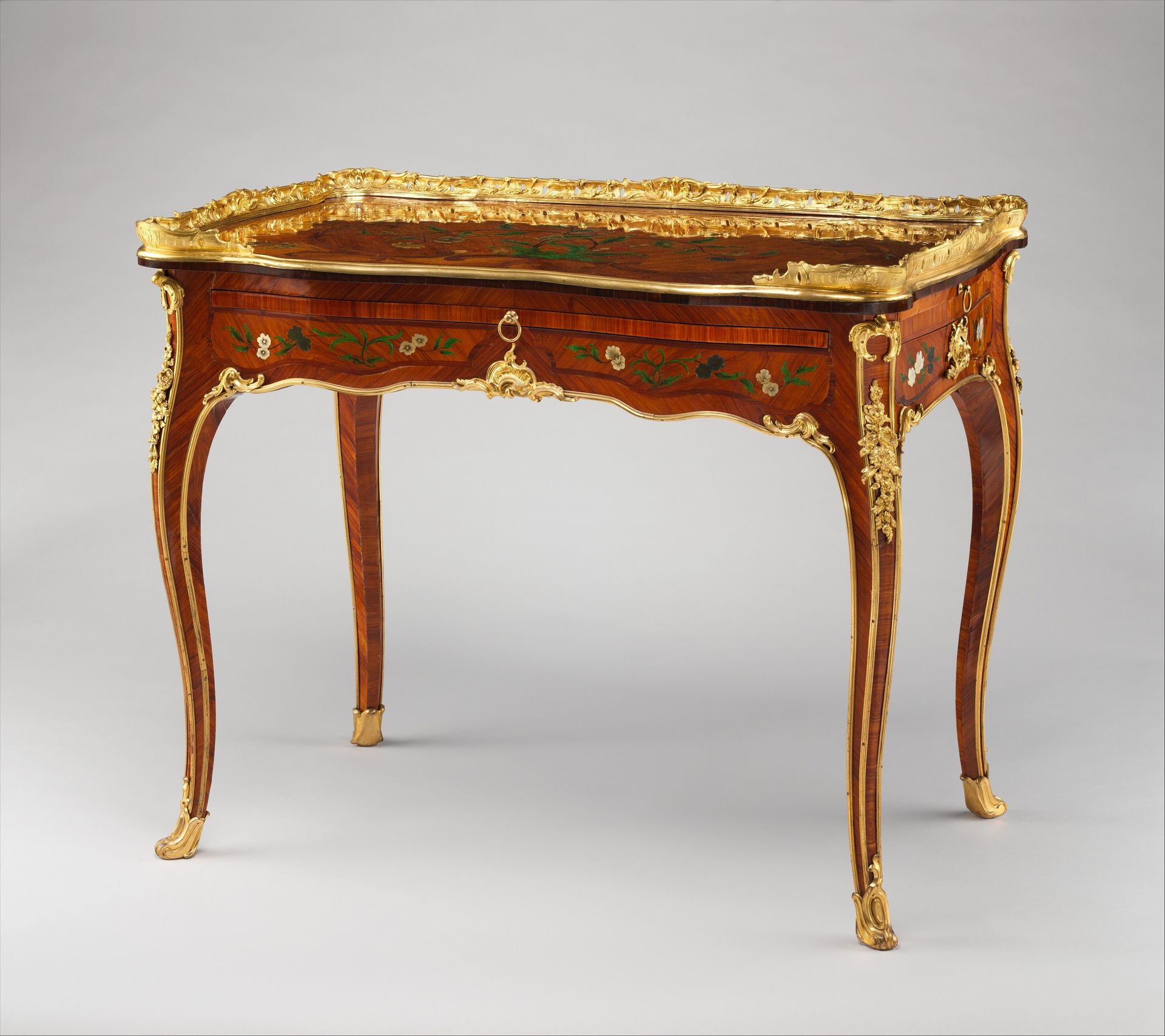
This writing table was crafted in France during the mid-18th century by Bernard II van Risenburgh, using kingwood, oak, and gilded bronze. It epitomizes the opulence and intricate craftsmanship favored by the French aristocracy. The table’s design, with its serpentine curves, floral marquetry, and lavish use of gilt bronze, reflects the Rococo style, mirroring the social values of the time. Furniture like this was not merely functional, but a statement of wealth and refined taste. It speaks to the prevailing social hierarchy where artistry and luxury were tools to affirm status and power. By studying furniture makers’ guild records, aristocratic inventories, and design pattern books, we can better understand the table’s cultural significance and its role in shaping the social landscape of 18th-century France. Recognizing how social conditions influenced artistic production, and vice versa, allows us to see beyond its aesthetic appeal, and appreciate the complex dynamics of art and society.
Writing table (table à écrire)
1750 - 1760

Bernard II van Risenburgh
1696 - 1767
The Metropolitan Museum of Art
Metropolitan Museum of Art, New York, NYArtwork details
- Medium
- sculpture, wood
- Dimensions
- H. 30-3/4 x W. 38 x D. 22-5/8 in. (78.1 x 96.5 x 57.5 cm)
- Location
- Metropolitan Museum of Art, New York, NY
- Copyright
- Public Domain
Tags
furniture
virtual 3d design
sculpture
wood
decorative-art
rococo
Comments
Be the first to share your thoughts about this work.
About this artwork
This writing table was crafted in France during the mid-18th century by Bernard II van Risenburgh, using kingwood, oak, and gilded bronze. It epitomizes the opulence and intricate craftsmanship favored by the French aristocracy. The table’s design, with its serpentine curves, floral marquetry, and lavish use of gilt bronze, reflects the Rococo style, mirroring the social values of the time. Furniture like this was not merely functional, but a statement of wealth and refined taste. It speaks to the prevailing social hierarchy where artistry and luxury were tools to affirm status and power. By studying furniture makers’ guild records, aristocratic inventories, and design pattern books, we can better understand the table’s cultural significance and its role in shaping the social landscape of 18th-century France. Recognizing how social conditions influenced artistic production, and vice versa, allows us to see beyond its aesthetic appeal, and appreciate the complex dynamics of art and society.
Comments
Be the first to share your thoughts about this work.