About this artwork
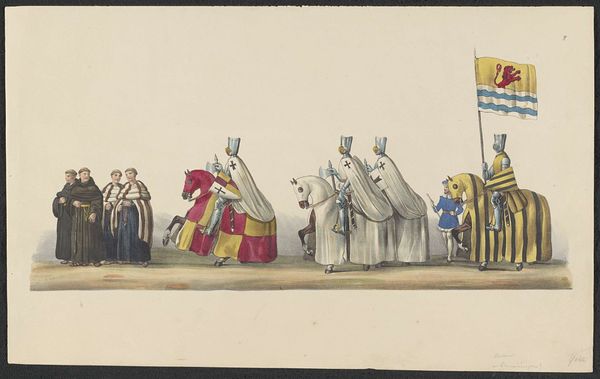
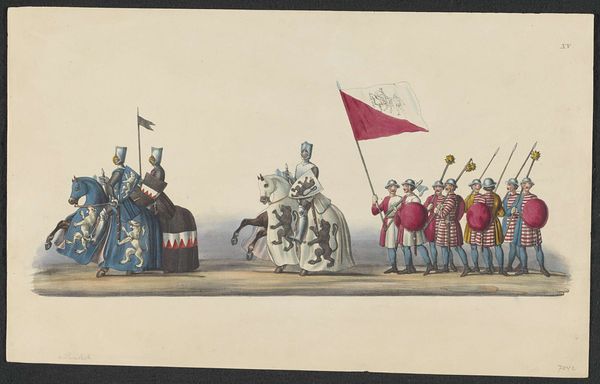
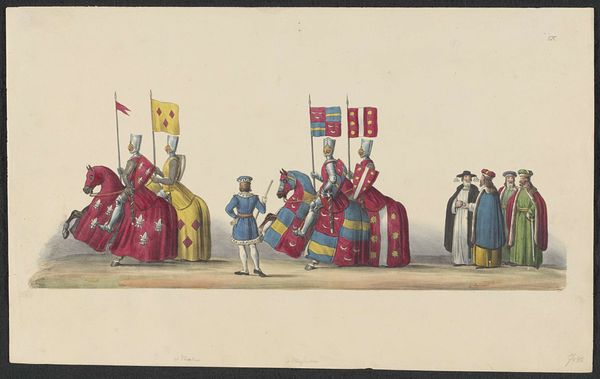
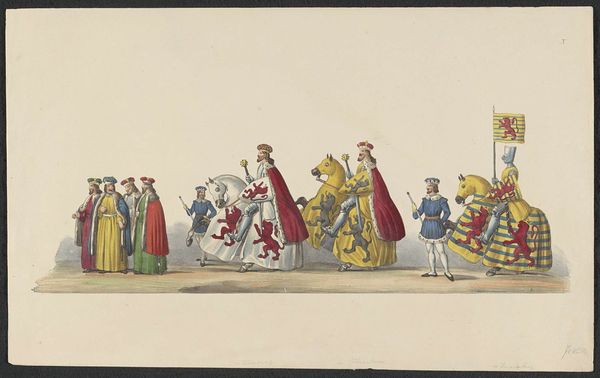
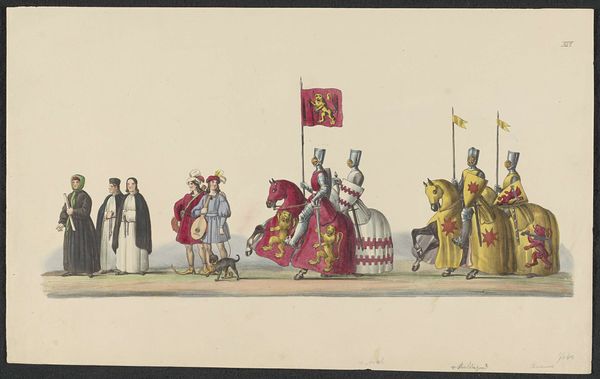
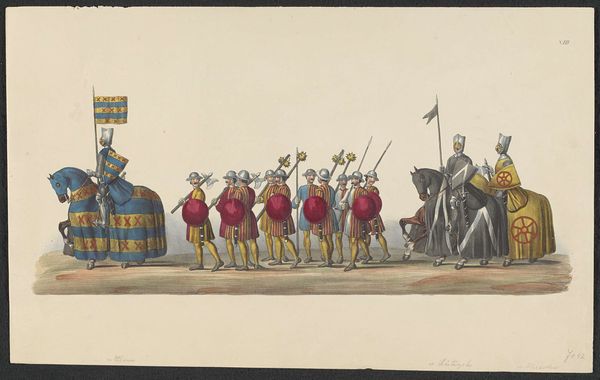
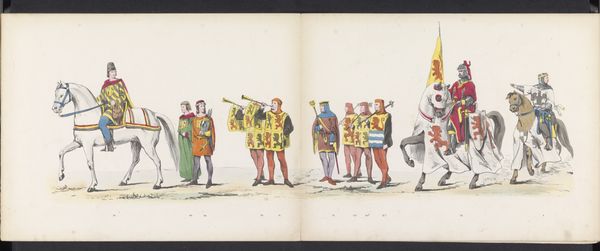
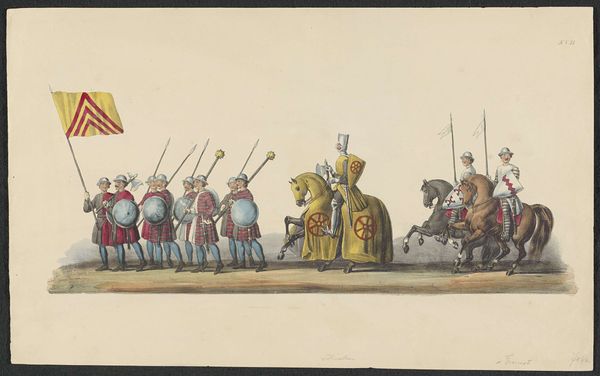
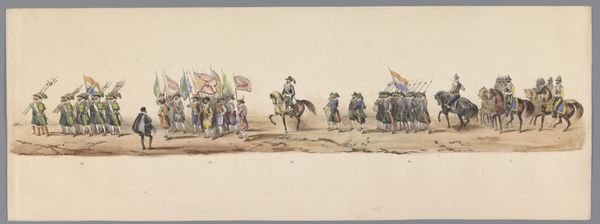
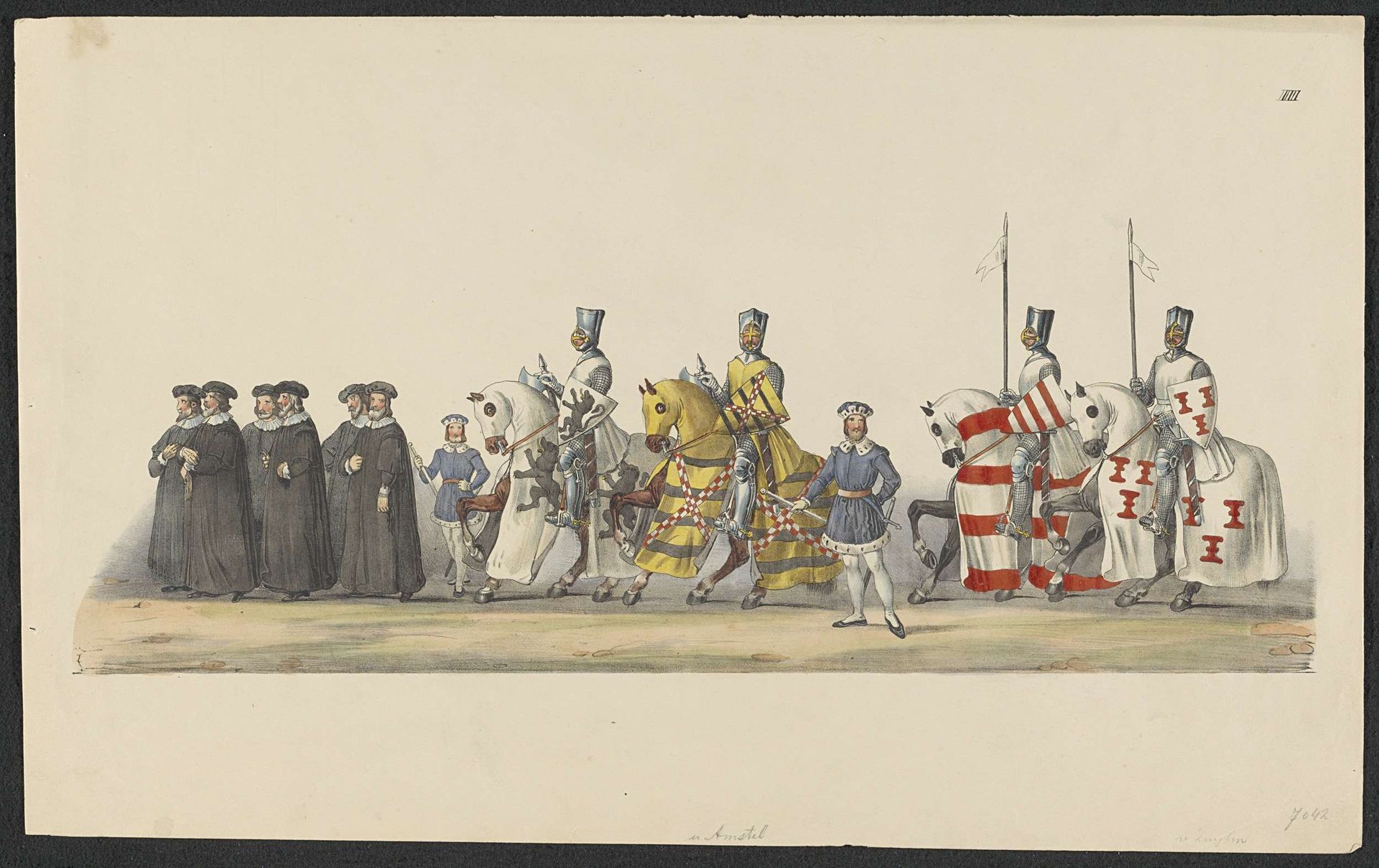
This is a watercolor drawing of a costumed procession with knights on horseback, made in 1841 by an anonymous artist. The composition of the procession unfolds horizontally, a frieze of figures against a pale ground. The color scheme alternates between somber blacks and vibrant reds and yellows, creating a rhythmic visual cadence. The anonymous artist constructs a tableau that both monumentalizes and playfully engages with historical pageantry. The figures, stiff and somewhat awkwardly rendered, evoke a sense of archaic formality. Yet, the overall effect is less about historical accuracy and more about the spectacle of display. The juxtaposition of religious figures with knights suggests a complex interplay between spiritual authority and secular power. The artist destabilizes the fixed meanings of these symbols, inviting us to consider how spectacle shapes our understanding of history and identity. Note how the very flatness of the composition throws into relief the artifice of the entire proceeding. It’s this tension between representation and reality that defines the drawing’s aesthetic and philosophical resonance.
Gekostumeerde optocht van 1841: ridders te paard (blad III)
1841

Anonymous
@anonymousLocation
RijksmuseumArtwork details
- Medium
- print, watercolor
- Dimensions
- height 300 mm, width 480 mm
- Location
- Rijksmuseum
- Copyright
- Rijks Museum: Open Domain
Tags
Comments
Share your thoughts
About this artwork
This is a watercolor drawing of a costumed procession with knights on horseback, made in 1841 by an anonymous artist. The composition of the procession unfolds horizontally, a frieze of figures against a pale ground. The color scheme alternates between somber blacks and vibrant reds and yellows, creating a rhythmic visual cadence. The anonymous artist constructs a tableau that both monumentalizes and playfully engages with historical pageantry. The figures, stiff and somewhat awkwardly rendered, evoke a sense of archaic formality. Yet, the overall effect is less about historical accuracy and more about the spectacle of display. The juxtaposition of religious figures with knights suggests a complex interplay between spiritual authority and secular power. The artist destabilizes the fixed meanings of these symbols, inviting us to consider how spectacle shapes our understanding of history and identity. Note how the very flatness of the composition throws into relief the artifice of the entire proceeding. It’s this tension between representation and reality that defines the drawing’s aesthetic and philosophical resonance.
Comments
Share your thoughts