About this artwork
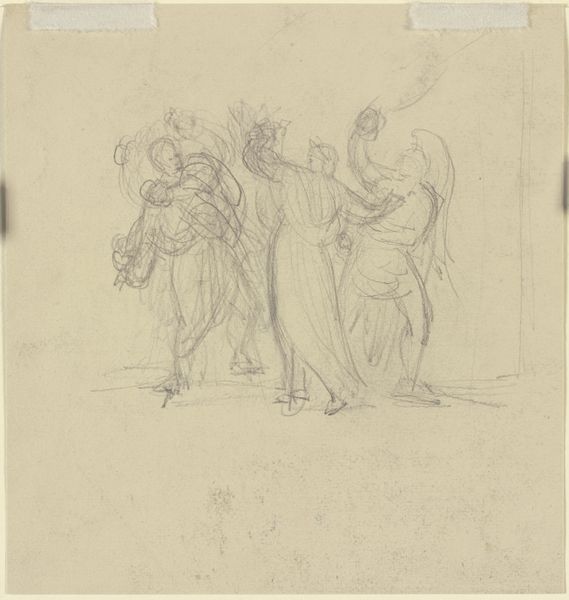
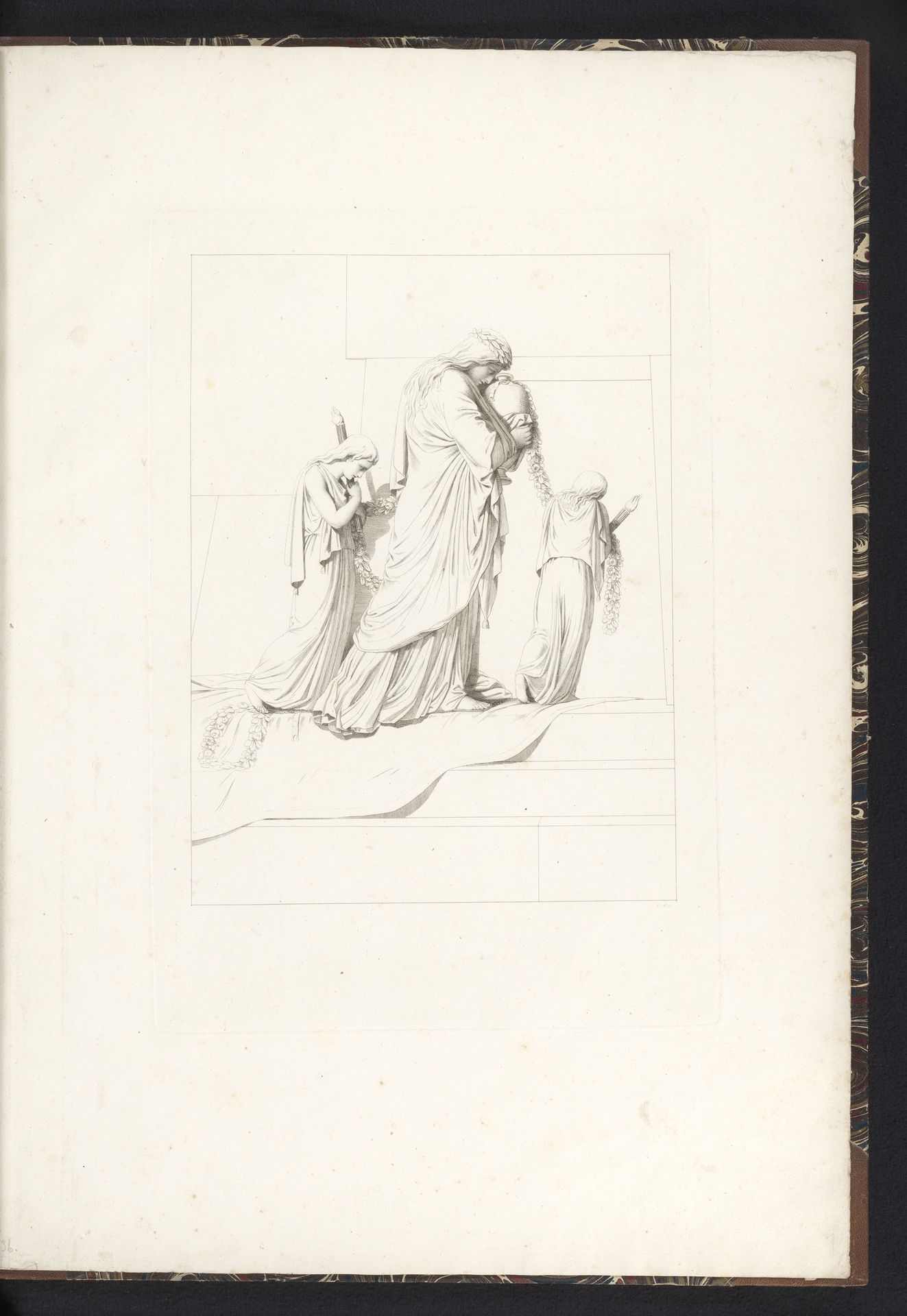
Karl Joseph Aloys Agricola created this drawing of a grieving woman and two girls in the late 18th or early 19th century. Agricola lived through an era of significant upheaval, including the Napoleonic Wars and the rise of nationalism. The artwork shows us a woman draped in classical robes embracing an urn, flanked by two girls. They carry torches and a garland of flowers, symbols often associated with mourning and remembrance. The scene echoes themes of loss and bereavement, but also the continuity of life. The artist, trained in the tradition of Neoclassicism, might have sought to ennoble and universalize the emotion of grief by placing it within a classical context. What feelings does this scene evoke in you? Does it remind you of your own experiences with loss, or of the ways we memorialize those we have loved and lost?
Treurende vrouw met urn, begeleid door twee meisjes met fakkels en een bloemenguirlande 1812

Artwork details
- Medium
- drawing, pencil
- Dimensions
- height 363 mm, width 252 mm
- Copyright
- Rijks Museum: Open Domain
Tags
portrait
drawing
neoclacissism
allegory
pencil sketch
pencil
history-painting
Comments
No comments
About this artwork
Karl Joseph Aloys Agricola created this drawing of a grieving woman and two girls in the late 18th or early 19th century. Agricola lived through an era of significant upheaval, including the Napoleonic Wars and the rise of nationalism. The artwork shows us a woman draped in classical robes embracing an urn, flanked by two girls. They carry torches and a garland of flowers, symbols often associated with mourning and remembrance. The scene echoes themes of loss and bereavement, but also the continuity of life. The artist, trained in the tradition of Neoclassicism, might have sought to ennoble and universalize the emotion of grief by placing it within a classical context. What feelings does this scene evoke in you? Does it remind you of your own experiences with loss, or of the ways we memorialize those we have loved and lost?
Comments
No comments