silver, metal
#
decorative element
#
silver
#
baroque
#
metal
#
decorative-art
Dimensions: 8 1/4 x 15 15/16 in. (20.96 x 40.48 cm)
Copyright: Public Domain
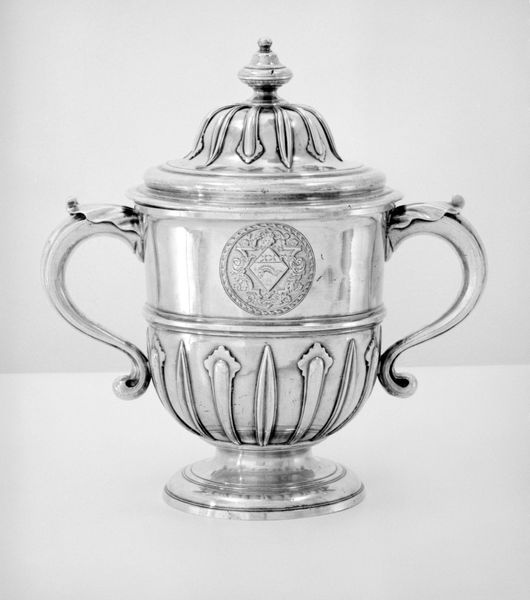
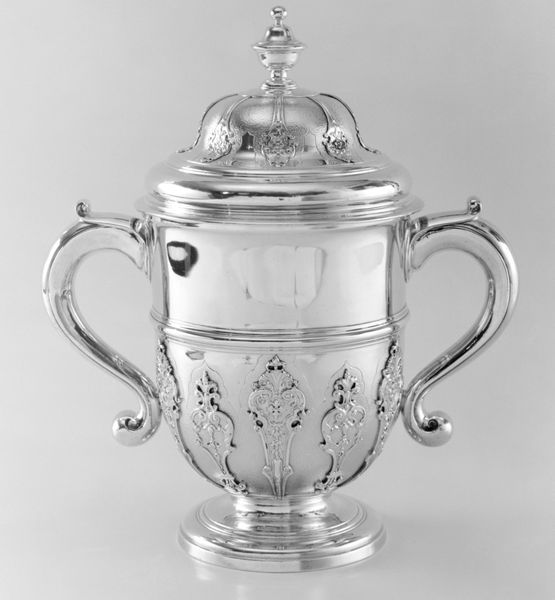
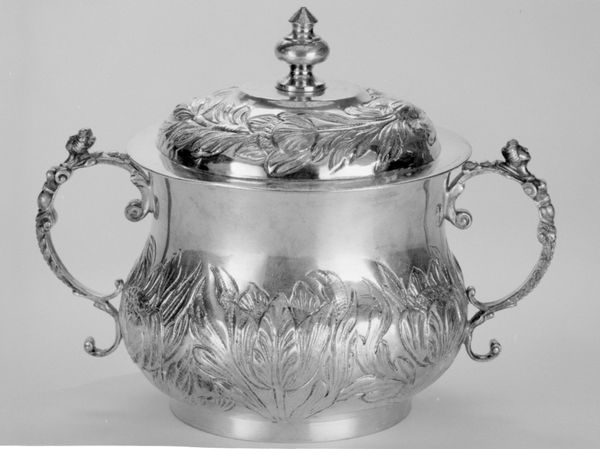
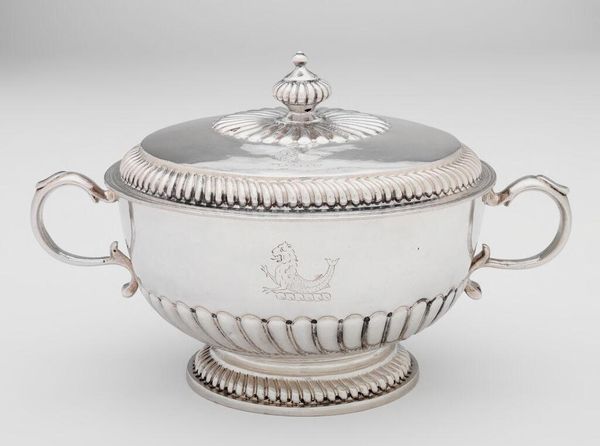
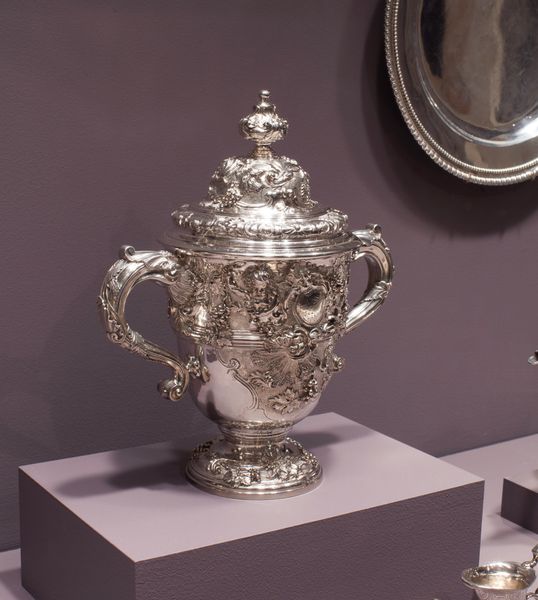
Curator: Before us gleams a magnificent example of Baroque silverwork: a two-handled cup, crafted by Bartholomew Le Roux sometime between 1702 and 1708. Editor: It’s quite opulent, isn't it? The bright reflective surface and elaborate decoration give it an almost dreamlike, regal air. Curator: Indeed. The decorative element—leaves wrapping the base of the cup— immediately signals the cup's high status. And consider the sheer labour invested; Le Roux was a master silversmith, working during the height of Louis XIV's reign. Silver wasn’t just a material; it was a declaration. What statements are conveyed here, in your view? Editor: Oh, I see layers upon layers. First, there's the symbolic language inherent in the cup’s form itself – a vessel, connoting containment, abundance, maybe even communion. Then you have the crest – faded and abraded, perhaps a visual ghost of a noble family. All speaking to ritual and remembrance. Curator: It’s the scale that interests me. Objects like this were about displaying power. The material makes it so. The act of producing and consuming pieces such as this cup sustained an entire hierarchy of artisans and patrons. Can you make the cup through time? Editor: I find it fascinating how objects accumulate meaning over time. This cup, designed for lavish display, may have become an heirloom, imbued with generations of family stories. Maybe at some point even repurposed, its original function giving way to something new. Curator: Absolutely. It’s important to remember how pieces like this operated within complex systems of trade, mining, and craft production. That shine is beautiful but built upon exploitative practices and material extraction. Editor: It’s true; beauty and power are rarely innocent. Still, contemplating this object— its symbolism, its craftsmanship— provides a glimpse into a vanished world. Curator: It reveals the complex intersections of craft, labor, and symbolic representation present even within a single object. Editor: A powerful demonstration of how objects serve as silent witnesses to history.
Comments
No comments
Be the first to comment and join the conversation on the ultimate creative platform.
 Collect
 React
React Comment
More like this