About this artwork
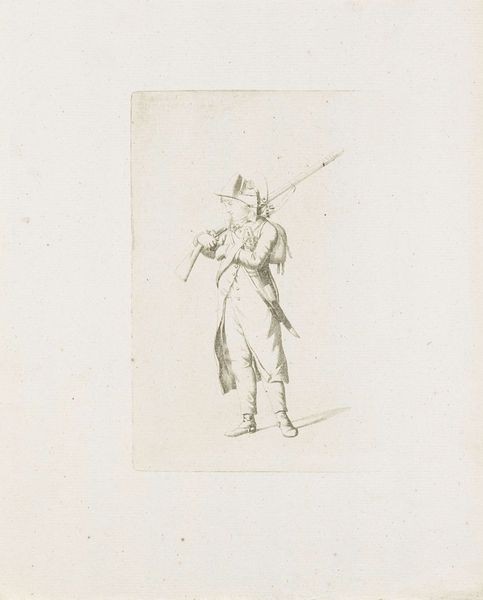
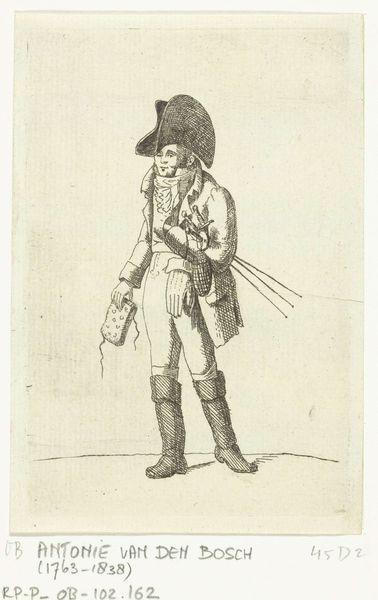
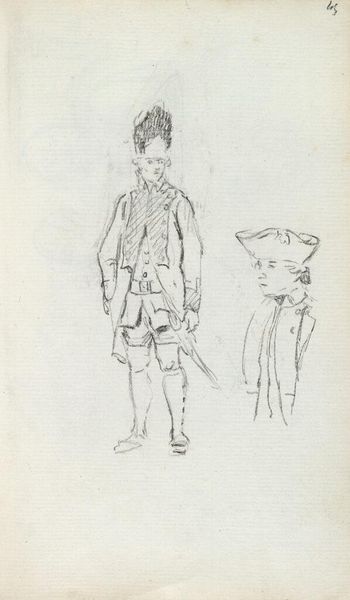
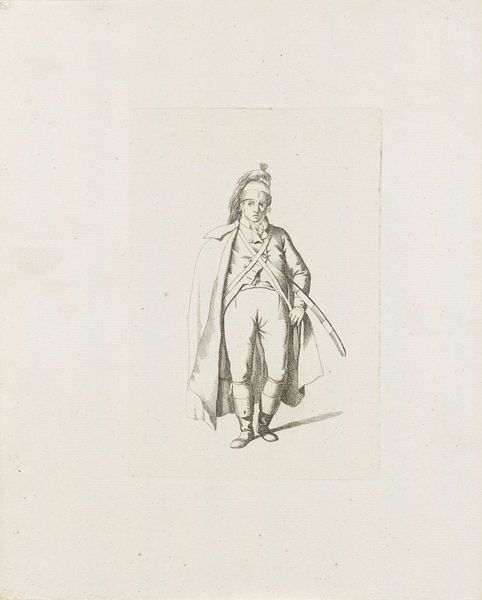
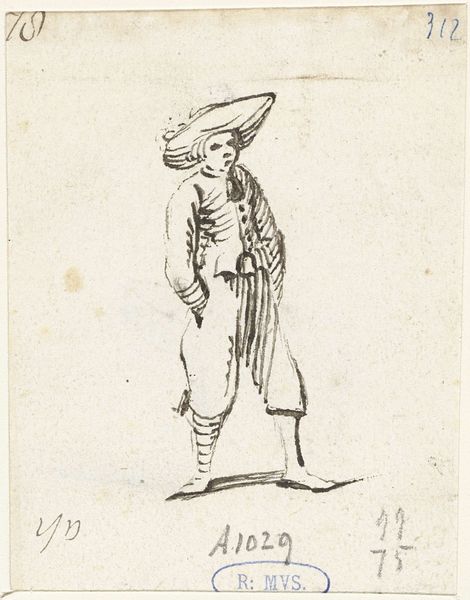
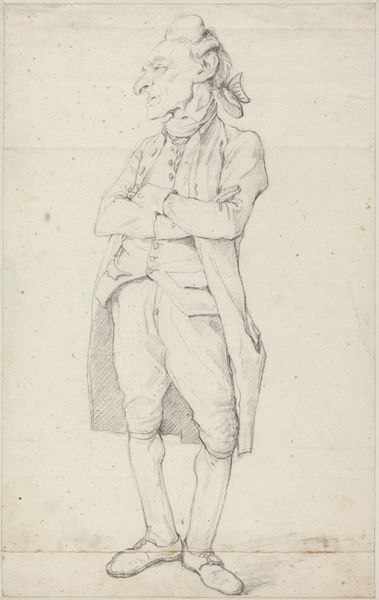
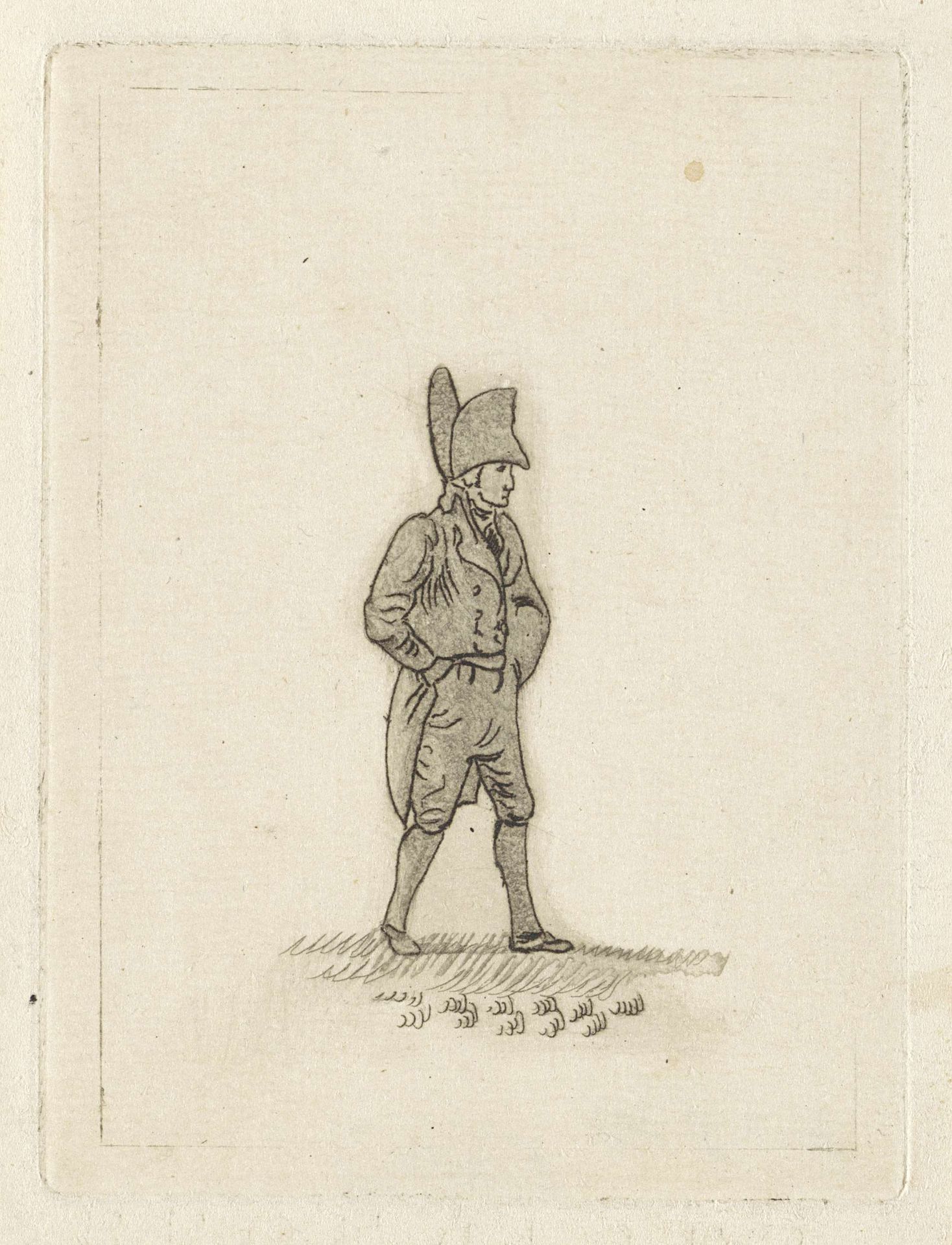
Joannes Pieter Visser Bender created this etching, "Man met steek op het hoofd," sometime before his death in 1813. The image presents a figure wearing a bicorne, a type of hat widely associated with military and naval uniforms in the late 18th and early 19th centuries. Produced during the Netherlands’ period of French rule, the artwork participates in a visual culture shaped by the Napoleonic Empire. The figure's attire, stance, and the presence of what seem to be bullets on the ground evoke the militaristic atmosphere of the time, reflecting the social conditions marked by war and conscription. Further research into the artist’s life, the etching's production context, and the iconography of military dress during the Napoleonic era will clarify the meaning of this image, highlighting how art serves as a mirror to its socio-political world.
Man met steek op het hoofd
1795 - 1813

Joannes Pieter Visser Bender
1785 - 1813Location
RijksmuseumArtwork details
- Medium
- drawing, pencil
- Dimensions
- height 92 mm, width 70 mm
- Location
- Rijksmuseum
- Copyright
- Rijks Museum: Open Domain
Tags
Comments
Share your thoughts
About this artwork
Joannes Pieter Visser Bender created this etching, "Man met steek op het hoofd," sometime before his death in 1813. The image presents a figure wearing a bicorne, a type of hat widely associated with military and naval uniforms in the late 18th and early 19th centuries. Produced during the Netherlands’ period of French rule, the artwork participates in a visual culture shaped by the Napoleonic Empire. The figure's attire, stance, and the presence of what seem to be bullets on the ground evoke the militaristic atmosphere of the time, reflecting the social conditions marked by war and conscription. Further research into the artist’s life, the etching's production context, and the iconography of military dress during the Napoleonic era will clarify the meaning of this image, highlighting how art serves as a mirror to its socio-political world.
Comments
Share your thoughts