About this artwork
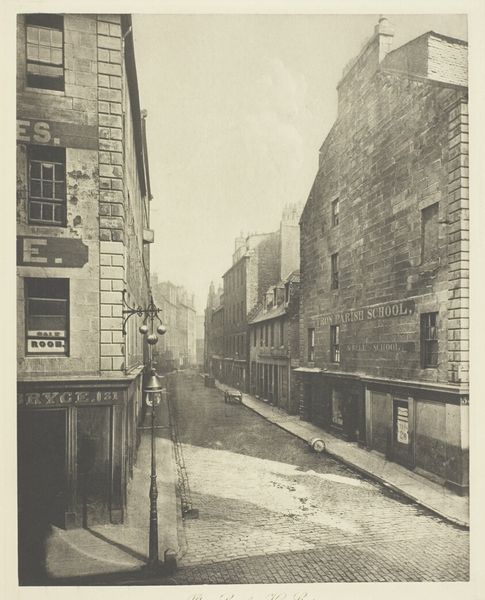
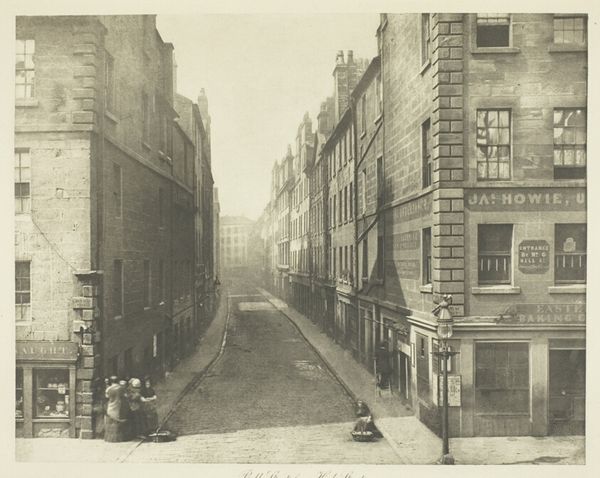
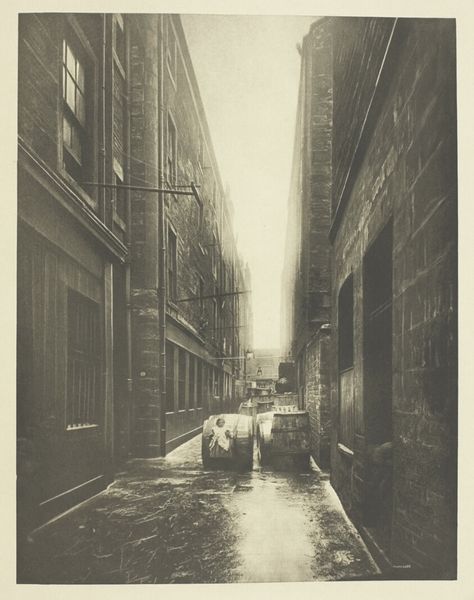
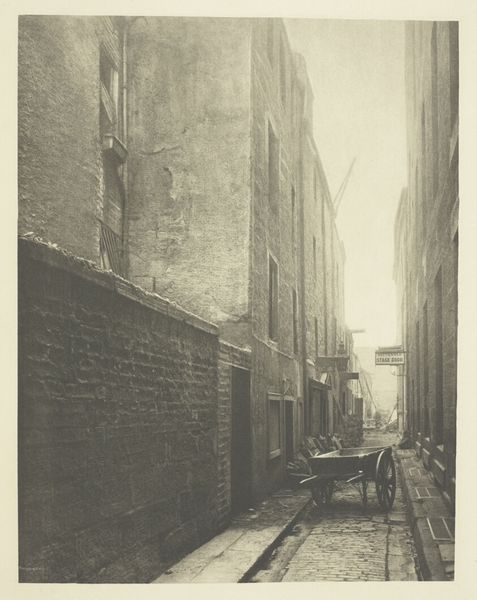
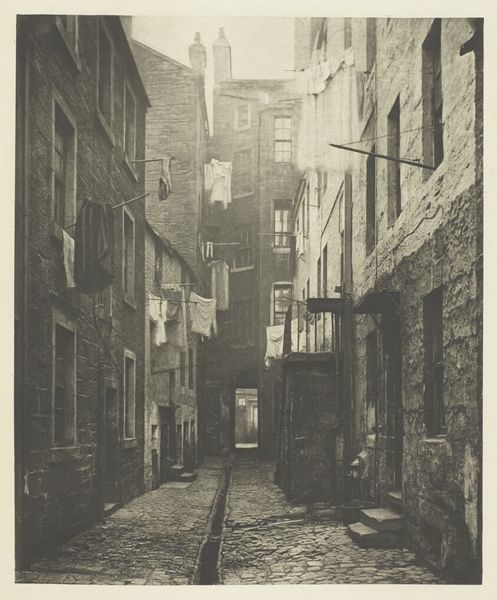
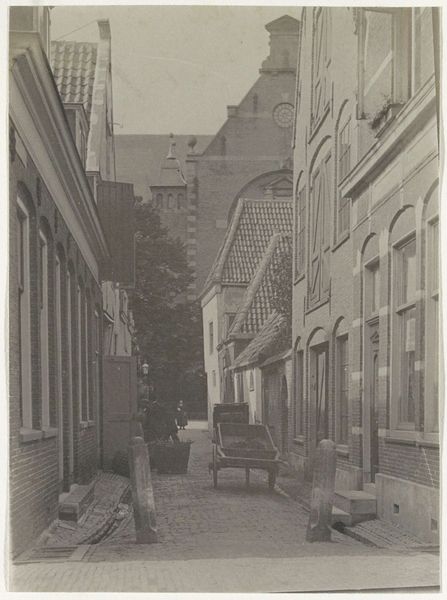
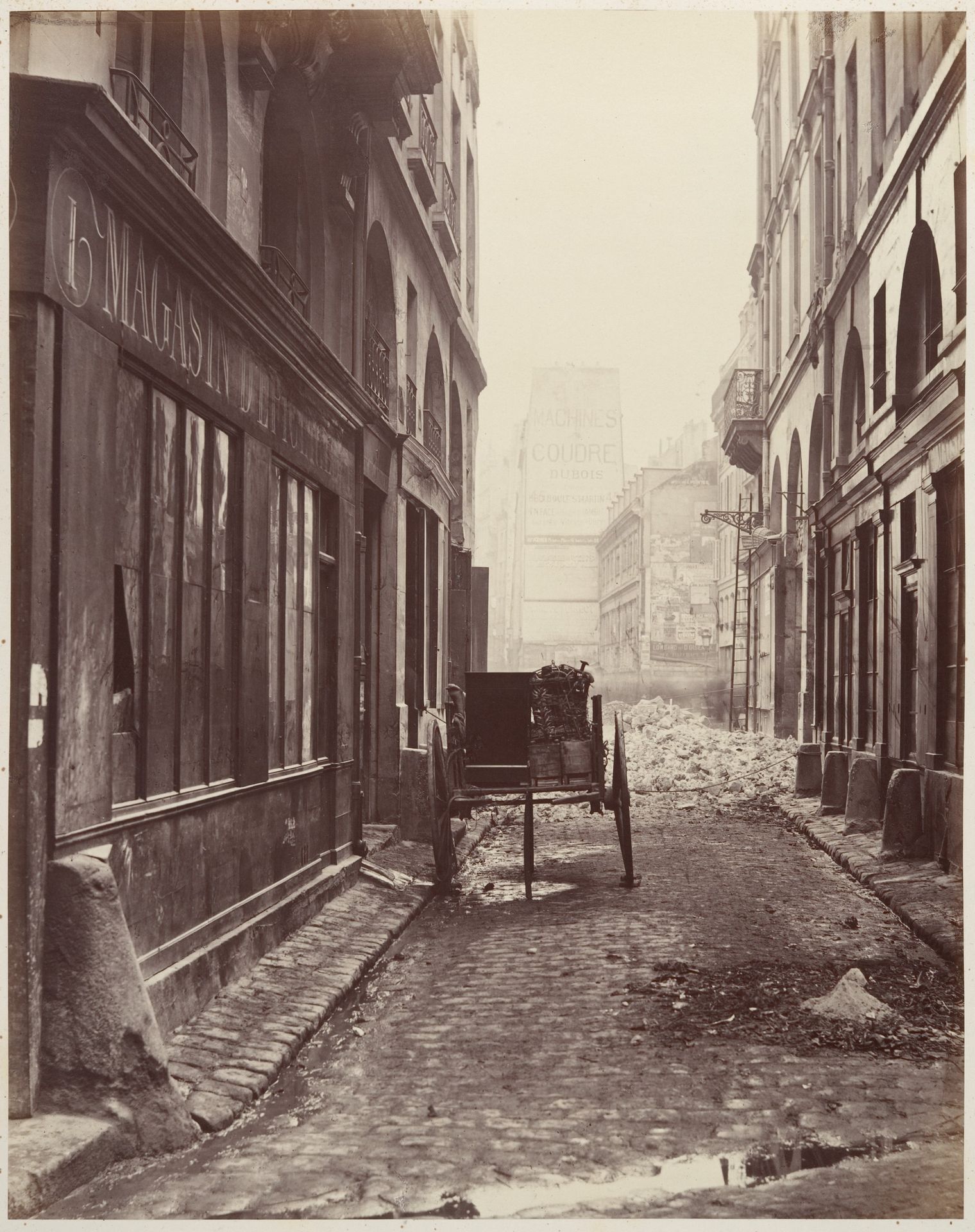
Charles Marville captured this somber image of Rue Estienne, de la rue Boucher with his camera, a tool then heralding a new era of documentation. The narrow street, a canyon of human construction, is laden with the symbolism of urban life. Notice the buildings: they loom as silent witnesses, their arches reminiscent of Roman aqueducts. These arches are a vestige of structures designed to bring life into burgeoning cities, but here, they seem to frame an absence, a void. Consider the cart in the center, an isolated vehicle. The cart echoes the chariots of antiquity, now reduced to a mundane carrier amidst a city's transformation. There is a powerful psychological undercurrent here, a palpable sense of loss and transition, as Marville documented Paris before its radical reconstruction. The "before" is preserved in the collective memory.
Rue Estienne, de la rue Boucher
1862 - 1865


Artwork details
- Medium
- print, daguerreotype, photography
- Dimensions
- Image: 34.3 x 27.1 cm (13 1/2 x 10 11/16 in.) Mount: 23 11/16 × 16 5/16 in. (60.2 × 41.4 cm)
- Location
- Metropolitan Museum of Art, New York, NY
- Copyright
- Public Domain
Tags
Comments
Share your thoughts
About this artwork
Charles Marville captured this somber image of Rue Estienne, de la rue Boucher with his camera, a tool then heralding a new era of documentation. The narrow street, a canyon of human construction, is laden with the symbolism of urban life. Notice the buildings: they loom as silent witnesses, their arches reminiscent of Roman aqueducts. These arches are a vestige of structures designed to bring life into burgeoning cities, but here, they seem to frame an absence, a void. Consider the cart in the center, an isolated vehicle. The cart echoes the chariots of antiquity, now reduced to a mundane carrier amidst a city's transformation. There is a powerful psychological undercurrent here, a palpable sense of loss and transition, as Marville documented Paris before its radical reconstruction. The "before" is preserved in the collective memory.
Comments
Share your thoughts