1628 - 1670
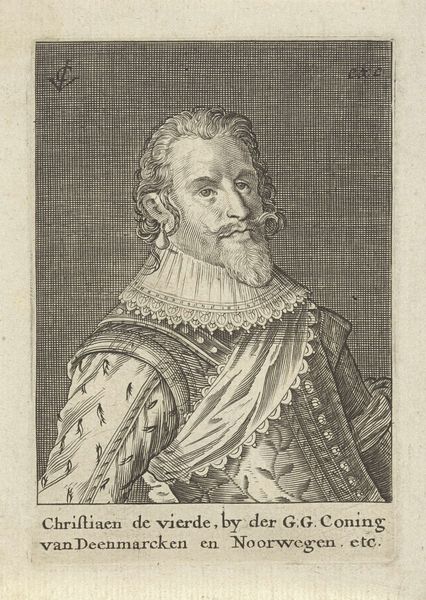
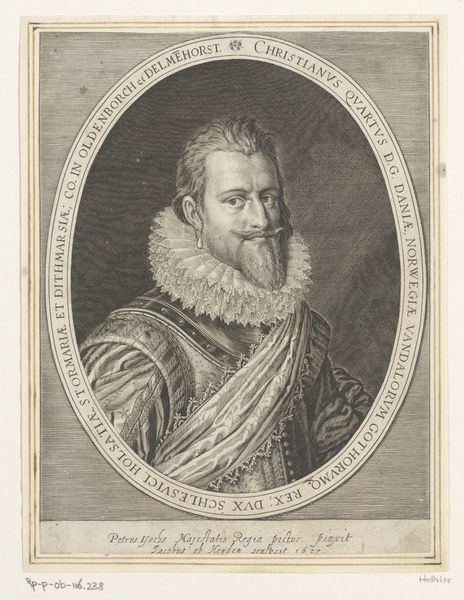
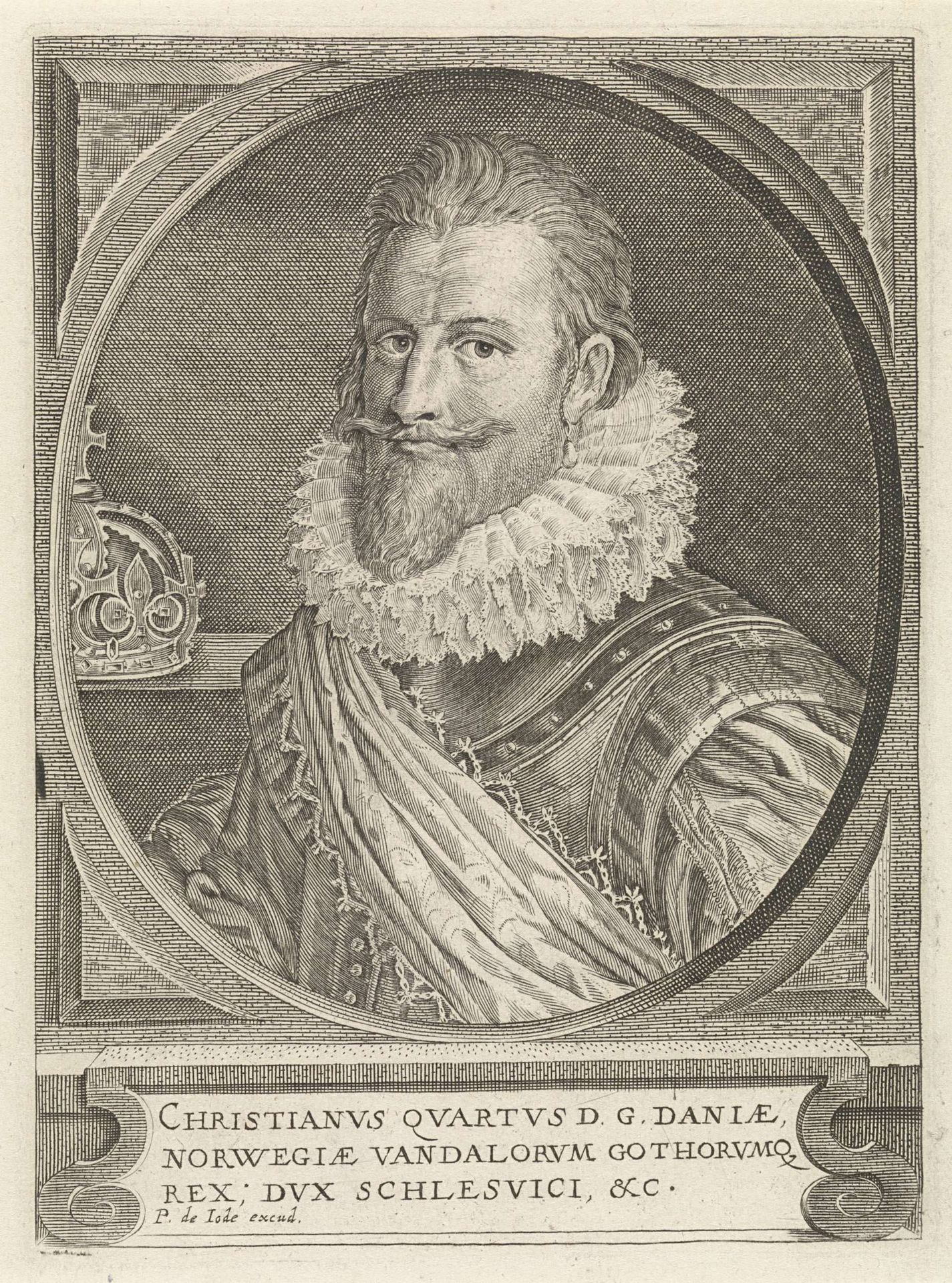
Portret van Christiaan IV, koning van Denemarken

Pieter de (II) Jode
1606 - 1674Location
RijksmuseumListen to curator's interpretation
Curatorial notes
Pieter de Jode II created this portrait of Christian IV, King of Denmark, using engraving techniques. Note the oval frame which immediately captures our attention and directs our gaze inward. The engraving employs a meticulous network of fine lines, cross-hatching, and stippling to define form and texture. This can be seen in the sharp details of Christian IV's facial features and the ornate patterns of his attire. The textures of the beard and lace collar are rendered through densely packed lines, while the play of light across his armour is achieved with subtle gradations of tone. The oval frame contrasts with the rectangular field, and the crown at the left adds a symbolic dimension that speaks to Christian IV's authority and status. The portrait functions not only as a representation but also as a symbol of power, utilizing a visual language that was deeply entrenched in the social and political discourses of the time. The structural elements of the engraving—the lines, textures, and composition—work together to project an image of authority.