About this artwork
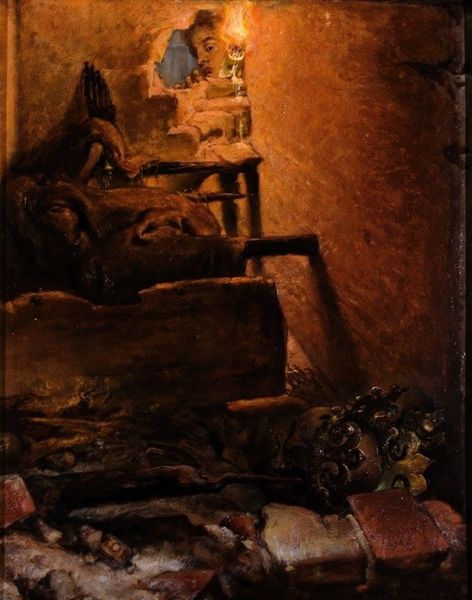
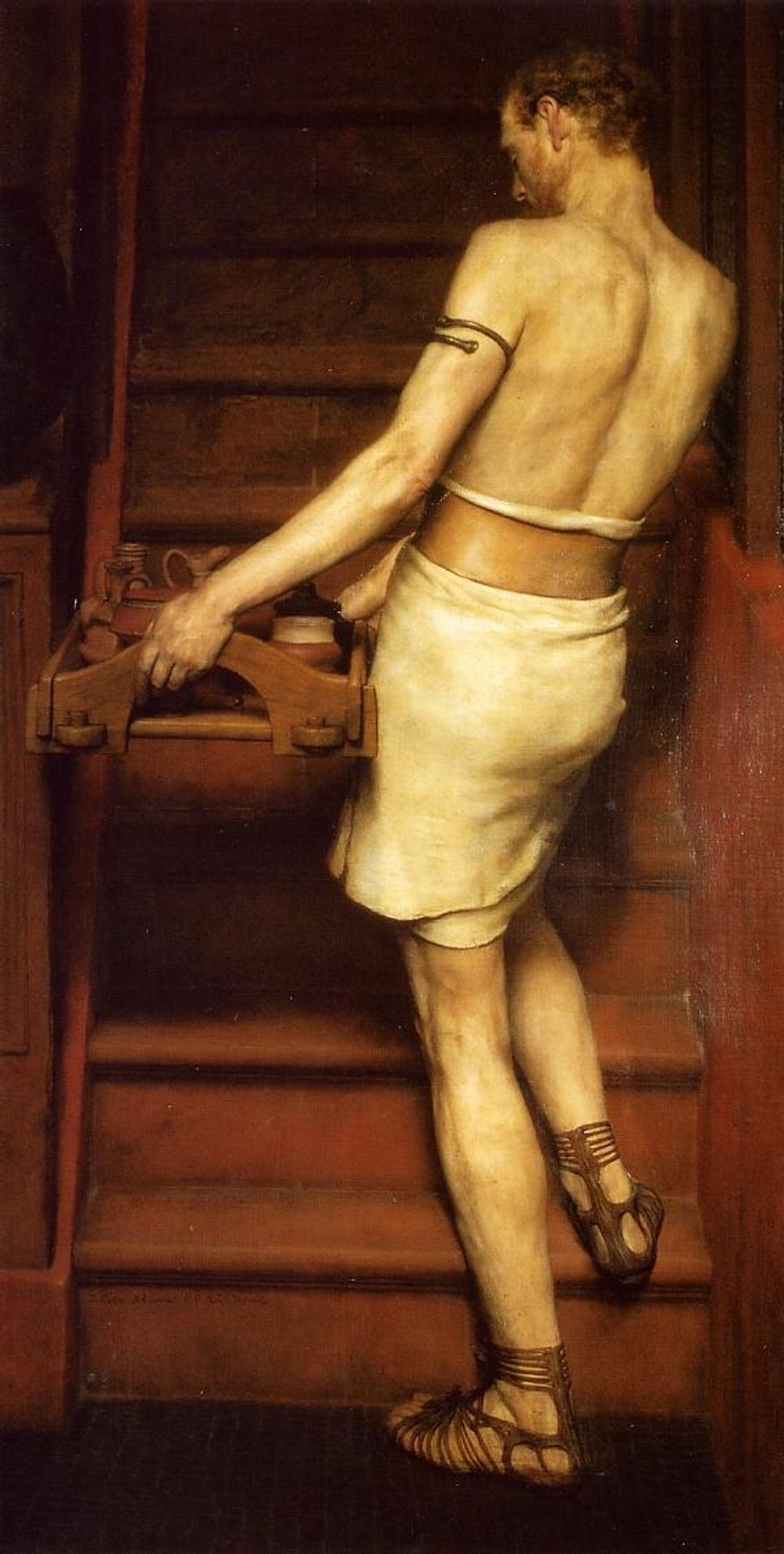
Lawrence Alma-Tadema painted "The Roman Potter" with oil on wood; its vertical form and careful composition encourage us to contemplate this scene of antiquity. The rich palette of earthy reds and browns creates a sense of warmth and intimacy, with the starkly lit figure of the potter drawing our eye. The artist's focus on form and structure lends itself to a semiotic interpretation. The staircase acts as a series of signs, each step a marker in a visual language which guides the potter's ascent. His upward climb can be seen as a metaphor for social mobility or personal betterment. We can read the clay vessels he carries as symbols of transformation, from raw material to objects of function and beauty. Alma-Tadema expertly utilizes color and shadow, inviting us to explore the deeper structures of meaning within the work. While the painting appears to capture a moment in time, it invites ongoing dialogue with history and culture.
The Roman Potter
1884


Artwork details
- Medium
- painting, oil-paint
- Location
- Musée d'Orsay, Paris, France
- Copyright
- Public domain
Tags
Comments
Share your thoughts
About this artwork
Lawrence Alma-Tadema painted "The Roman Potter" with oil on wood; its vertical form and careful composition encourage us to contemplate this scene of antiquity. The rich palette of earthy reds and browns creates a sense of warmth and intimacy, with the starkly lit figure of the potter drawing our eye. The artist's focus on form and structure lends itself to a semiotic interpretation. The staircase acts as a series of signs, each step a marker in a visual language which guides the potter's ascent. His upward climb can be seen as a metaphor for social mobility or personal betterment. We can read the clay vessels he carries as symbols of transformation, from raw material to objects of function and beauty. Alma-Tadema expertly utilizes color and shadow, inviting us to explore the deeper structures of meaning within the work. While the painting appears to capture a moment in time, it invites ongoing dialogue with history and culture.
Comments
Share your thoughts