About this artwork
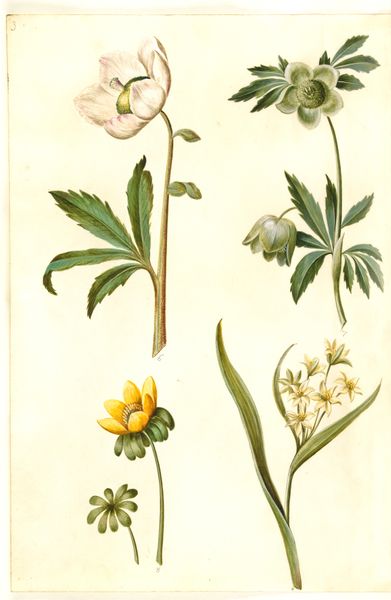
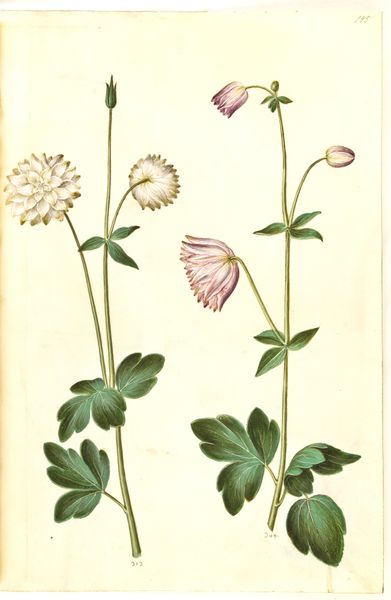
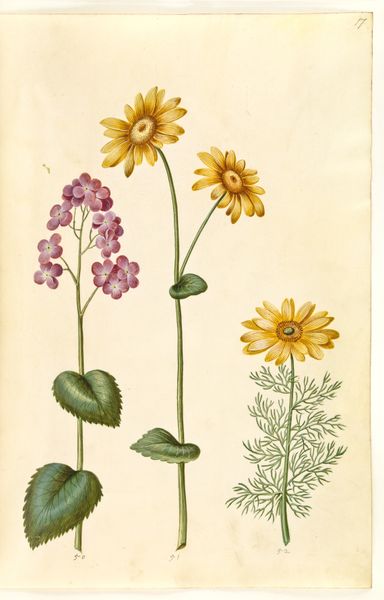
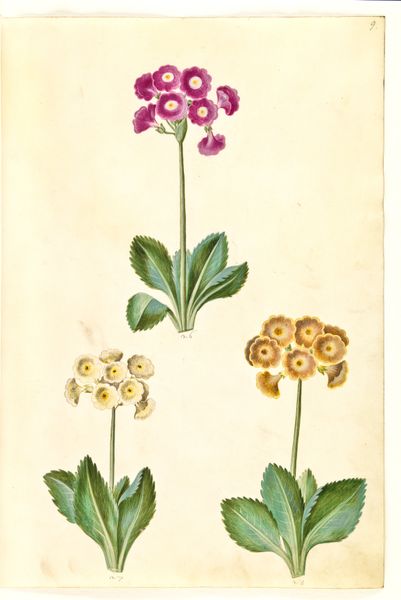
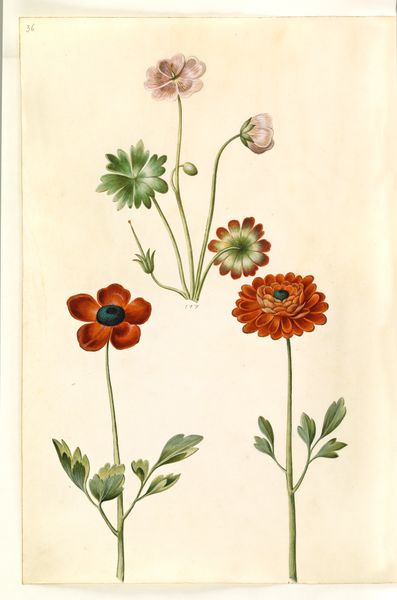
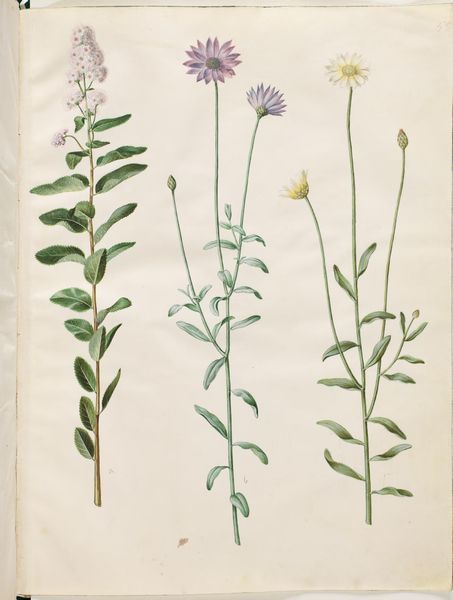
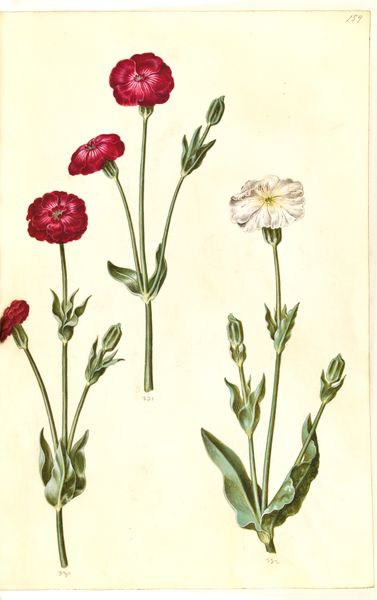
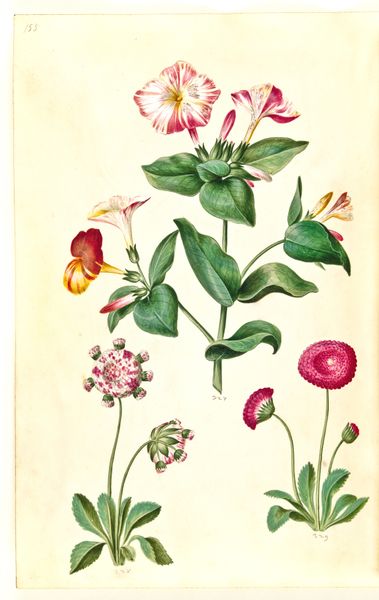
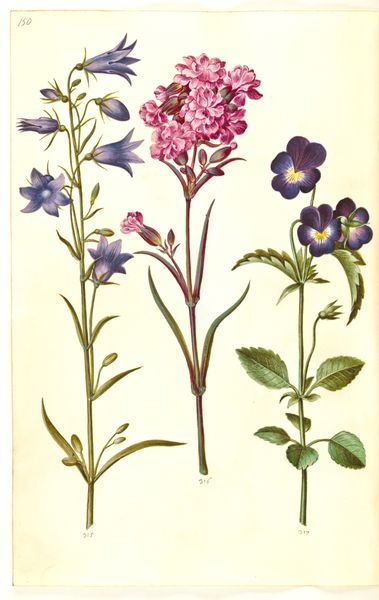
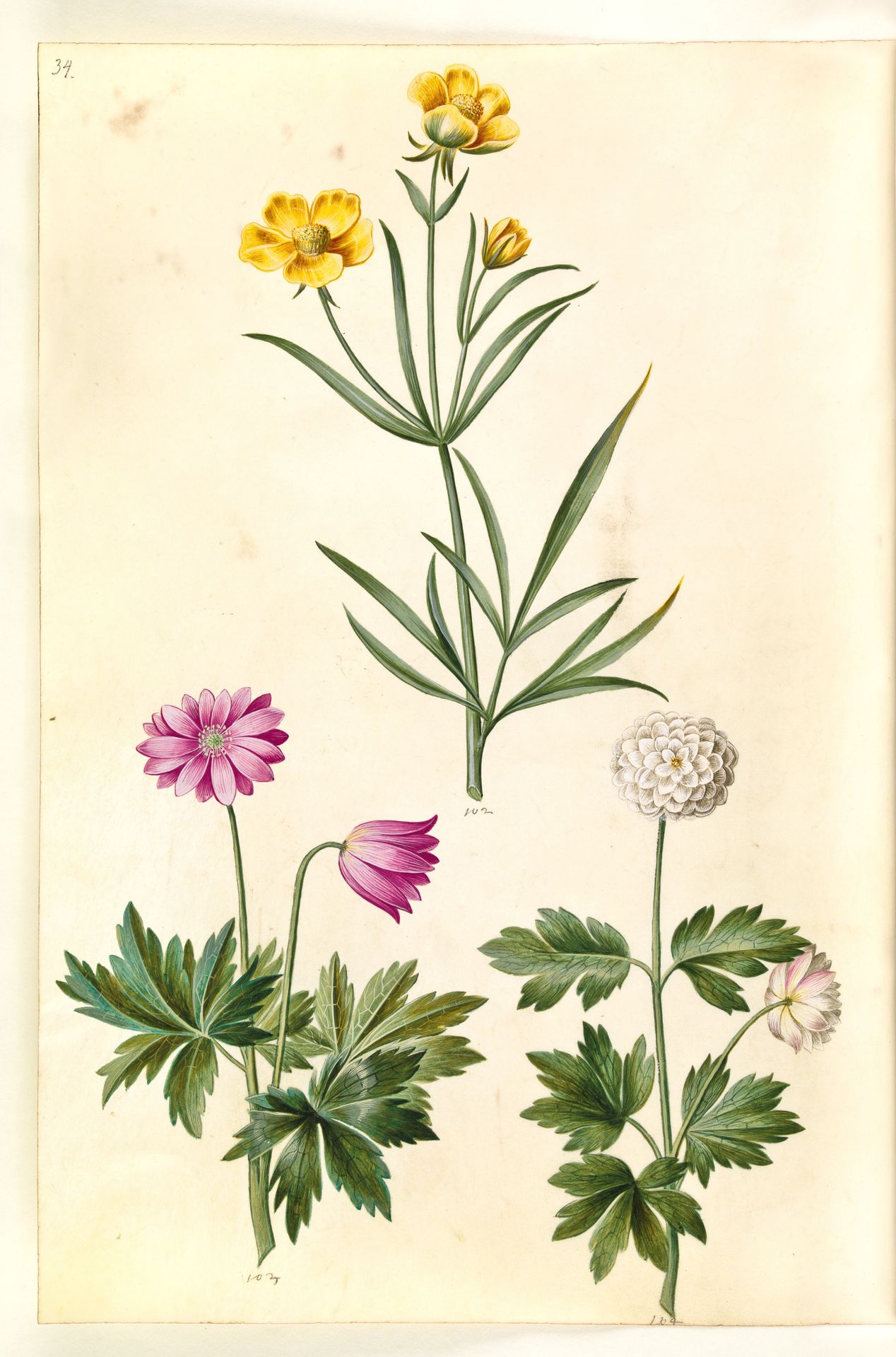
Hans Simon Holtzbecker rendered this botanical study of steppe-ranunkel and hvid anemone on paper. The image is defined by a clear, almost scientific structure, with each plant carefully positioned to allow detailed examination. Holtzbecker uses line and color to differentiate the species, with the ranunkel presented in vibrant yellows and greens, sharply contrasted against the softer pinks and whites of the anemone. The composition, organized vertically, creates a sense of order, yet the organic forms of the plants introduce a dynamic tension. Holtzbecker masterfully captures the textures of the leaves and petals, employing a precision that speaks to a deeper understanding of natural forms. This emphasis on detail and structure suggests a semiotic system where each element—color, shape, and arrangement—functions as a sign, conveying information about the plant's identity and characteristics. The interplay between scientific observation and aesthetic presentation highlights how art can challenge fixed meanings, inviting us to see nature through both a rational and an emotional lens.
Ranunculus illyricus (steppe-ranunkel); Anemone nemorosa (hvid anemone)
1635 - 1664


Artwork details
- Medium
- drawing, gouache, watercolor
- Dimensions
- 375 mm (height) x 265 mm (width) x 85 mm (depth) (monteringsmaal), 358 mm (height) x 250 mm (width) (bladmaal)
- Location
- SMK - Statens Museum for Kunst
Tags
Comments
Share your thoughts
About this artwork
Hans Simon Holtzbecker rendered this botanical study of steppe-ranunkel and hvid anemone on paper. The image is defined by a clear, almost scientific structure, with each plant carefully positioned to allow detailed examination. Holtzbecker uses line and color to differentiate the species, with the ranunkel presented in vibrant yellows and greens, sharply contrasted against the softer pinks and whites of the anemone. The composition, organized vertically, creates a sense of order, yet the organic forms of the plants introduce a dynamic tension. Holtzbecker masterfully captures the textures of the leaves and petals, employing a precision that speaks to a deeper understanding of natural forms. This emphasis on detail and structure suggests a semiotic system where each element—color, shape, and arrangement—functions as a sign, conveying information about the plant's identity and characteristics. The interplay between scientific observation and aesthetic presentation highlights how art can challenge fixed meanings, inviting us to see nature through both a rational and an emotional lens.
Comments
Share your thoughts