About this artwork
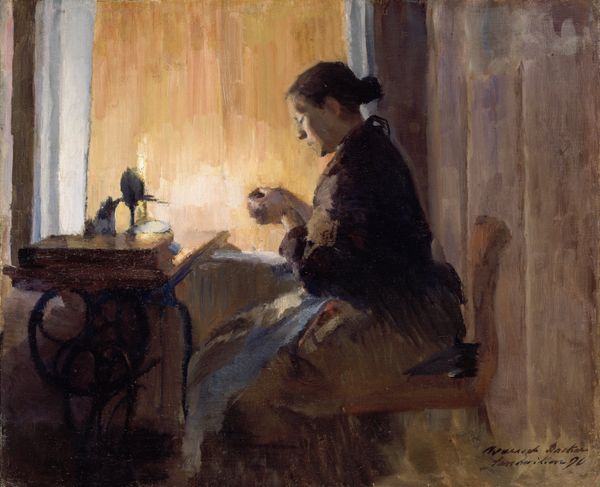
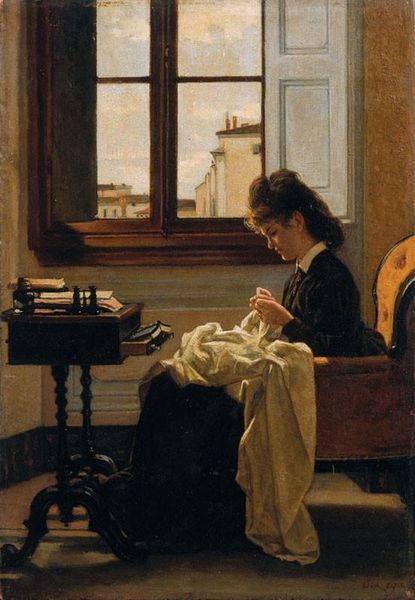
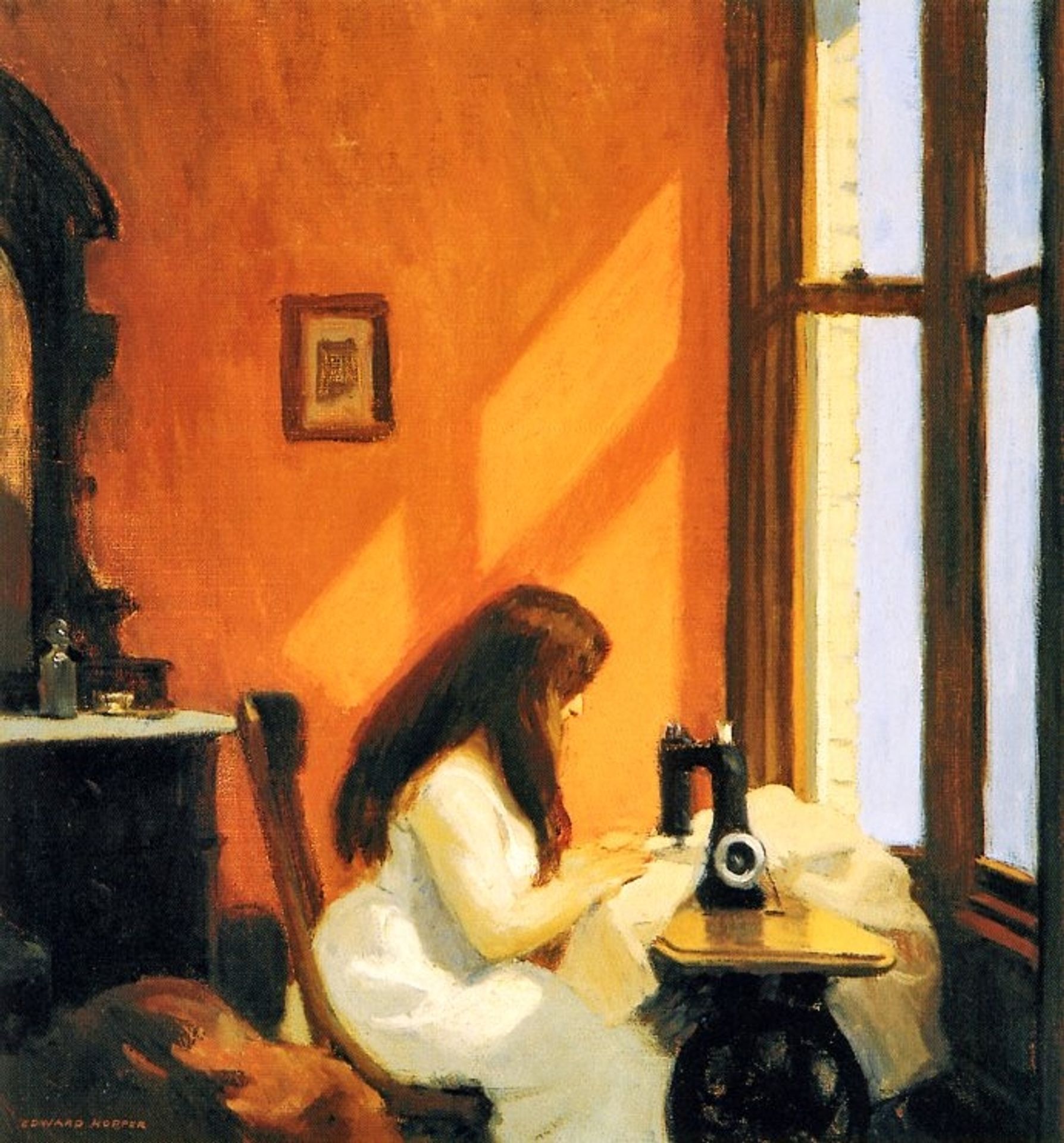
Edward Hopper made "Girl at a Sewing Machine," a painting with oil, sometime in the early part of the 20th century. Hopper’s paintings are just, well, masterful, and they achieve that through a complex orchestration of light, color, and form. Notice how the stark light rakes across the wall, a powerful diagonal slicing through the warm, muted oranges and yellows. It’s really the interplay of light and shadow that gives this piece its quiet drama. The paint application is interesting: it’s neither thickly impastoed nor completely smooth. You can see the brushstrokes, especially in the background, which gives it a kind of textured, handmade quality. The window is really a key part of the composition, it’s like a stage set for the figure. Hopper reminds me a little of someone like Vilhelm Hammershøi. Both artists use a muted palette and a sense of quiet introspection, but Hopper has a more American sensibility, a kind of directness that’s all his own.
Girl at a Sewing Machine
1921

Edward Hopper
1882 - 1967Location
Thyssen-Bornemisza Museum, Madrid, SpainArtwork details
- Dimensions
- 46 x 48 cm
- Location
- Thyssen-Bornemisza Museum, Madrid, Spain
- Copyright
- Public domain US
Tags
Comments
Share your thoughts
About this artwork
Edward Hopper made "Girl at a Sewing Machine," a painting with oil, sometime in the early part of the 20th century. Hopper’s paintings are just, well, masterful, and they achieve that through a complex orchestration of light, color, and form. Notice how the stark light rakes across the wall, a powerful diagonal slicing through the warm, muted oranges and yellows. It’s really the interplay of light and shadow that gives this piece its quiet drama. The paint application is interesting: it’s neither thickly impastoed nor completely smooth. You can see the brushstrokes, especially in the background, which gives it a kind of textured, handmade quality. The window is really a key part of the composition, it’s like a stage set for the figure. Hopper reminds me a little of someone like Vilhelm Hammershøi. Both artists use a muted palette and a sense of quiet introspection, but Hopper has a more American sensibility, a kind of directness that’s all his own.
Comments
Share your thoughts