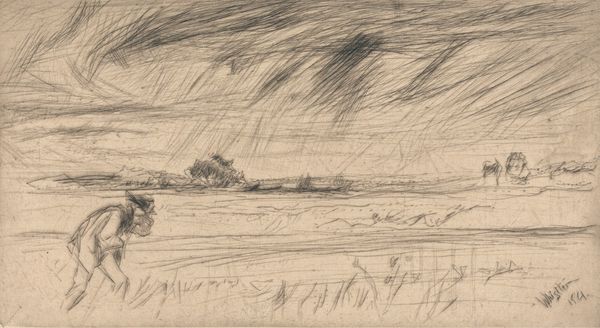
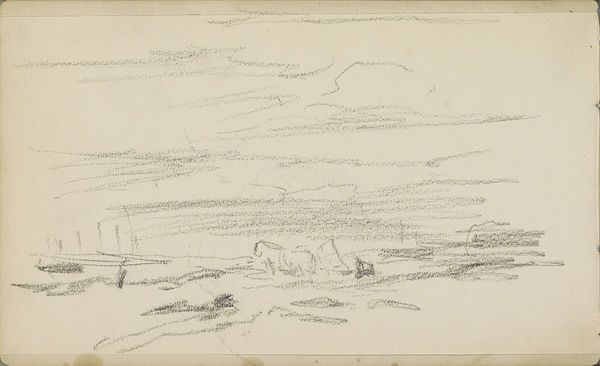
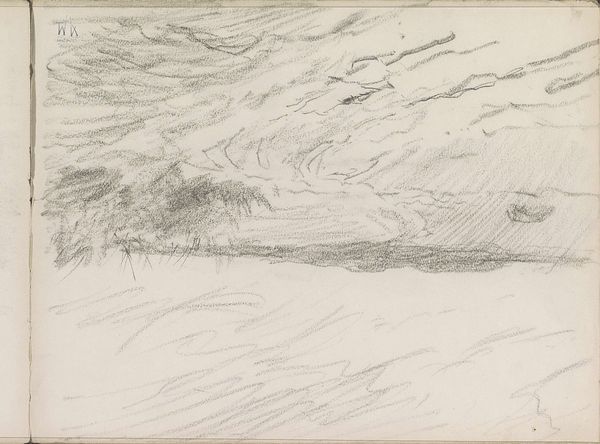
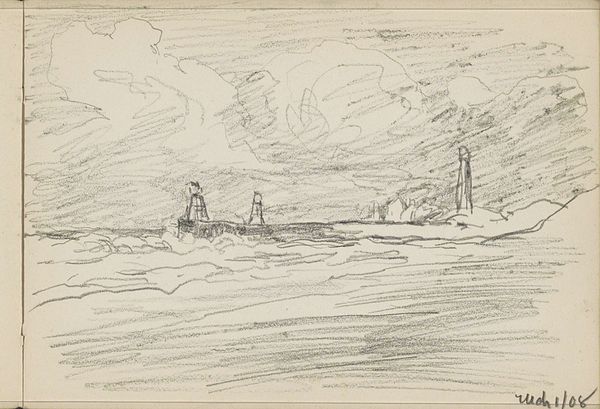
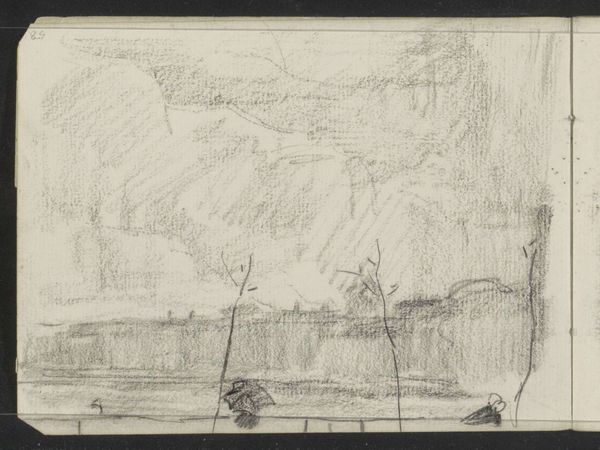
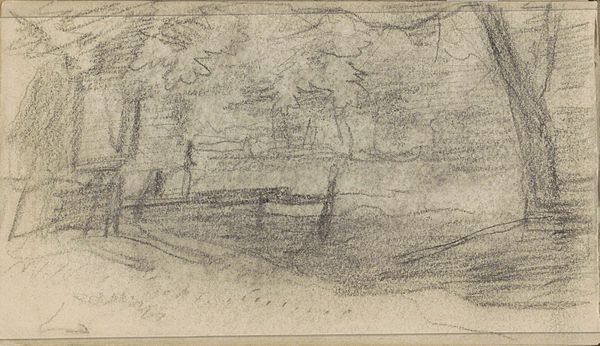
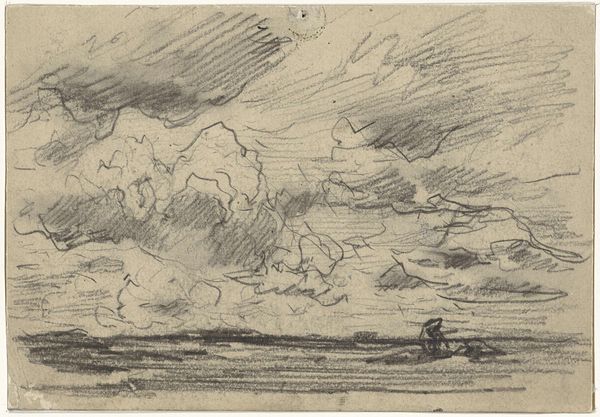
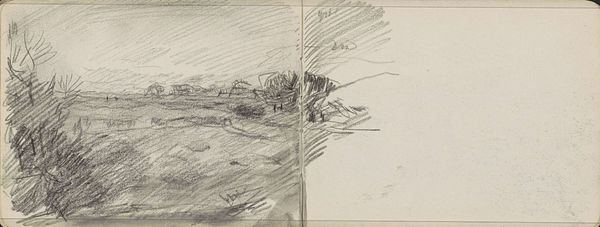
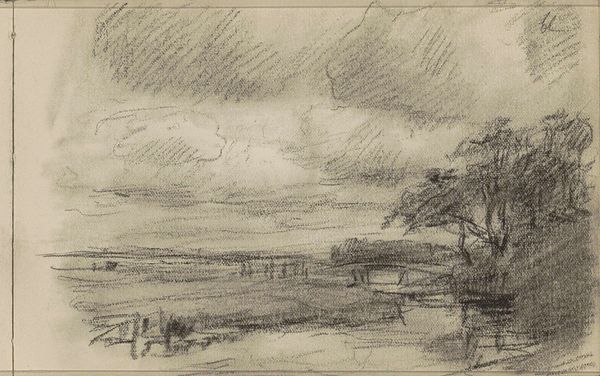
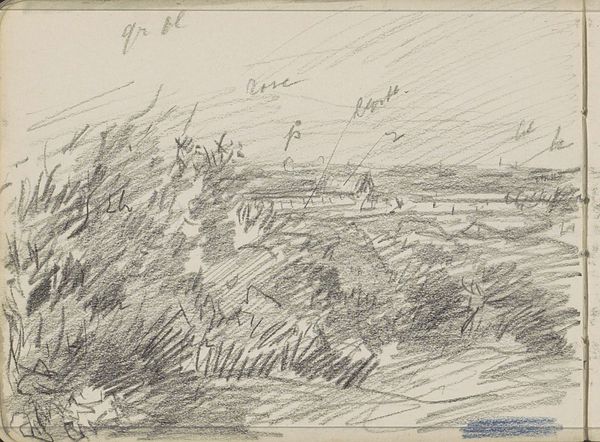
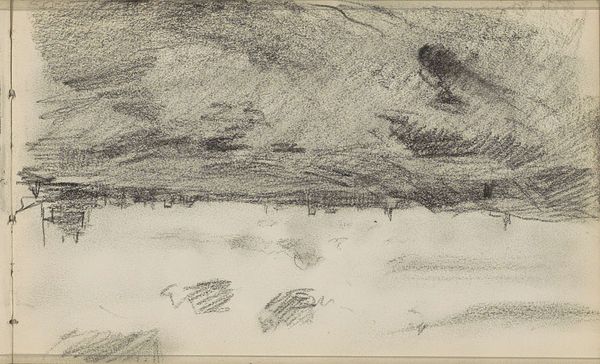
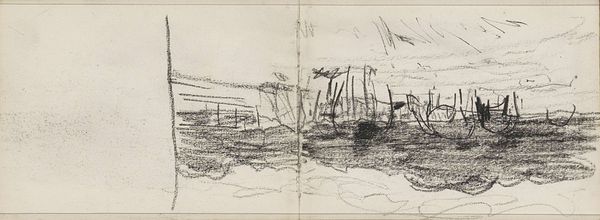
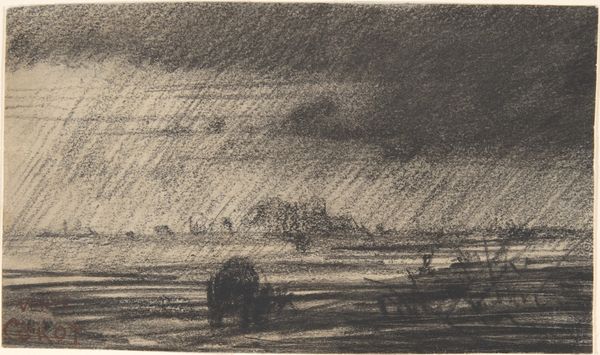
amateur sketch
toned paper
light pencil work
pen sketch
pencil sketch
incomplete sketchy
personal sketchbook
pen-ink sketch
sketchbook drawing
initial sketch
Copyright: Rijks Museum: Open Domain
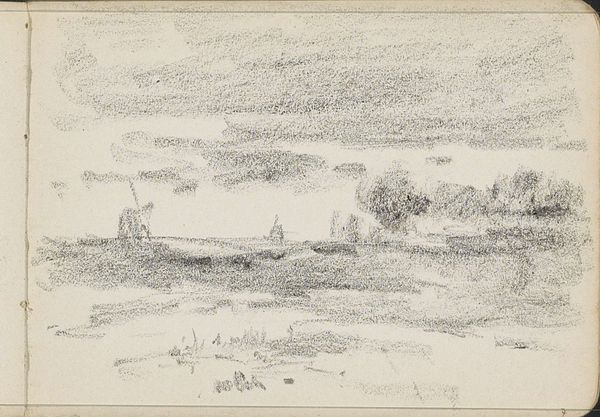
Johan Antonie de Jonge sketched this landscape with windmills using graphite on paper. The windmill, a symbol deeply woven into the Dutch identity, transcends its practical function. It represents not just the harnessing of nature but also the ingenuity and resilience of a people constantly battling the sea. We see echoes of this motif across art history, from the serene landscapes of Dutch Golden Age painters to its resurgence in Impressionism, where the windmill becomes a study in light and atmosphere. Consider how the windmill, initially a symbol of economic and environmental mastery, evolves into a vehicle for exploring perception and emotion. This transformation reveals how cultural memory imprints itself onto symbols. It's as if the collective subconscious recognizes the familiar form of the windmill, associating it with ancestral perseverance, while the artist reinterprets it through the lens of individual experience. This cyclical return and reinvention highlight the dynamic relationship between cultural symbols and the human psyche.
Comments
No comments
Be the first to comment and join the conversation on the ultimate creative platform.
 React
React Comment