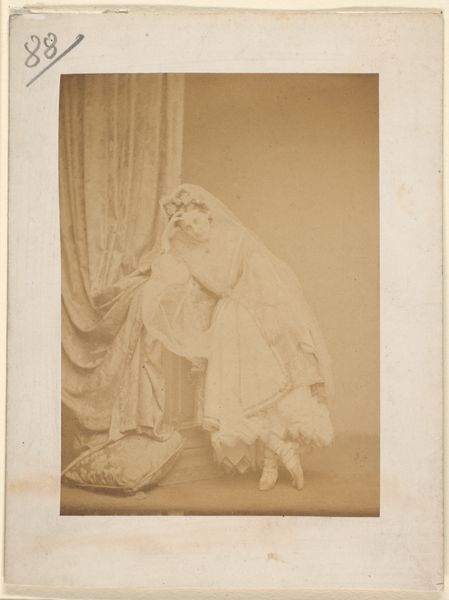
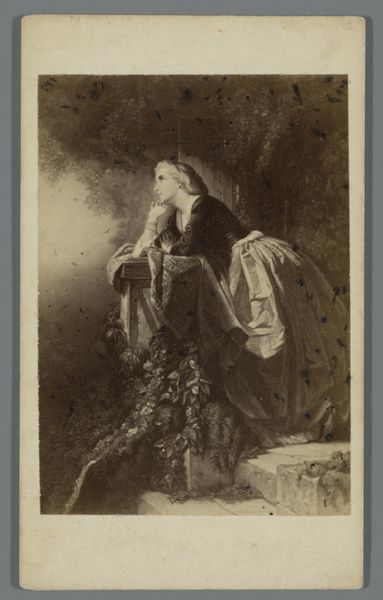
![[La Comtesse in robe de piqué or as Judith (?)] by Pierre-Louis Pierson](/_next/image?url=https%3A%2F%2Fd2w8kbdekdi1gv.cloudfront.net%2FeyJidWNrZXQiOiAiYXJ0ZXJhLWltYWdlcy1idWNrZXQiLCAia2V5IjogImFydHdvcmtzL2U3MjQ0NjZiLTk2NTgtNDg3Yi1iMjkzLWQ0MWEyZThkODc2Ni9lNzI0NDY2Yi05NjU4LTQ4N2ItYjI5My1kNDFhMmU4ZDg3NjZfZnVsbC5qcGciLCAiZWRpdHMiOiB7InJlc2l6ZSI6IHsid2lkdGgiOiAxOTIwLCAiaGVpZ2h0IjogMTkyMCwgImZpdCI6ICJpbnNpZGUifX19&w=3840&q=75)
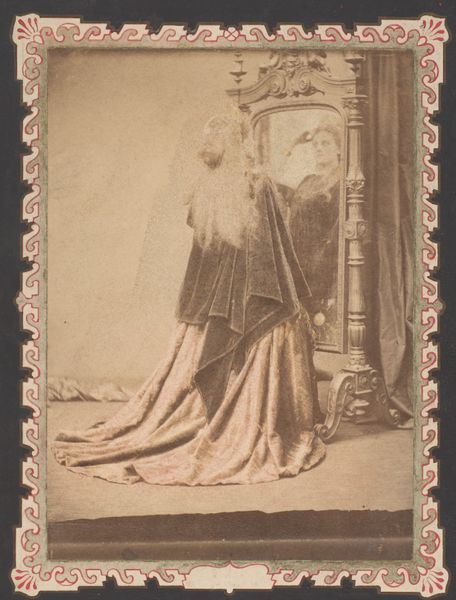
[La Comtesse in robe de piqué or as Judith (?)] 1860s
0:00
0:00


Dimensions: 12.4 x 8.7 cm (4 7/8 x 3 7/16 in.)
Copyright: Public Domain
Curator: Look at this intriguing portrait from the 1860s by Pierre-Louis Pierson, currently held at the Metropolitan Museum of Art. It is thought to depict La Comtesse, and the title includes the alternate, suggestive possibility that it might actually be Judith. It's executed in watercolor. Editor: There's an immediate feeling of fragility about it. The washes of color are so delicate, and she appears lost in thought, almost melancholy. The whole piece seems intentionally ephemeral, light. Curator: Yes, and Pierson's subject, if indeed it is the Comtesse, was a prominent figure within the French court of Napoleon III. He would later create iconic images of her together with the Count in carefully staged propaganda photography promoting their reign and wealth. But you have to consider how this image pre-dates their ascension to true royalty; perhaps she’s weighed down by social expectations. Editor: It’s fascinating to consider that this is a watercolor because we associate Pierson mostly with photographs, not the more painstaking medium of painting. There’s an interesting interplay between what feels spontaneous—the flowing watercolor—and the almost obsessive detail on the gown and veil, and their texture. You know how important attire was back then. Curator: Absolutely. The rendering of her dress signals her elite social standing. The level of material production that went into something like lace suggests an enormous level of social labor to maintain even basic displays of class difference. Editor: The color palette, too, plays into that feeling of melancholic beauty. The muted greens and golds lend the portrait a sense of quiet opulence but also, I'd say, some ambiguity. The heavy shadow makes me consider Pierson’s relationship with Romanticism and the use of the portrait as a method of emotional and even historical narrative. Curator: True. The way she’s posed as Judith, for instance, brings forward all sorts of historical parallels of a more serious note to what appears to be at first a piece made for gentle, quiet appreciation. Editor: It makes me appreciate, on the one hand, how materials are linked inextricably to societal power and prestige and on the other, that this image can still project feelings that we respond to on a much deeper level now, 150 years later. Curator: Indeed. I'll be considering Pierson's choice of Judith a little further. It throws quite a dramatic twist into his practice of art-making overall.
Comments
No comments
Be the first to comment and join the conversation on the ultimate creative platform.
 Collect
 React
React Comment
More like this