
Curatorial notes
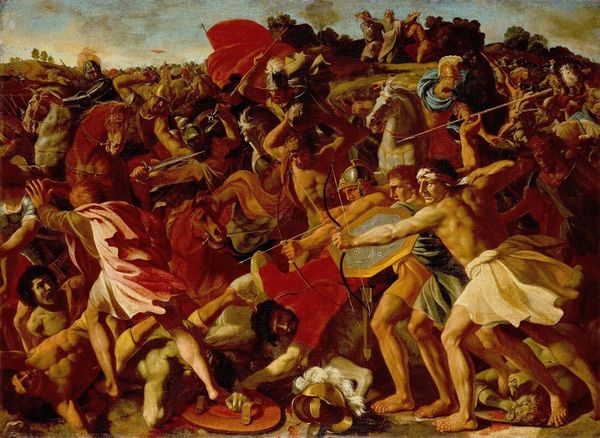
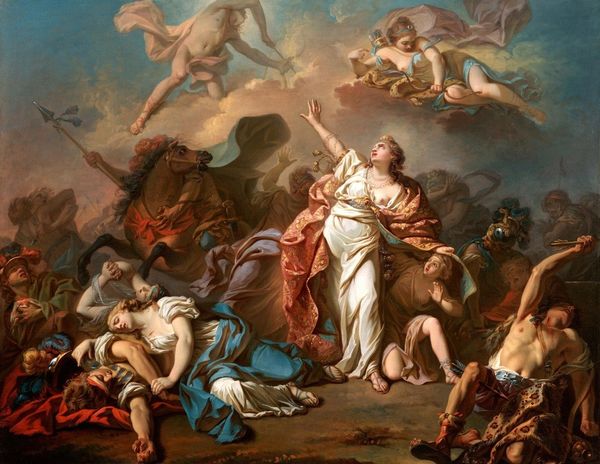
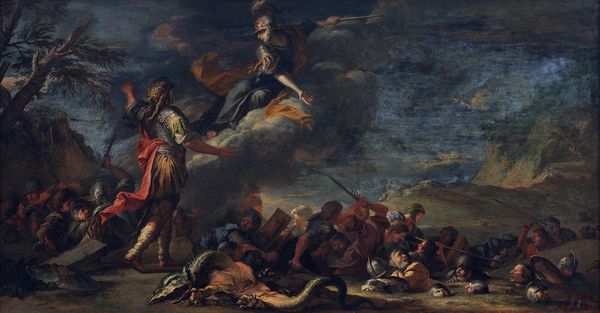
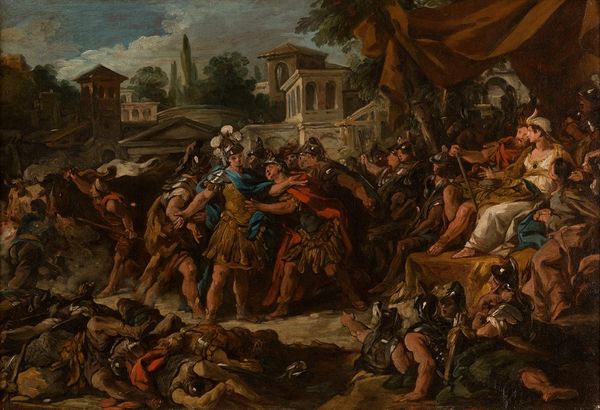
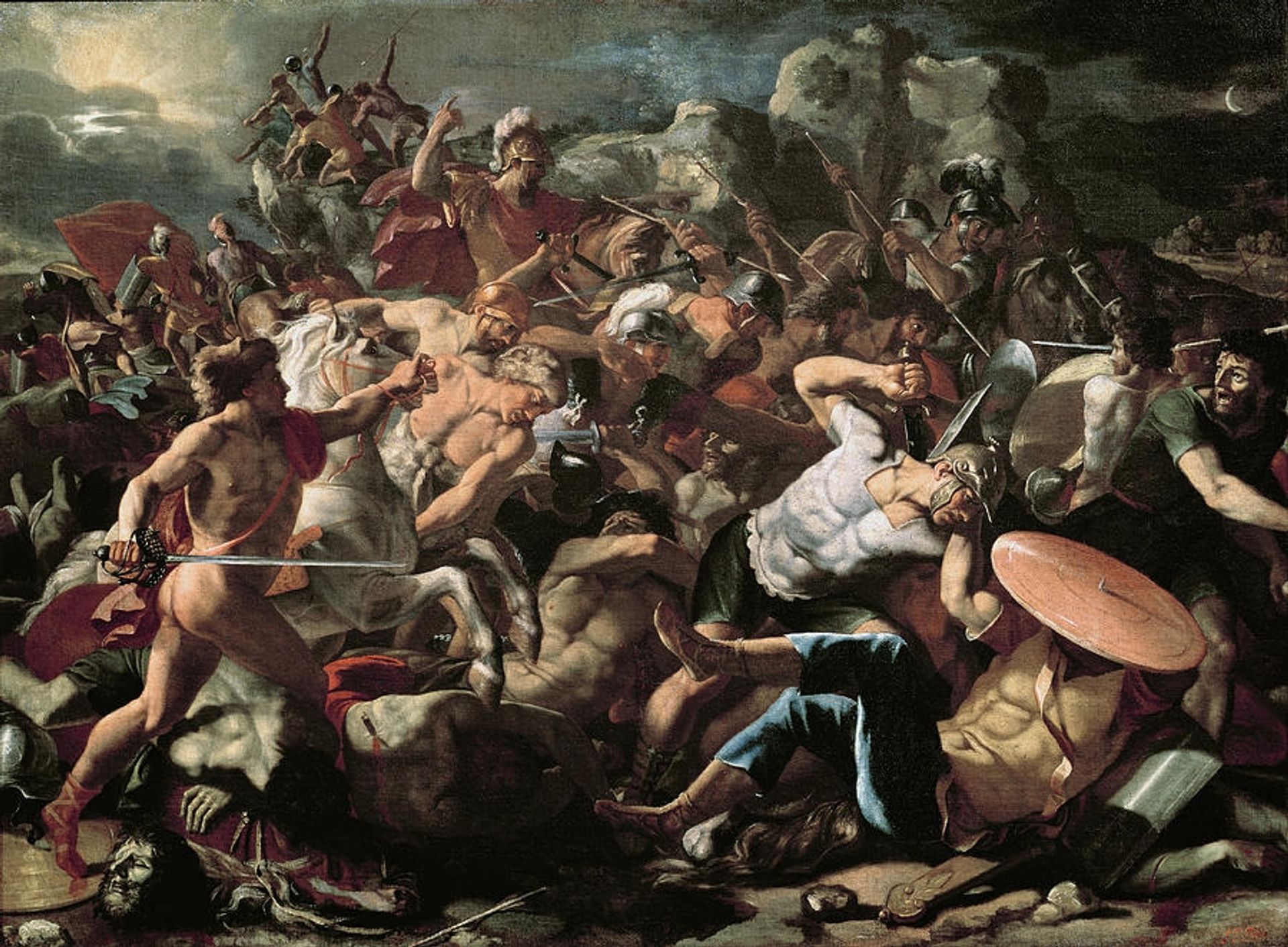
Editor: Here we have a painting titled "The Battle" by Nicolas Poussin. It’s oil on canvas, and it depicts, well, a battle! I’m immediately struck by the sheer chaos and violence. What can you tell me about how this work reflects the world around Poussin? Curator: Poussin was deeply influenced by the political and religious turmoil of 17th-century Europe, particularly the Thirty Years' War. Consider the social context: powerful nations vying for dominance, religious factions in conflict. Do you see how that larger sense of disorder is distilled into this scene? Editor: Absolutely, the figures are intertwined, almost indistinguishable from each other. Was Poussin commenting on the futility of war or something? Curator: Possibly. Look closely at how Poussin constructs the composition. It isn't just a scene of mayhem. The painting is rooted in a revival of classical artistic ideals which itself speaks to a particular intellectual and cultural moment. How does that emphasis on form complicate a straightforward reading of the painting as simply a statement about the horrors of war? Editor: So, it's less about documenting a specific event and more about exploring larger ideas about order and chaos, within a society that itself valued such classical ideals? The way conflict upends traditional notions of order. Curator: Precisely! The bodies are rendered with anatomical precision, echoing ancient sculptures, but they are engaged in utterly savage behavior. Poussin is using classical form to frame something much more disruptive. Editor: It makes you wonder about how art and power were so intertwined in this period, even a scene of destruction becomes another expression of it. Thank you. Curator: My pleasure. Considering how art uses visual form to reflect the anxieties and ambitions of an era offers great insight.