About this artwork
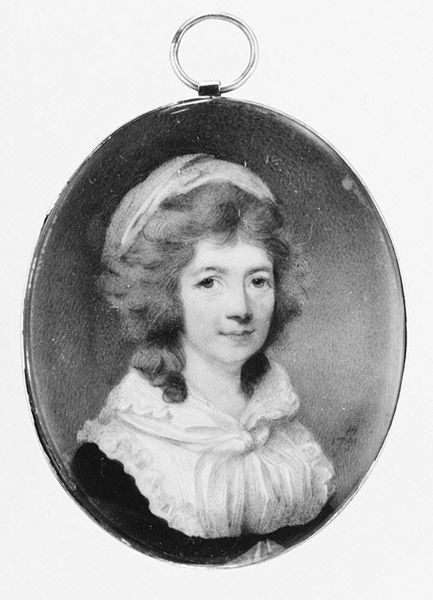
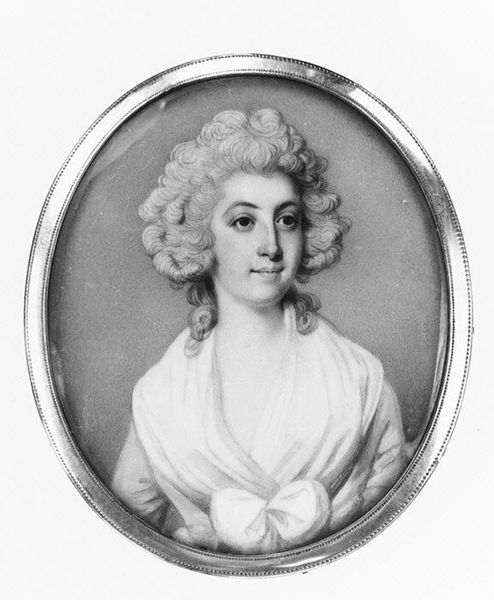
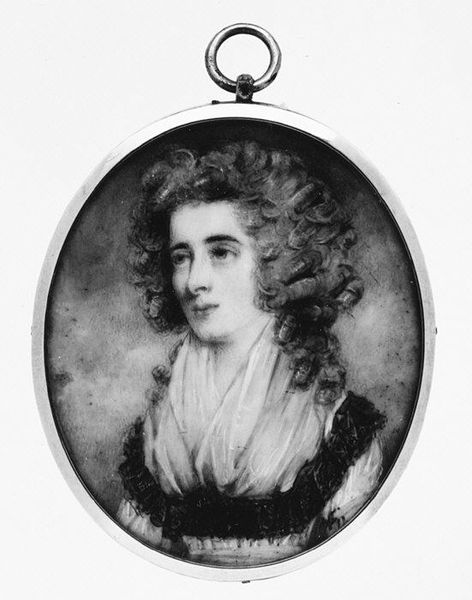
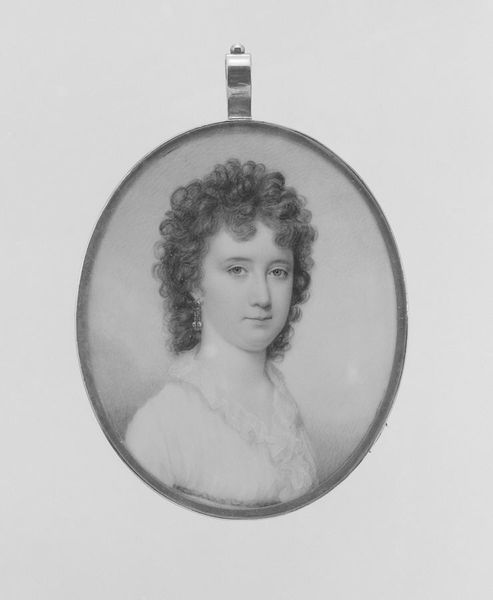
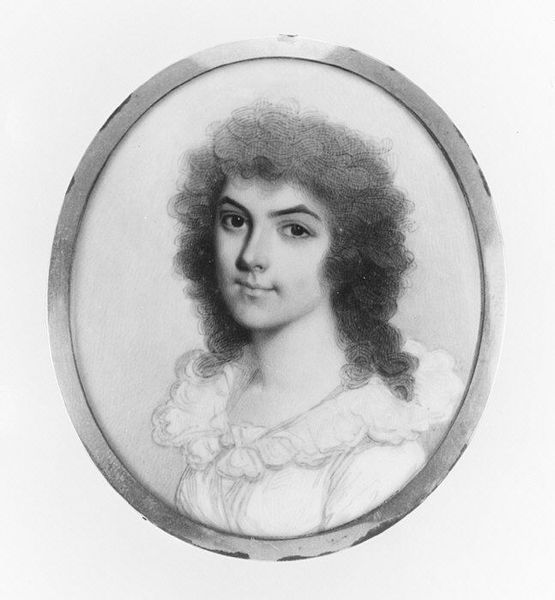
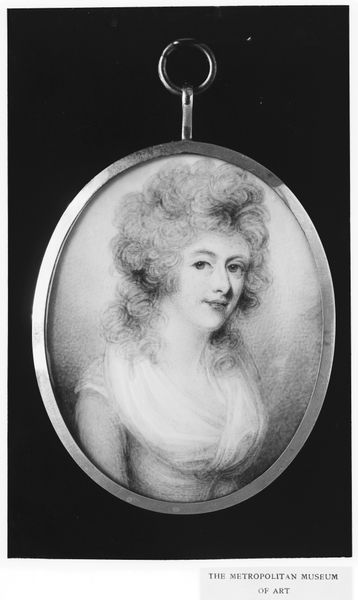
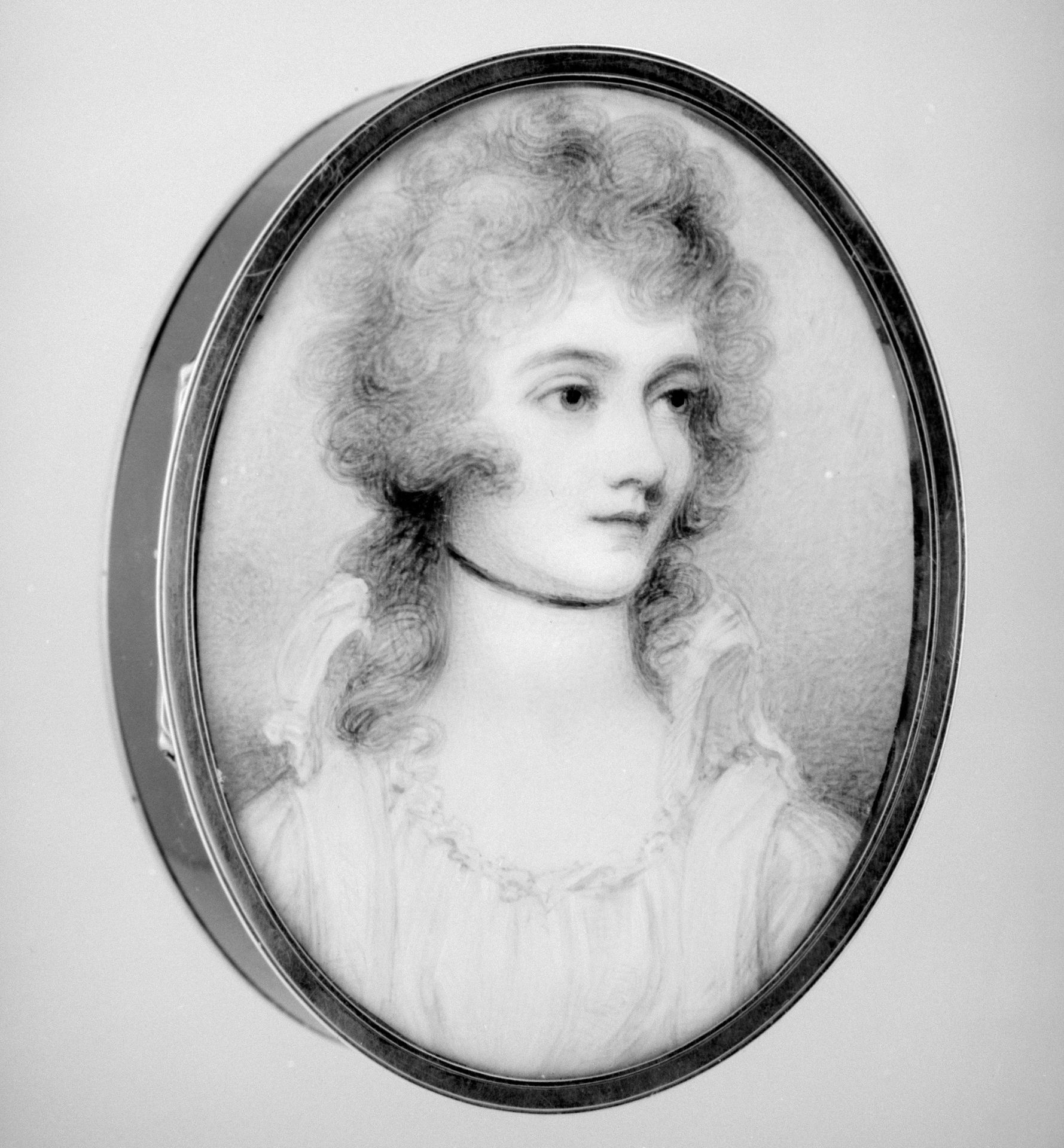
Editor: This is a miniature portrait from between 1785 and 1795, potentially depicting Barbara, Marchioness of Donegall, and painted by Anne Foldsone Mee. The piece seems very contained and almost austere, despite the subject’s elaborate hair. What draws your eye in this work? Curator: The careful composition first. Observe the oval format, mirroring the subject's face, and the restrained palette. Note the delicate hatching, building up tonal variations on her face. Editor: The hatching is incredibly fine, almost invisible unless you’re right up close. It seems very precise. Curator: Precisely! The artist’s control of line and form is the most striking aspect. The softness is achieved through technique, not merely mood. Her face almost seems modeled three dimensionally. This is accomplished not only by skillful lines, but light as well. The reflection, if you will. This element suggests more complex interplay. Editor: So, the subject isn't so much a romanticized figure as a study in form and technique? Curator: Indeed. While Romanticism may inform the subject, the real interest, for me, lies in Mee’s rendering of structure using minimal tonal contrast. Editor: I see it now! Looking closely reveals so much more about Mee’s skill. Thanks for sharing that insight! Curator: My pleasure. Visual language and intention come into sharper focus through that attention to artistic strategy, the core visual experience.
Portrait of a Woman, Possibly Barbara (1768–1829), Marchioness of Donegall
1785 - 1795


Artwork details
- Medium
- painting
- Dimensions
- Oval, 2 7/8 x 2 1/8 in. (73 x 53 mm)
- Location
- Metropolitan Museum of Art, New York, NY
- Copyright
- Public Domain
Tags
Comments
Share your thoughts
About this artwork
Editor: This is a miniature portrait from between 1785 and 1795, potentially depicting Barbara, Marchioness of Donegall, and painted by Anne Foldsone Mee. The piece seems very contained and almost austere, despite the subject’s elaborate hair. What draws your eye in this work? Curator: The careful composition first. Observe the oval format, mirroring the subject's face, and the restrained palette. Note the delicate hatching, building up tonal variations on her face. Editor: The hatching is incredibly fine, almost invisible unless you’re right up close. It seems very precise. Curator: Precisely! The artist’s control of line and form is the most striking aspect. The softness is achieved through technique, not merely mood. Her face almost seems modeled three dimensionally. This is accomplished not only by skillful lines, but light as well. The reflection, if you will. This element suggests more complex interplay. Editor: So, the subject isn't so much a romanticized figure as a study in form and technique? Curator: Indeed. While Romanticism may inform the subject, the real interest, for me, lies in Mee’s rendering of structure using minimal tonal contrast. Editor: I see it now! Looking closely reveals so much more about Mee’s skill. Thanks for sharing that insight! Curator: My pleasure. Visual language and intention come into sharper focus through that attention to artistic strategy, the core visual experience.
Comments
Share your thoughts