About this artwork
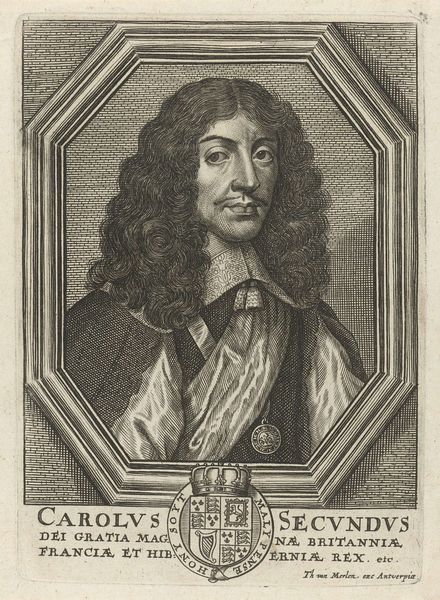
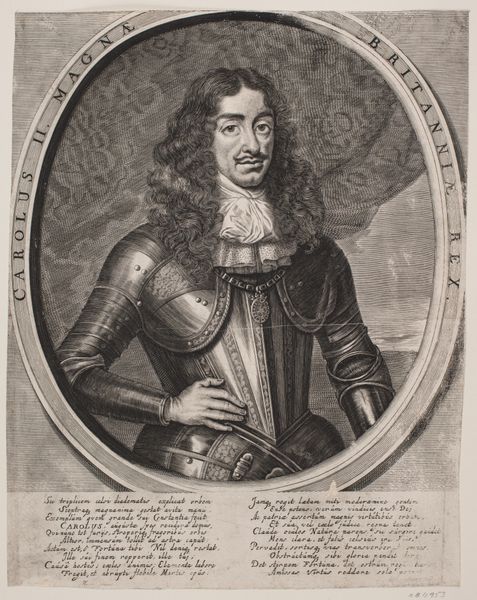
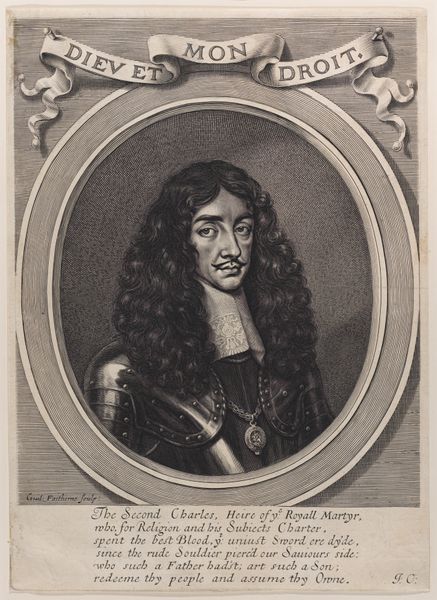
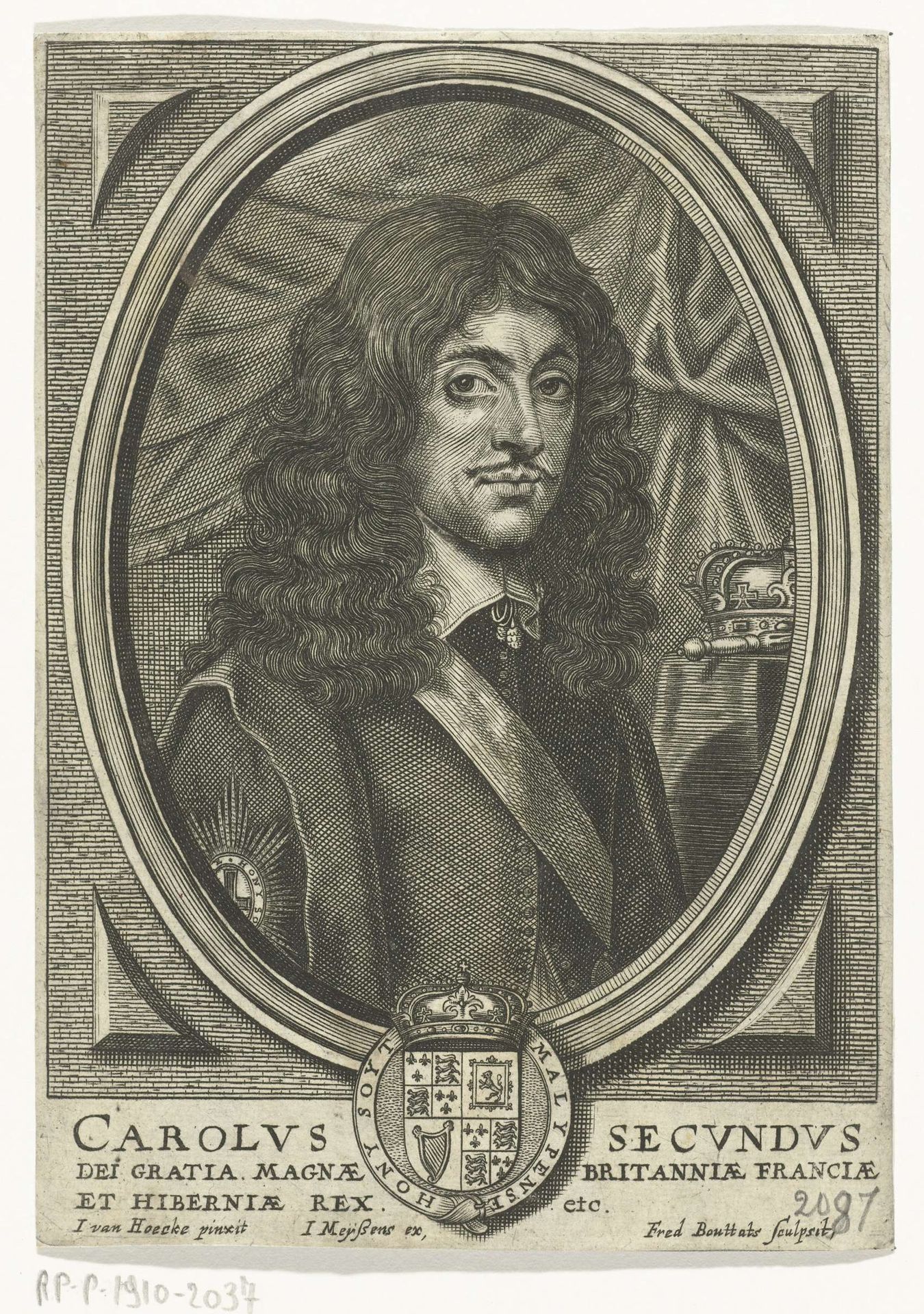
This engraving depicts Charles II of England and was created by Frederik Bouttats, who was active in the 17th century. This portrait offers a glimpse into the complexities of identity and power during a period of monarchy and upheaval. Consider the weight of Charles's position, symbolized by the crown subtly placed behind him, as well as the emblems of royalty emblazoned at the bottom. His gaze, though poised, may hint at the tensions of his reign, marked by political and religious conflict. Bouttats, as the artist, navigates the politics of representation, contributing to the construction of royal authority. Such portraits served not only as representations but also as tools of power, shaping the perception of rulers. Take a moment to consider the portrait's delicate balance between personal expression and the performance of sovereignty. How might we interpret this image through the lenses of class, gender, and the intersection of power and representation?
Portret van Karel II van Engeland
1649 - 1676

Frederik (I) Bouttats
1590 - 1661Location
RijksmuseumArtwork details
- Medium
- etching, intaglio, engraving
- Dimensions
- height 163 mm, width 115 mm
- Location
- Rijksmuseum
- Copyright
- Rijks Museum: Open Domain
Tags
Comments
Share your thoughts
About this artwork
This engraving depicts Charles II of England and was created by Frederik Bouttats, who was active in the 17th century. This portrait offers a glimpse into the complexities of identity and power during a period of monarchy and upheaval. Consider the weight of Charles's position, symbolized by the crown subtly placed behind him, as well as the emblems of royalty emblazoned at the bottom. His gaze, though poised, may hint at the tensions of his reign, marked by political and religious conflict. Bouttats, as the artist, navigates the politics of representation, contributing to the construction of royal authority. Such portraits served not only as representations but also as tools of power, shaping the perception of rulers. Take a moment to consider the portrait's delicate balance between personal expression and the performance of sovereignty. How might we interpret this image through the lenses of class, gender, and the intersection of power and representation?
Comments
Share your thoughts