before 1892
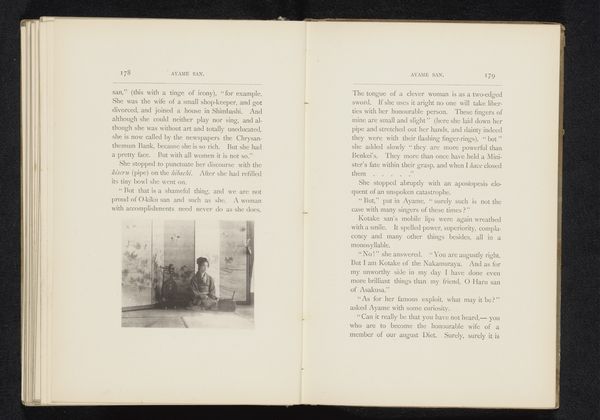
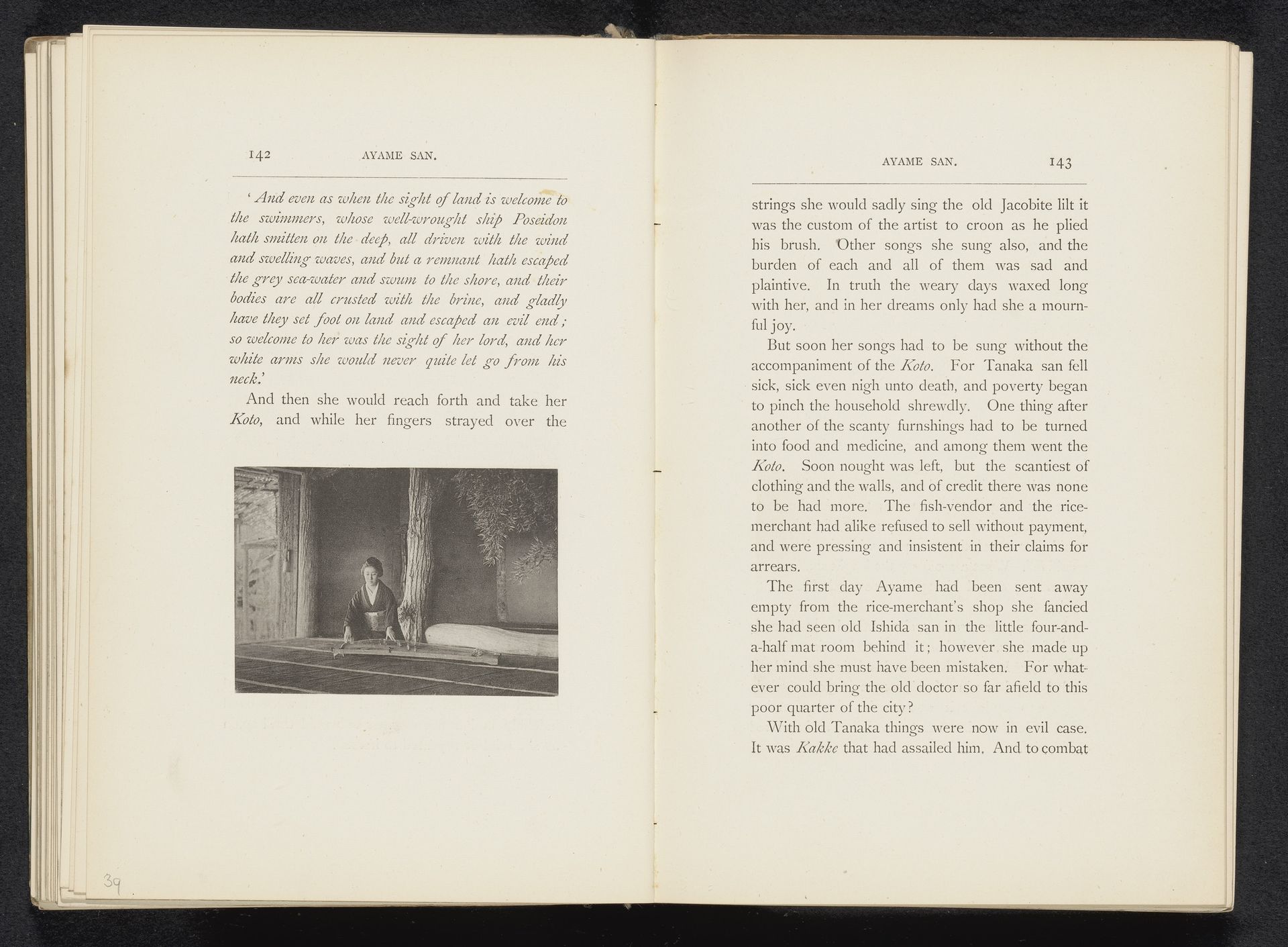
Vrouw speelt de koto in een interieur

Listen to curator's interpretation
Curatorial notes
This monochrome image, found in a book by William Kinnimond Burton, depicts a woman playing the koto, a traditional Japanese stringed instrument. The koto, with its elongated form and multiple strings, symbolizes harmony and refinement, embodying a connection to cultural heritage. The presence of a musical instrument brings to mind instruments in classical European paintings such as the lute or lyre, which served as symbols of harmony, order, and civilization, reflecting an aspiration toward higher cultural values. The gestures involved in playing are also important. Note that the koto player's hands are actively engaged, suggesting themes of creation and cultural expression. Throughout art history, the hand has been seen as an expressive agent. Such recurring motifs engage viewers on a deep, subconscious level. The koto and the hand both connect to a symbolic, non-linear cyclical progression, as they have resurfaced, evolved, and taken on new meanings in different historical contexts.