About this artwork
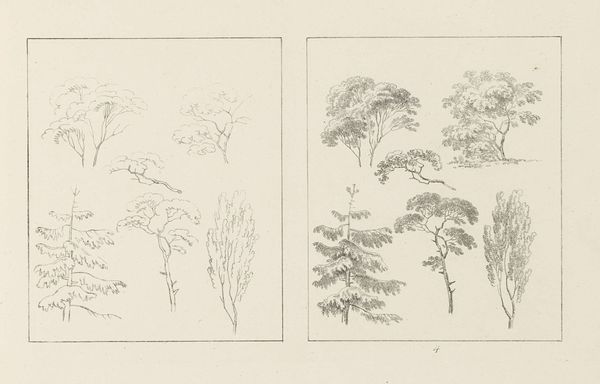
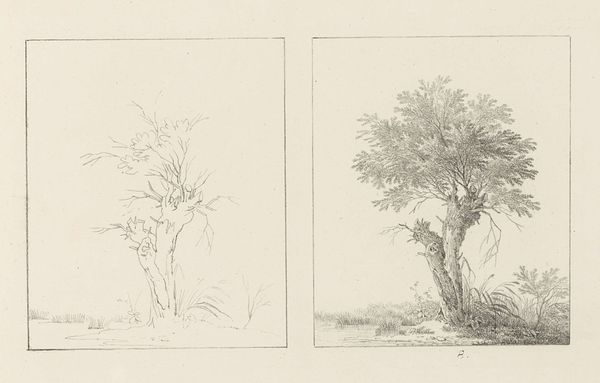
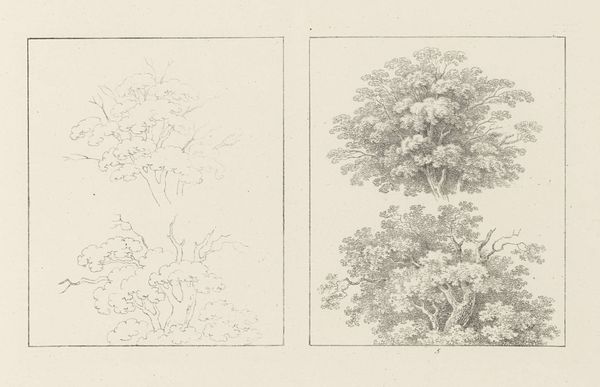
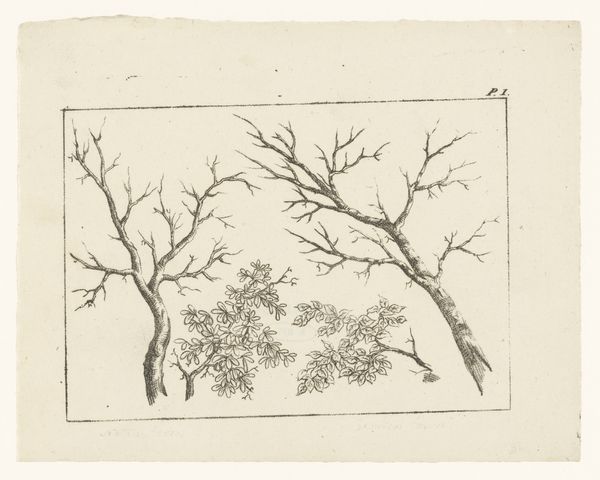
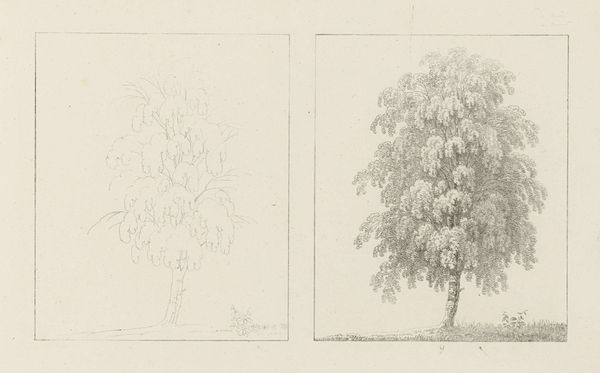
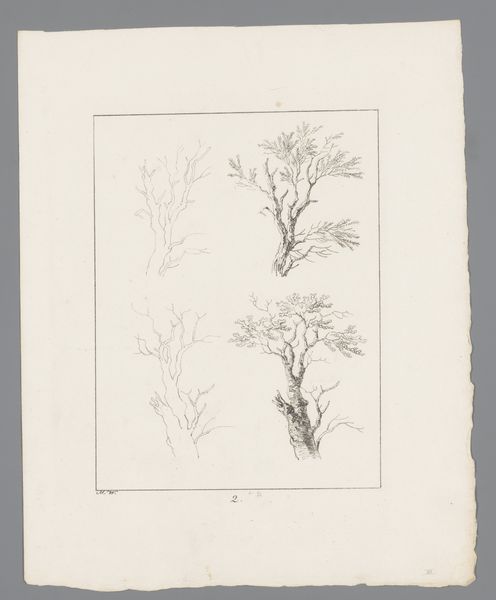
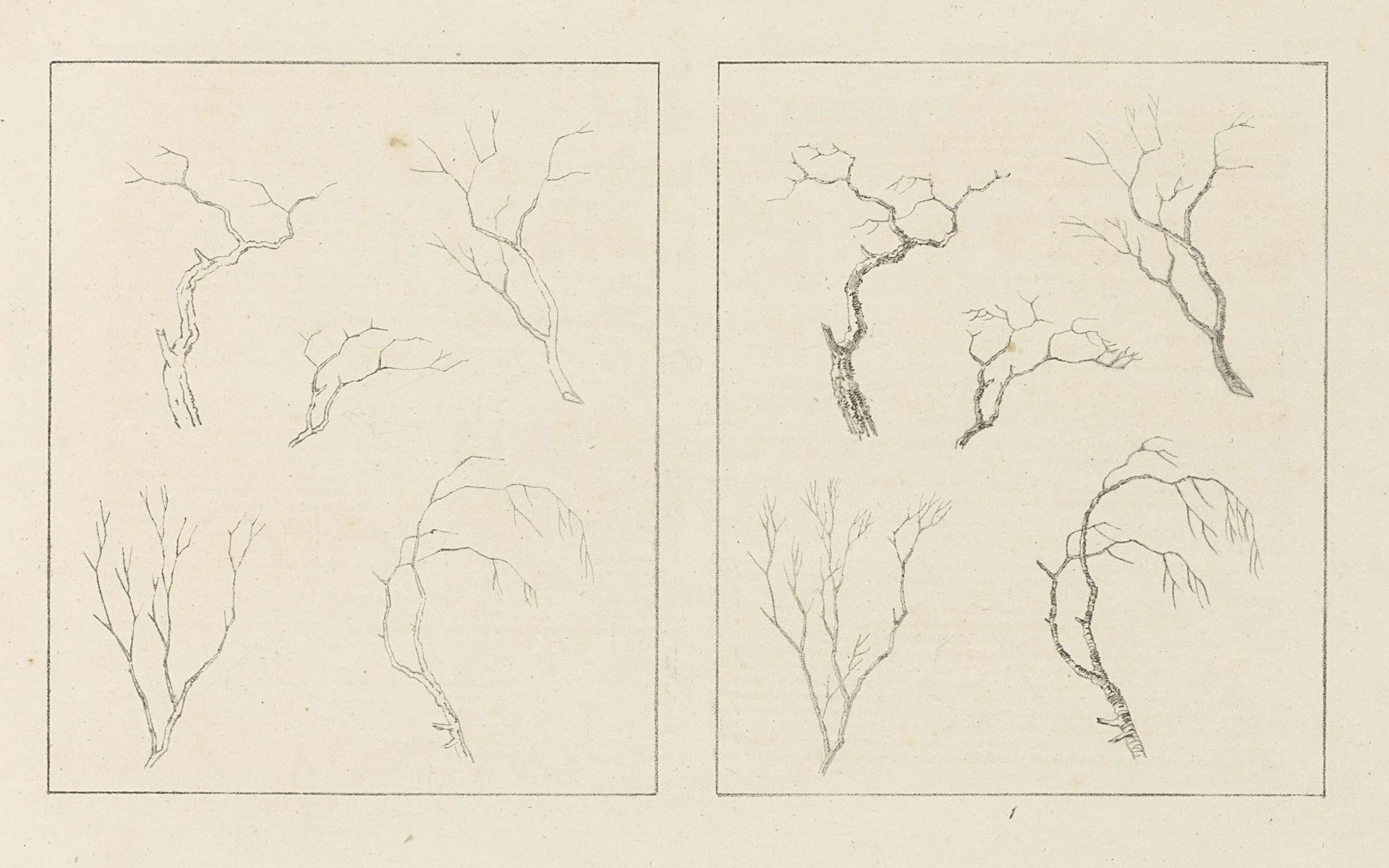
Editor: So, here we have Max Josef Wagenbauer’s "Albumblad met twee voorstellingen van kale boomtakken; links het ontwerp, rechts de uitvoering" from 1816, a drawing in pencil and etching on paper. The bare branches feel quite stark and vulnerable. What do you see in this piece? Curator: What strikes me is the duality presented—not just design versus execution, but the vulnerability of these skeletal trees as a stark mirror to the social climate of 1816. This was a year after the end of the Napoleonic Wars, a period marked by widespread famine and disease. Does seeing these branches, so meticulously rendered, evoke any of that in your mind? Editor: I hadn't considered the socio-political context. Knowing that makes me see them differently – less like simple studies and more like… emblems of resilience, perhaps? Curator: Precisely. The artist chooses to depict these stark, reaching forms. Considering this choice in light of the societal struggles, can we interpret them as a testament to the persistence of life, even in its most diminished state? Think of marginalized communities then and now - do you find resonance there? Editor: I think so. The drawing almost becomes a commentary on survival. That duality between left and right takes on new meaning as design becomes something forged in struggle, maybe? Curator: Exactly! And how does the act of depiction itself play a role? Wagenbauer chooses drawing and etching—methods demanding precision. Can we view that meticulousness as a form of honoring something so easily overlooked, like the strength inherent in perceived fragility? Editor: Definitely. It makes me rethink my initial assumptions, seeing them as more than just aesthetic studies, now infused with social and historical significance. Curator: And that, ultimately, is where art can truly resonate – when we engage with its context and allow it to speak to our present.
Albumblad met twee voorstellingen van kale boomtakken; links het ontwerp, rechts de uitvoering 1816

Artwork details
- Medium
- drawing, paper, pencil
- Dimensions
- height 317 mm, width 460 mm, height 206 mm, width 170 mm
- Copyright
- Rijks Museum: Open Domain
Tags
tree
drawing
landscape
etching
paper
form
pencil
line
realism
Comments
No comments
About this artwork
Editor: So, here we have Max Josef Wagenbauer’s "Albumblad met twee voorstellingen van kale boomtakken; links het ontwerp, rechts de uitvoering" from 1816, a drawing in pencil and etching on paper. The bare branches feel quite stark and vulnerable. What do you see in this piece? Curator: What strikes me is the duality presented—not just design versus execution, but the vulnerability of these skeletal trees as a stark mirror to the social climate of 1816. This was a year after the end of the Napoleonic Wars, a period marked by widespread famine and disease. Does seeing these branches, so meticulously rendered, evoke any of that in your mind? Editor: I hadn't considered the socio-political context. Knowing that makes me see them differently – less like simple studies and more like… emblems of resilience, perhaps? Curator: Precisely. The artist chooses to depict these stark, reaching forms. Considering this choice in light of the societal struggles, can we interpret them as a testament to the persistence of life, even in its most diminished state? Think of marginalized communities then and now - do you find resonance there? Editor: I think so. The drawing almost becomes a commentary on survival. That duality between left and right takes on new meaning as design becomes something forged in struggle, maybe? Curator: Exactly! And how does the act of depiction itself play a role? Wagenbauer chooses drawing and etching—methods demanding precision. Can we view that meticulousness as a form of honoring something so easily overlooked, like the strength inherent in perceived fragility? Editor: Definitely. It makes me rethink my initial assumptions, seeing them as more than just aesthetic studies, now infused with social and historical significance. Curator: And that, ultimately, is where art can truly resonate – when we engage with its context and allow it to speak to our present.
Comments
No comments