About this artwork
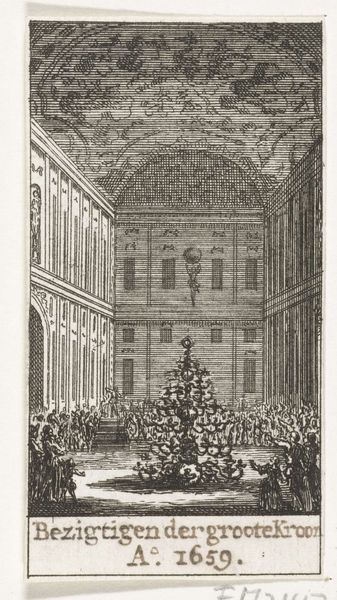
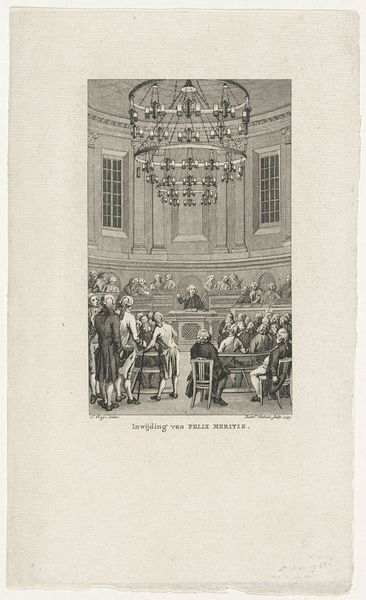
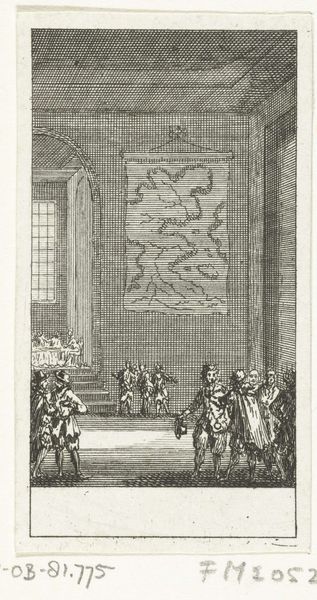
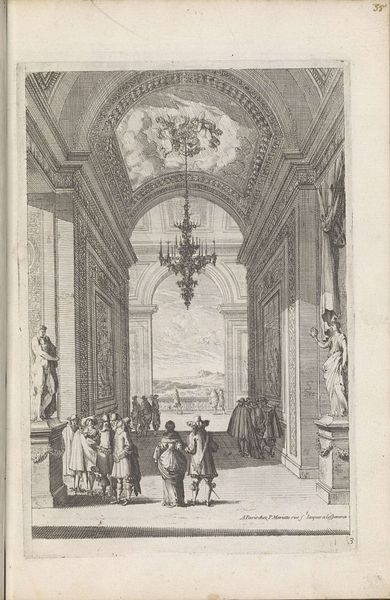
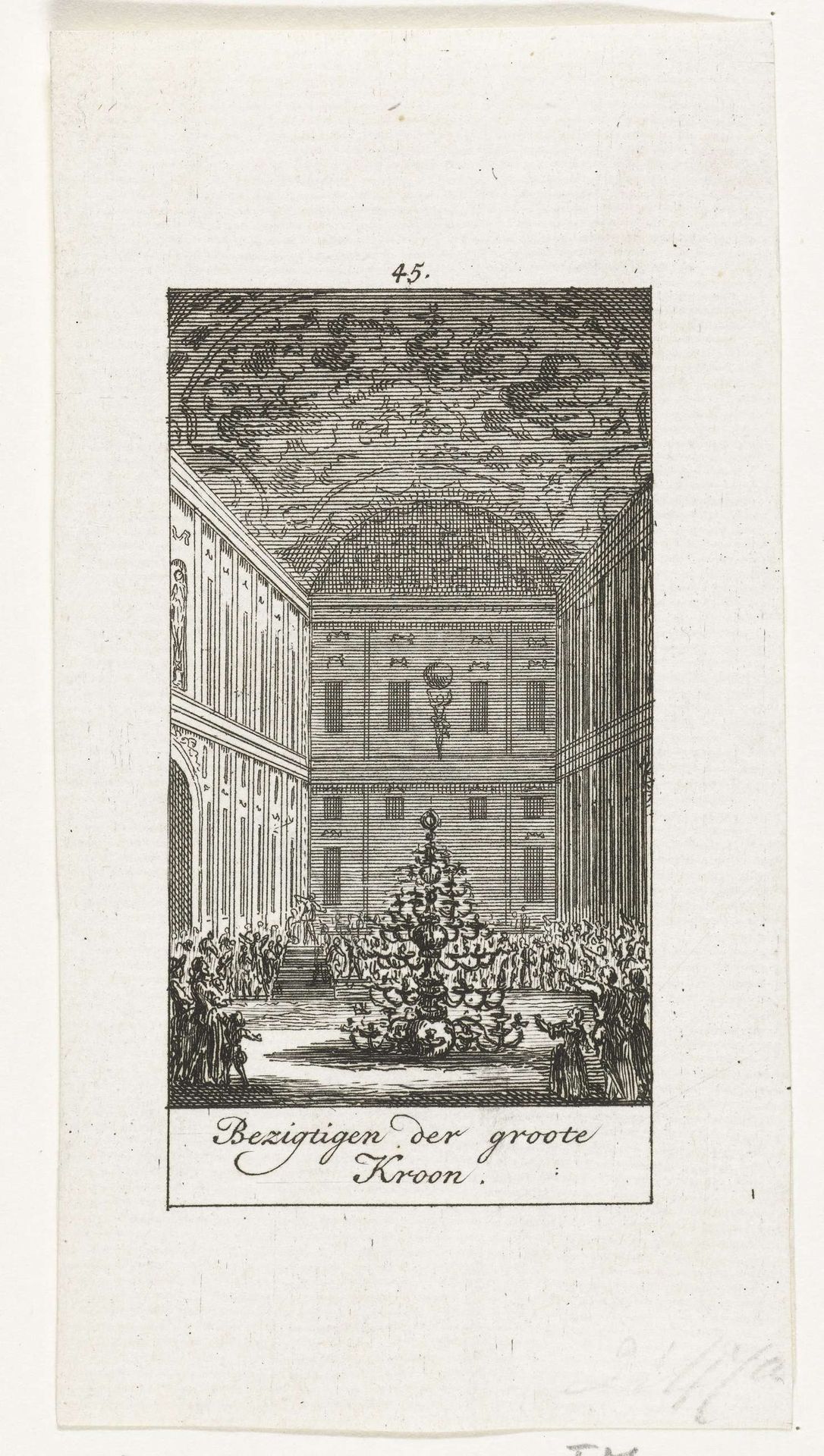
Simon Fokke created this print, titled 'Viewing of the large chandelier, a gift to the Russian Tsar, 1659,' sometime between 1712 and 1784 using etching. This scene captures a moment of diplomatic exchange and cultural display. The chandelier, an object of immense craftsmanship, becomes a symbol of alliance and power. What does it mean to offer light as a gesture of friendship? The act of "viewing" transforms the public into witnesses of an agreement and possible allegiance. The artist creates a stage where the social dynamics of class and status are clearly visible in the arrangement of figures around the chandelier. Fokke's etching offers a glimpse into the performative nature of diplomacy. The giving of gifts becomes an opportunity to solidify relationships between nations. What stories are told through these objects, and how do they shape our understanding of history?
Bezichtiging van de grote kroonluchter, geschenk aan de Russische tsaar, 1659
1779 - 1781

Simon Fokke
1712 - 1784Location
RijksmuseumArtwork details
- Medium
- drawing, print, etching, engraving
- Dimensions
- height 119 mm, width 62 mm
- Location
- Rijksmuseum
- Copyright
- Rijks Museum: Open Domain
Tags
Comments
Share your thoughts
About this artwork
Simon Fokke created this print, titled 'Viewing of the large chandelier, a gift to the Russian Tsar, 1659,' sometime between 1712 and 1784 using etching. This scene captures a moment of diplomatic exchange and cultural display. The chandelier, an object of immense craftsmanship, becomes a symbol of alliance and power. What does it mean to offer light as a gesture of friendship? The act of "viewing" transforms the public into witnesses of an agreement and possible allegiance. The artist creates a stage where the social dynamics of class and status are clearly visible in the arrangement of figures around the chandelier. Fokke's etching offers a glimpse into the performative nature of diplomacy. The giving of gifts becomes an opportunity to solidify relationships between nations. What stories are told through these objects, and how do they shape our understanding of history?
Comments
Share your thoughts