1779 - 1787
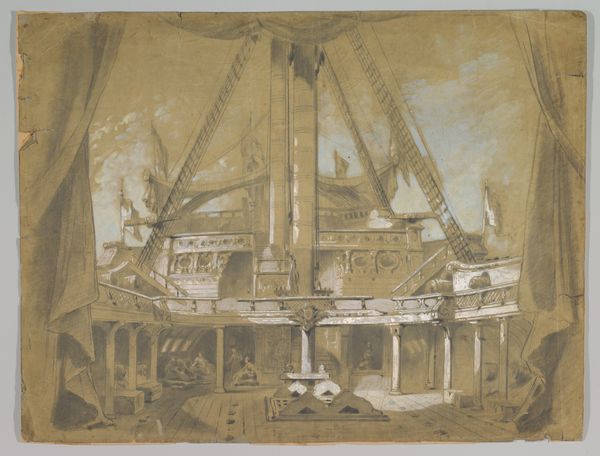
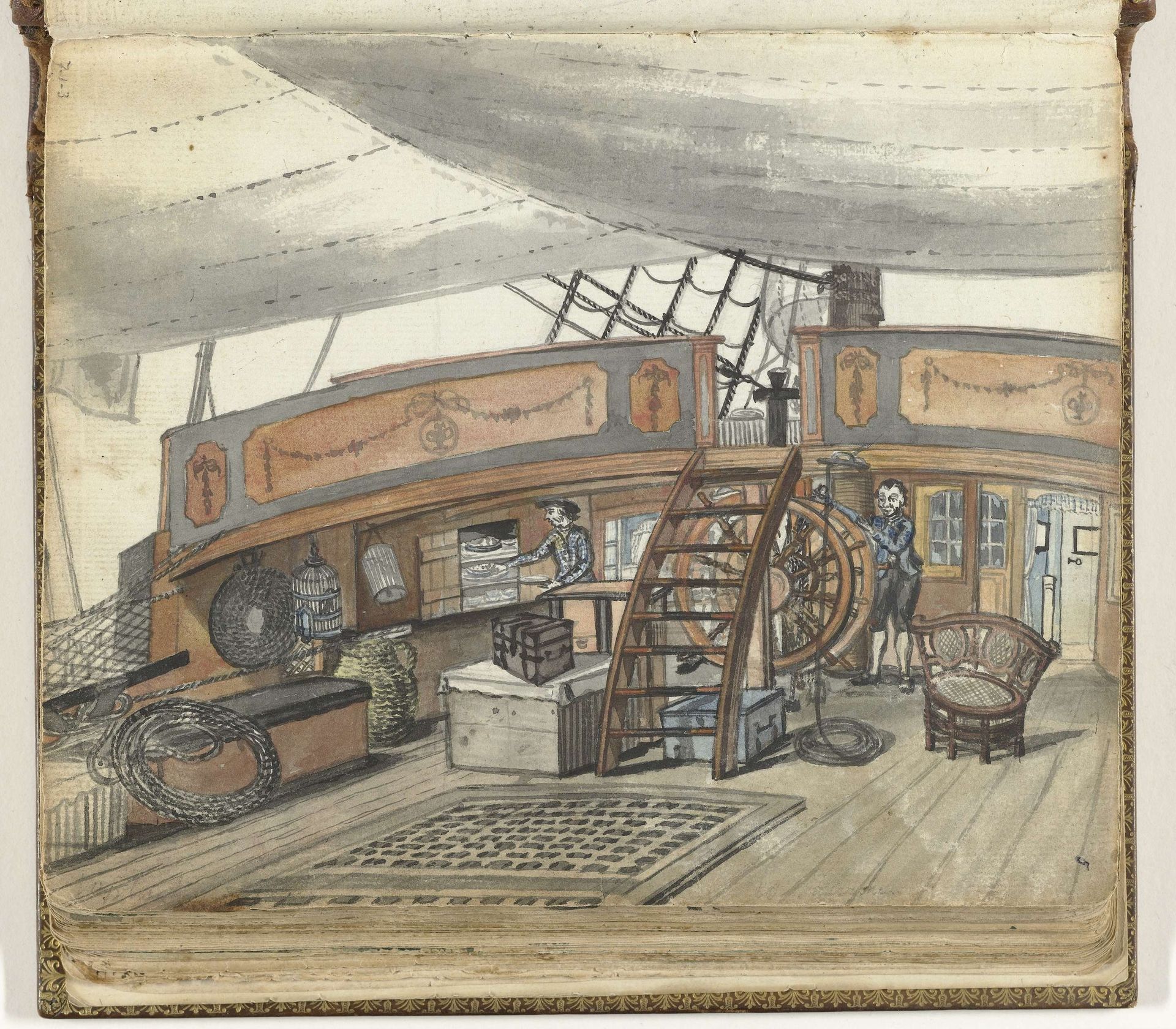
Dekzicht van een Oost-Indiëvaarder met stuurman aan het roer

Listen to curator's interpretation
Curatorial notes
Jan Brandes created this watercolor painting of the deck of a ship, likely sometime in the late 18th or early 19th century. The technique here is meticulous and controlled, using delicate washes to depict the ship's architecture, and its crew at work. Look closely, and you’ll notice how the artist has carefully rendered the wooden planks of the deck, and the ornate carvings of the ship's railing. These details draw our attention to the immense labor involved in building and maintaining such a vessel. The ship itself becomes a symbol of global trade, and the immense profits that flowed through the Dutch East India Company. In this context, even a quiet scene like this resonates with the larger forces of colonialism, and the exploitation of labor. Brandes's painting invites us to consider the relationship between artistry, industry, and the social realities of the time. It blurs the line between documentation and art, offering insight into the complex world of maritime commerce.