About this artwork
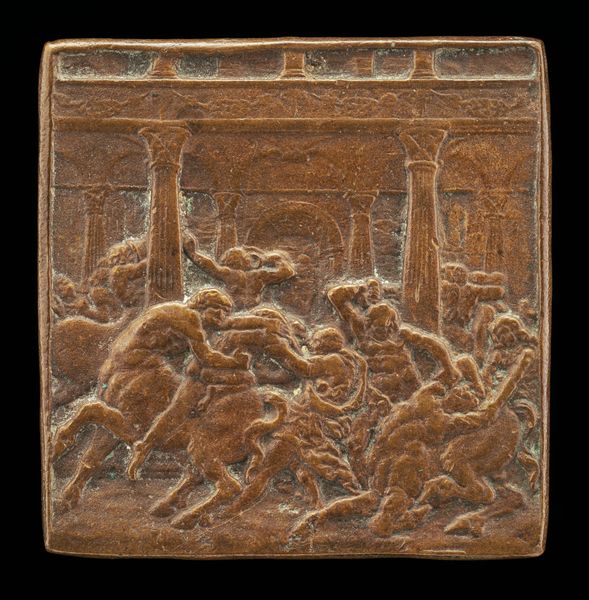
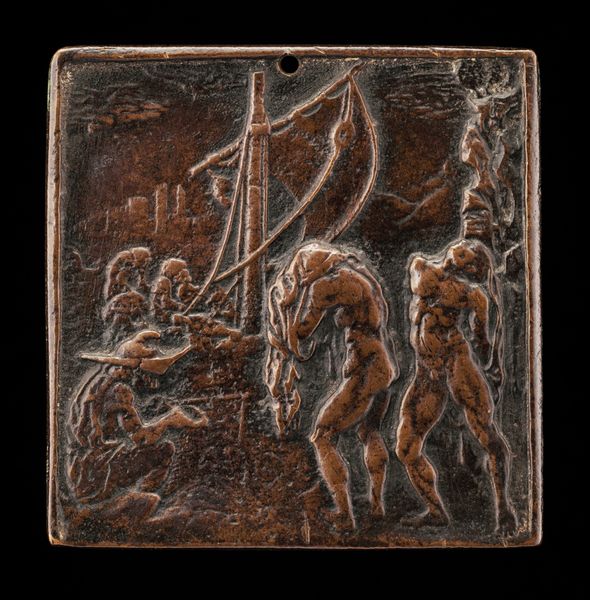
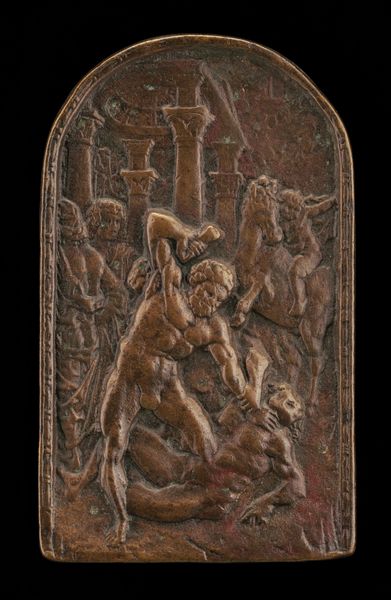
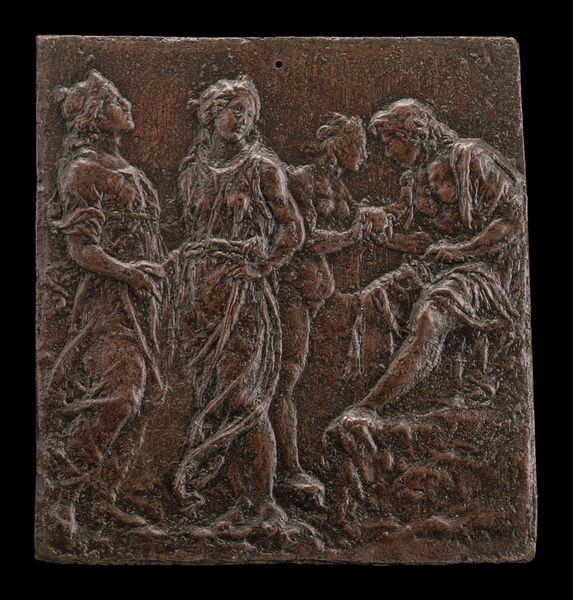
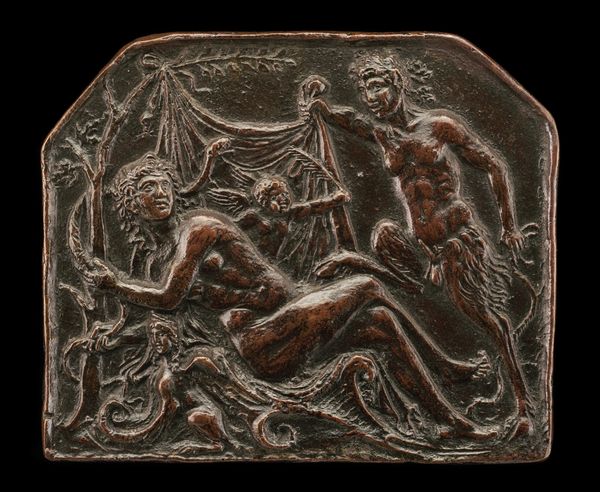
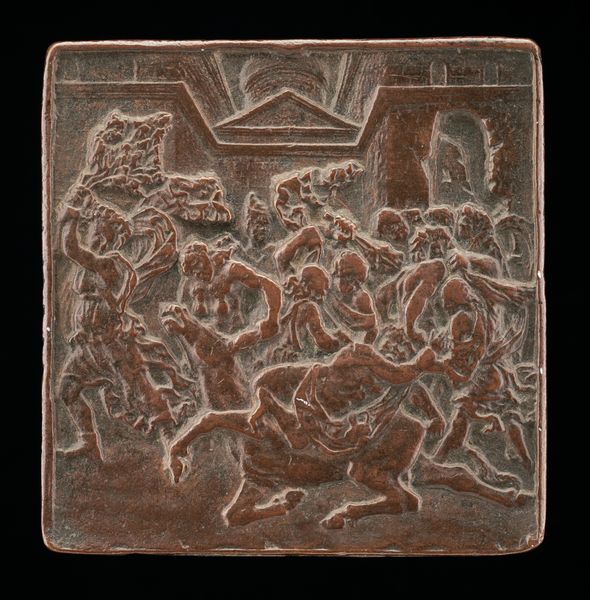
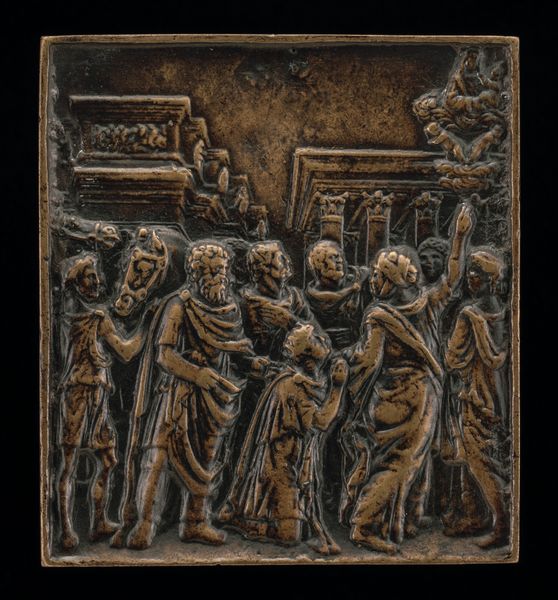
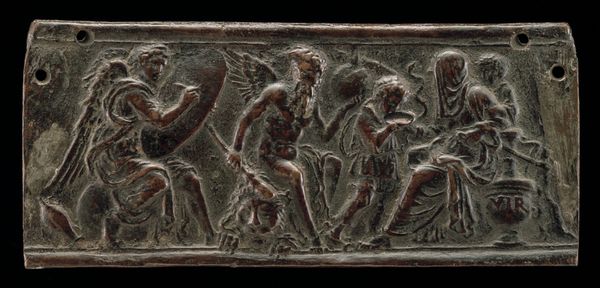
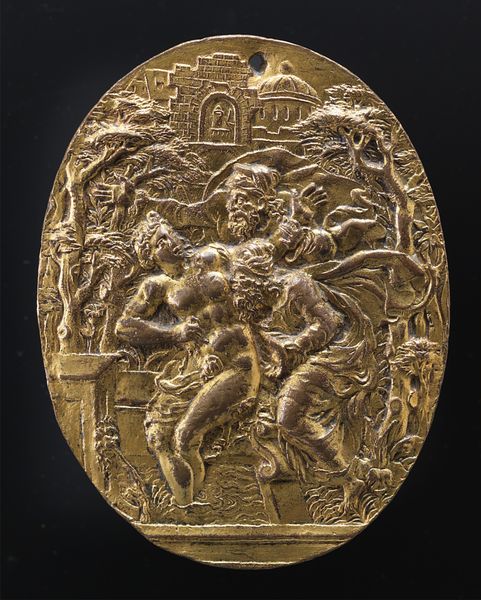
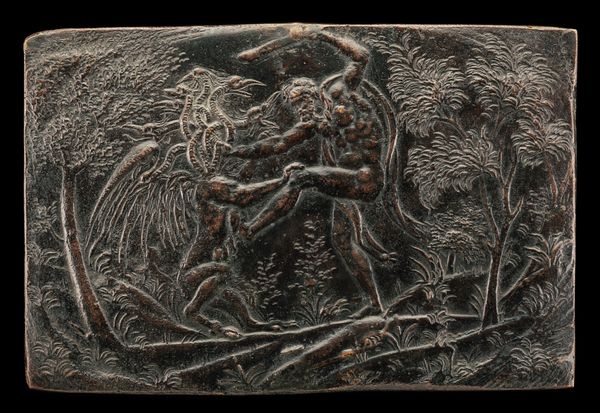
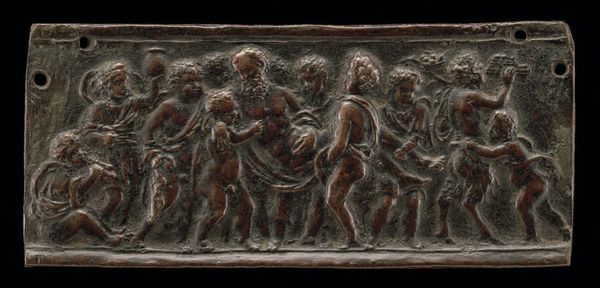
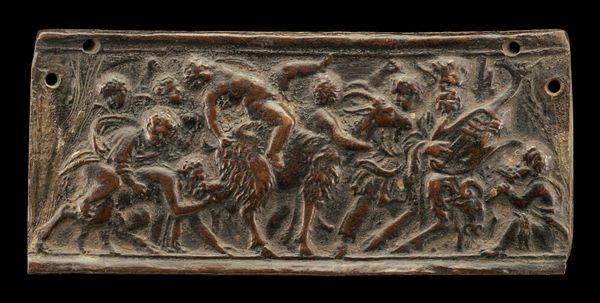
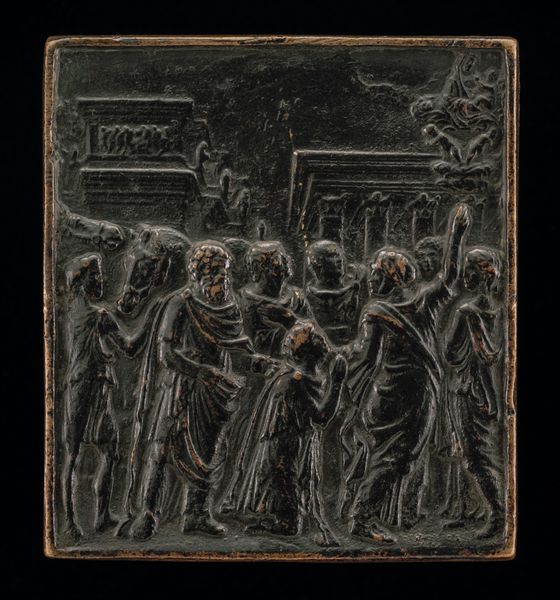
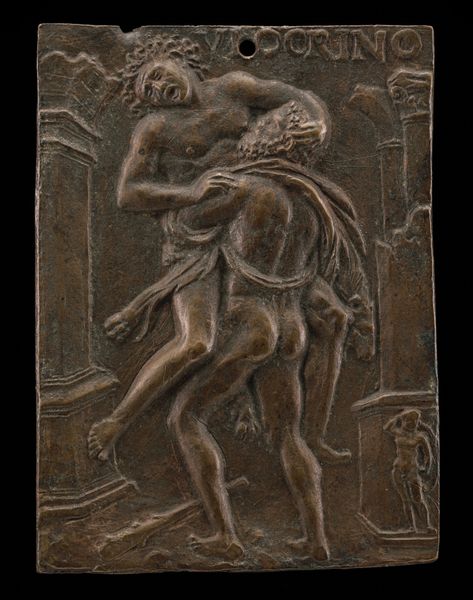
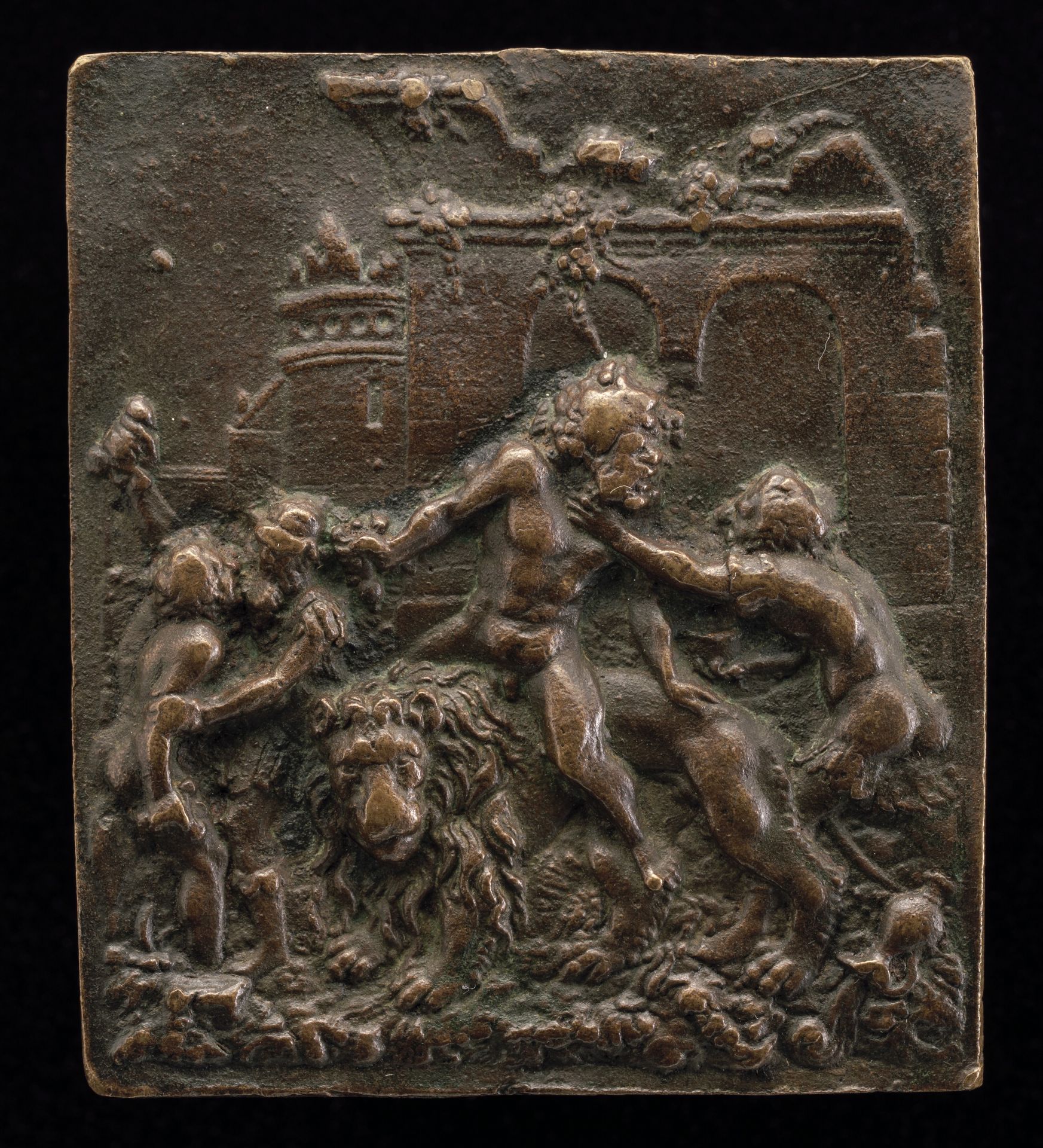
This small bronze relief of an allegorical scene was made by an anonymous artist. The figures, composition and architecture depicted are common visual codes used in Renaissance Italy. The muscular male figure wrestling atop a lion can be seen as an embodiment of strength and virtue, while the surrounding figures may represent the challenges and temptations one faces in life. The question remains, however: for what purpose was this small bronze relief made? Was it intended as a personal emblem, a statement of political allegiance, or perhaps a commentary on the institutions of the time? Further research into the social and intellectual climate of Renaissance Italy, looking at family crests, political writings, and religious literature of the time, might reveal the meanings it had for its original audience. Ultimately, understanding this artwork requires us to consider its social context and the ways in which it reflects and engages with the world around it.
An Allegorical Scene
c. 16th century


Artwork details
- Medium
- relief, bronze, sculpture
- Dimensions
- overall: 6.8 x 5.9 cm (2 11/16 x 2 5/16 in.) gross weight: 77 gr
- Copyright
- National Gallery of Art: CC0 1.0
Tags
allegory
sculpture
relief
bronze
figuration
11_renaissance
sculpture
history-painting
Comments
Be the first to share your thoughts about this work.
About this artwork
This small bronze relief of an allegorical scene was made by an anonymous artist. The figures, composition and architecture depicted are common visual codes used in Renaissance Italy. The muscular male figure wrestling atop a lion can be seen as an embodiment of strength and virtue, while the surrounding figures may represent the challenges and temptations one faces in life. The question remains, however: for what purpose was this small bronze relief made? Was it intended as a personal emblem, a statement of political allegiance, or perhaps a commentary on the institutions of the time? Further research into the social and intellectual climate of Renaissance Italy, looking at family crests, political writings, and religious literature of the time, might reveal the meanings it had for its original audience. Ultimately, understanding this artwork requires us to consider its social context and the ways in which it reflects and engages with the world around it.
Comments
Be the first to share your thoughts about this work.