About this artwork
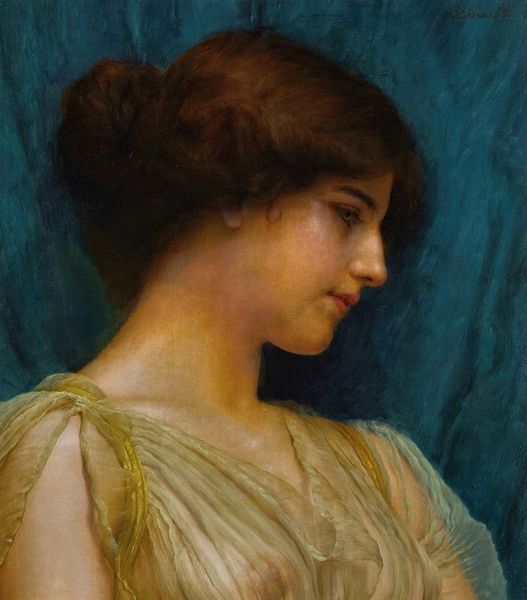
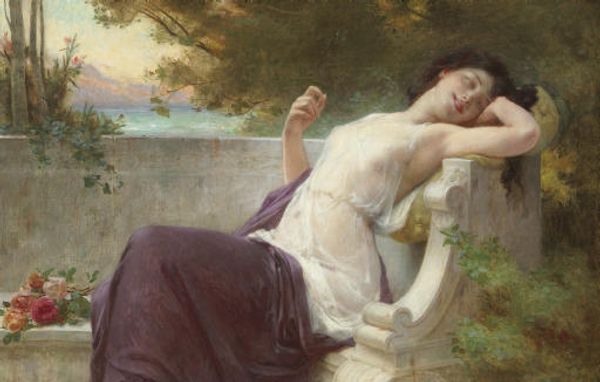
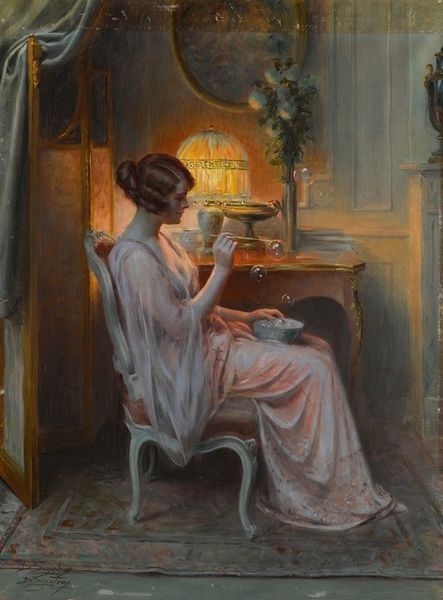
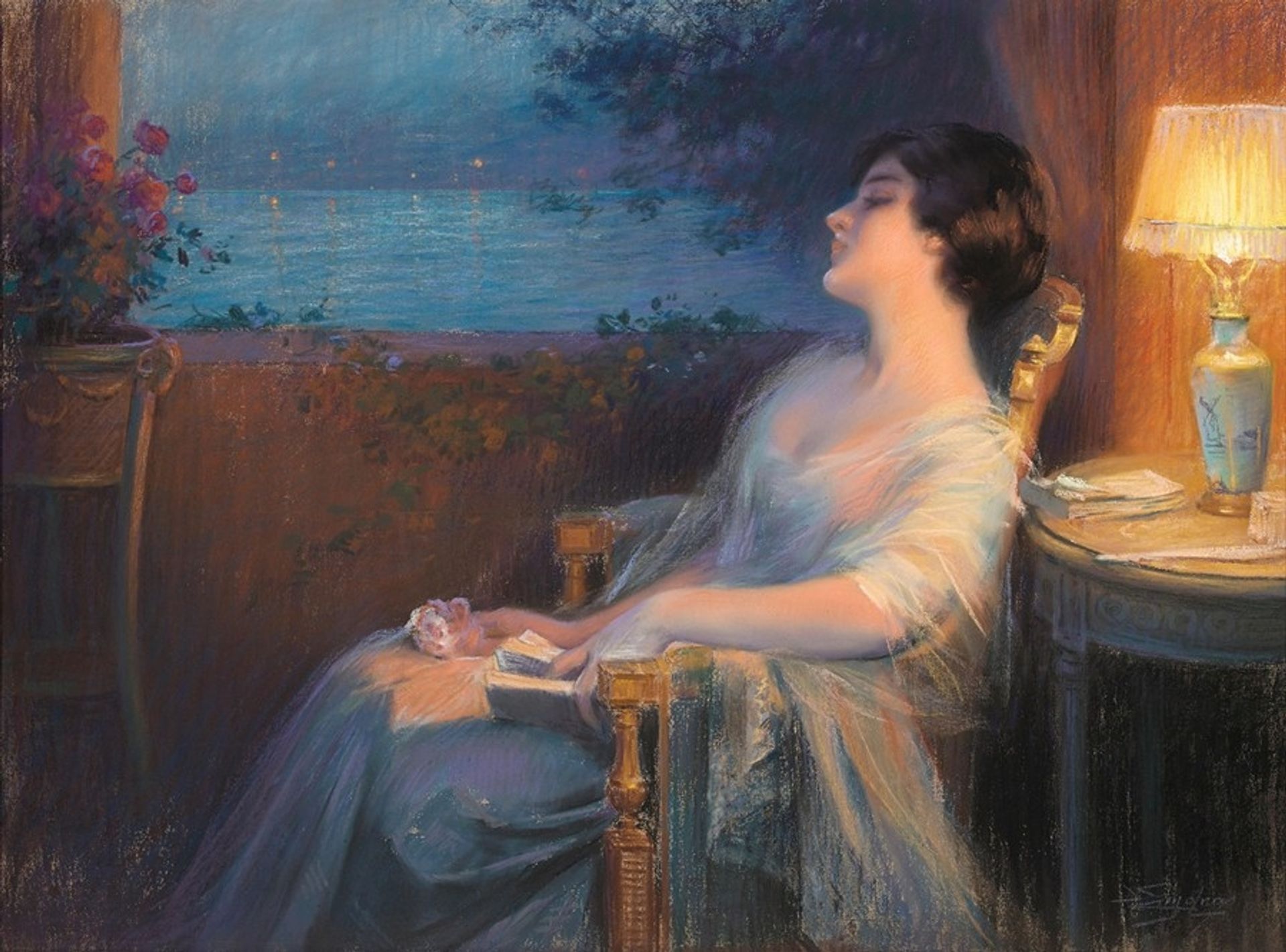
Delphin Enjolras painted "The Murmur of the Sea", but we're unsure exactly when. It offers a view into the private world of a woman, likely from the upper classes, during a moment of quiet contemplation by the sea. This image invites us to consider the cultural values and social norms of the late 19th and early 20th century Europe. The soft lighting and serene setting, combined with the woman's delicate features and elegant dress, evoke a sense of romanticism and refinement, reflecting the idealized images of women in art at the time. How does this relate to institutional histories? Well, consider the Paris Salon, for instance, a space that exhibited and validated work like this. The painting doesn’t necessarily critique the institutions of art, but rather reflects them. It presents a romanticized vision of feminine beauty and leisure that was considered desirable within the artistic and social establishment. As historians, our work lies in uncovering the cultural and institutional frameworks that shape artistic production and reception. By exploring sources, such as exhibition catalogs and social commentaries, we can gain insights into the complex relationship between art and society.

Artwork details
- Medium
- painting, oil-paint
- Copyright
- Public Domain: Artvee
Tags
Comments
Share your thoughts
About this artwork
Delphin Enjolras painted "The Murmur of the Sea", but we're unsure exactly when. It offers a view into the private world of a woman, likely from the upper classes, during a moment of quiet contemplation by the sea. This image invites us to consider the cultural values and social norms of the late 19th and early 20th century Europe. The soft lighting and serene setting, combined with the woman's delicate features and elegant dress, evoke a sense of romanticism and refinement, reflecting the idealized images of women in art at the time. How does this relate to institutional histories? Well, consider the Paris Salon, for instance, a space that exhibited and validated work like this. The painting doesn’t necessarily critique the institutions of art, but rather reflects them. It presents a romanticized vision of feminine beauty and leisure that was considered desirable within the artistic and social establishment. As historians, our work lies in uncovering the cultural and institutional frameworks that shape artistic production and reception. By exploring sources, such as exhibition catalogs and social commentaries, we can gain insights into the complex relationship between art and society.
Comments
Share your thoughts