About this artwork
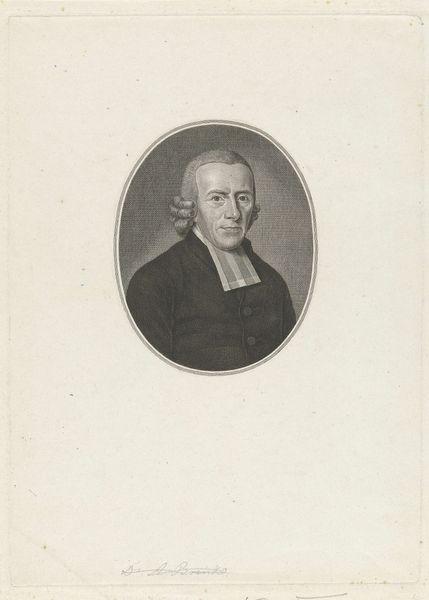
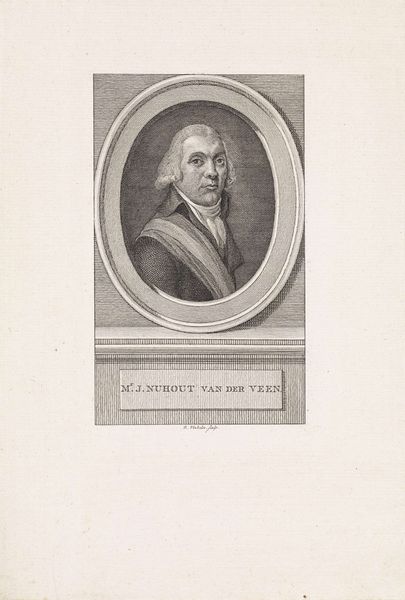
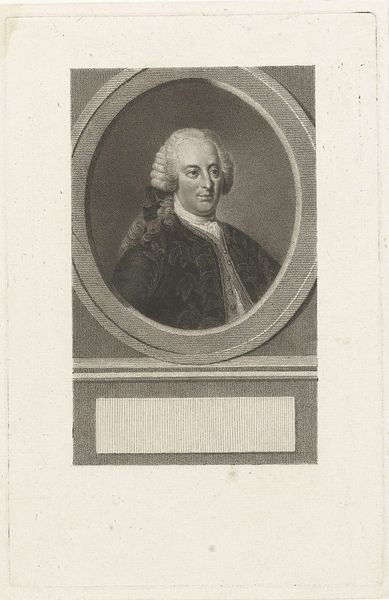
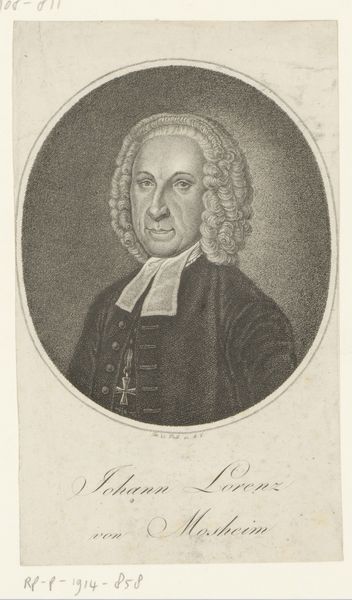
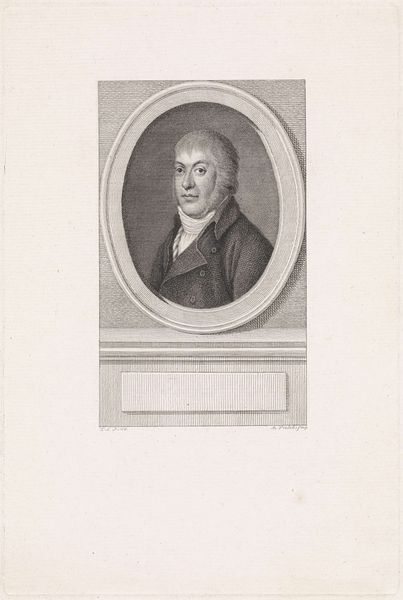
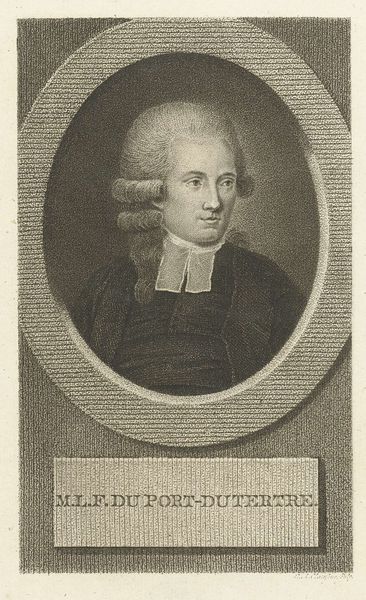
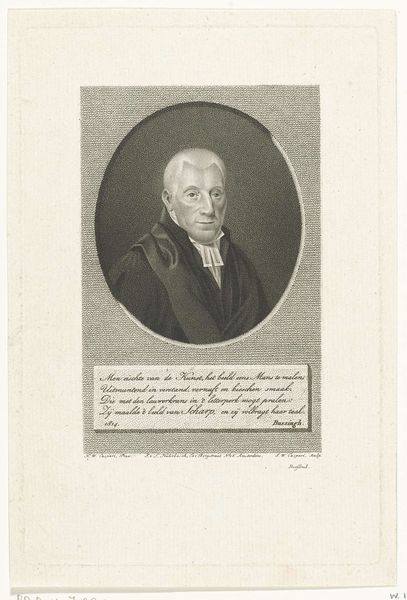
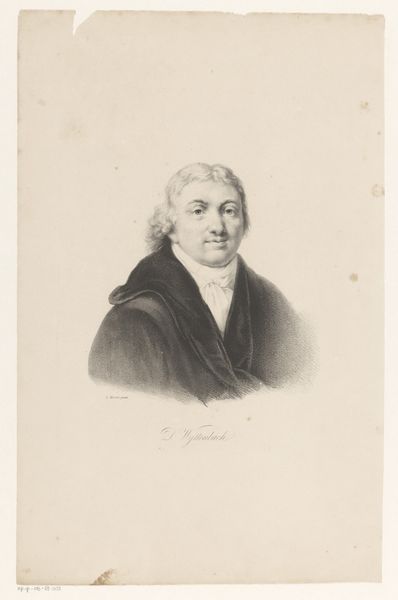
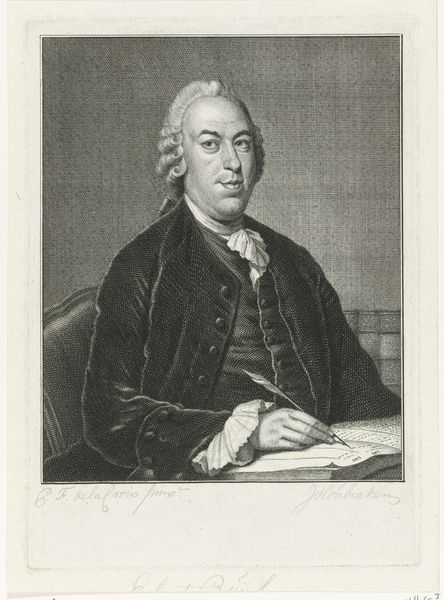
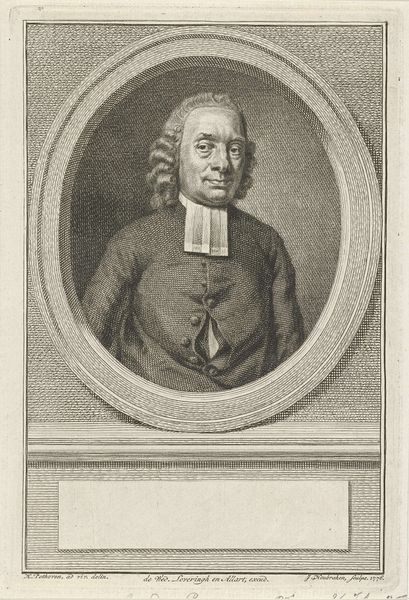
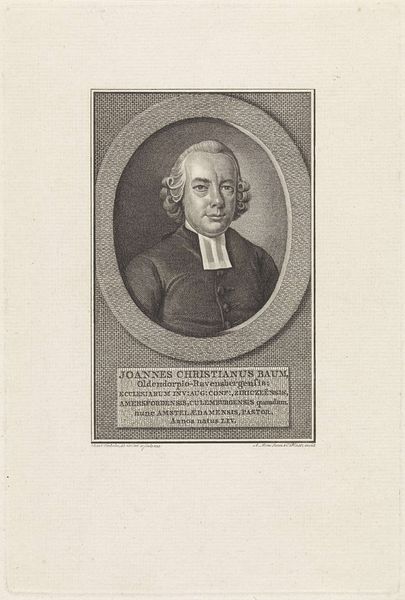
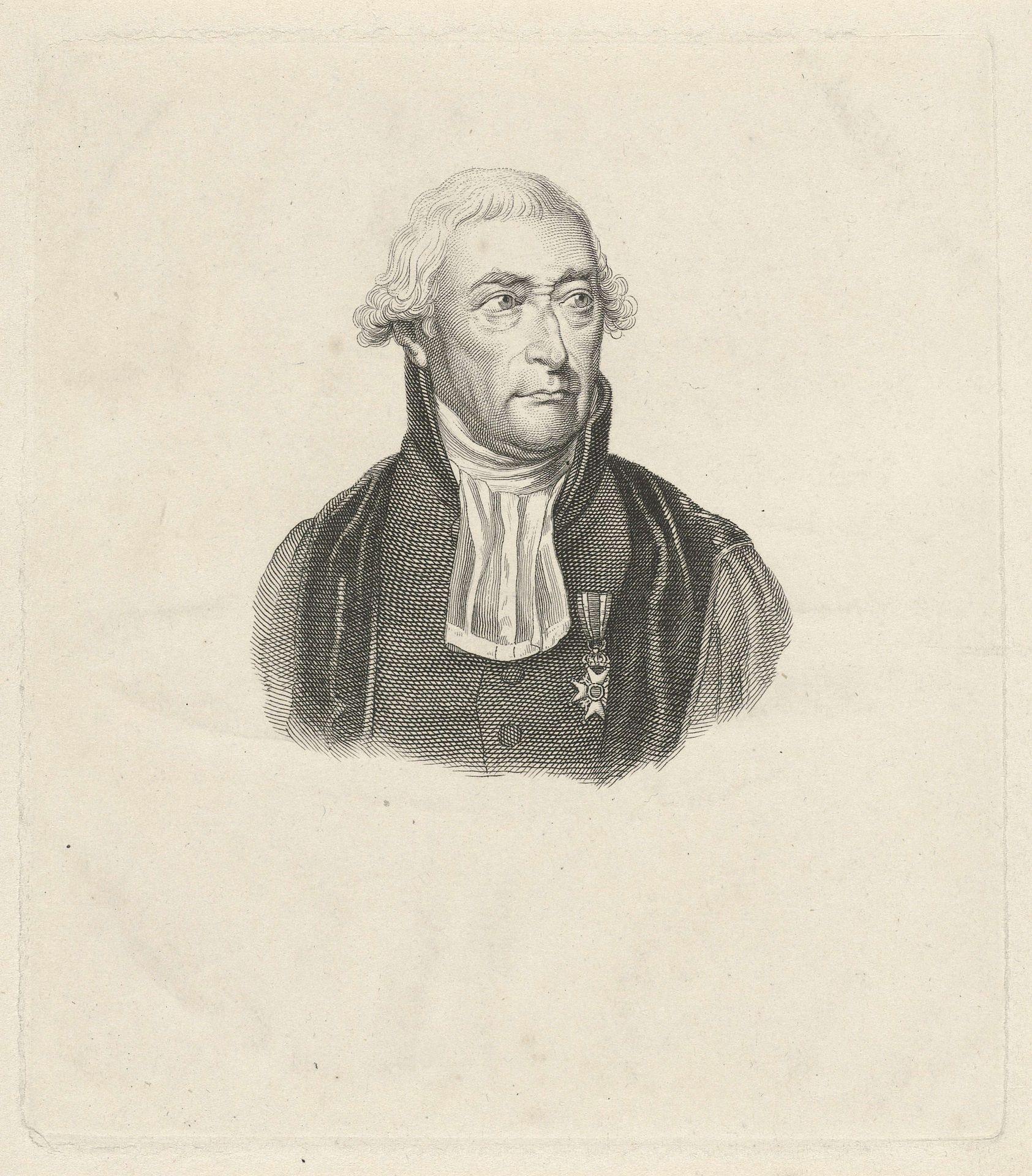
Curator: This is an engraving by Jacob Ernst Marcus titled *Portret van Hendrik Constantijn Cras,* created sometime between 1784 and 1826. It’s currently held here at the Rijksmuseum. Editor: Oh, he looks serious. Rather…disapproving, almost. Like he’s just caught me sneaking a cookie before dinner. And what’s with the fluffy hair? Did they really style it like that back then? Curator: Indeed. The portrait exemplifies Neoclassical aesthetics which was then the order of the day. Marcus captures Cras with a focus on realism and a dignified composure. Editor: Neoclassical, huh? I see that… very formal and proper, a man of importance being sure that he's depicted as one. You can see how he exudes power even if he's just posing from the shoulders up. How interesting... It's a simple composition though. Curator: The artist’s restrained use of line work certainly speaks to the era. It's an engraving, a medium known for its precision, lending to that crispness of detail and a somewhat austere feel. Editor: Austere is right! It feels so distant somehow, separated from any feeling, yet it has a strong presence. But what can you tell me about Mr. Cras? What made him worth engraving, worth preserving in a museum like this? Curator: Hendrik Constantijn Cras was a prominent lawyer and judge in his time, and he even held positions in the Batavian Republic government. These prints often served a political purpose. This helped spread imagery of important leaders. Editor: So it’s like a proto-Instagram, a way of visually broadcasting power and influence, shaping public perception? Fascinating how some things never really change, just the medium! Curator: Precisely. The distribution of his image would contribute to solidifying his legacy and bolstering public perception of his authority and status within the societal and political hierarchies of the era. Editor: I will never look at portraits the same way now. Thank you. I have been pondering the mood for far too long. Curator: And I, lost in social context! See how interesting one object becomes when different lenses are applied? It is the essence of appreciating history, no?
Portret van Hendrik Constantijn Cras
1784 - 1826

Jacob Ernst Marcus
1774 - 1826Location
RijksmuseumArtwork details
- Medium
- print, engraving
- Dimensions
- height 145 mm, width 129 mm
- Location
- Rijksmuseum
- Copyright
- Rijks Museum: Open Domain
Tags
Comments
Share your thoughts
About this artwork
Curator: This is an engraving by Jacob Ernst Marcus titled *Portret van Hendrik Constantijn Cras,* created sometime between 1784 and 1826. It’s currently held here at the Rijksmuseum. Editor: Oh, he looks serious. Rather…disapproving, almost. Like he’s just caught me sneaking a cookie before dinner. And what’s with the fluffy hair? Did they really style it like that back then? Curator: Indeed. The portrait exemplifies Neoclassical aesthetics which was then the order of the day. Marcus captures Cras with a focus on realism and a dignified composure. Editor: Neoclassical, huh? I see that… very formal and proper, a man of importance being sure that he's depicted as one. You can see how he exudes power even if he's just posing from the shoulders up. How interesting... It's a simple composition though. Curator: The artist’s restrained use of line work certainly speaks to the era. It's an engraving, a medium known for its precision, lending to that crispness of detail and a somewhat austere feel. Editor: Austere is right! It feels so distant somehow, separated from any feeling, yet it has a strong presence. But what can you tell me about Mr. Cras? What made him worth engraving, worth preserving in a museum like this? Curator: Hendrik Constantijn Cras was a prominent lawyer and judge in his time, and he even held positions in the Batavian Republic government. These prints often served a political purpose. This helped spread imagery of important leaders. Editor: So it’s like a proto-Instagram, a way of visually broadcasting power and influence, shaping public perception? Fascinating how some things never really change, just the medium! Curator: Precisely. The distribution of his image would contribute to solidifying his legacy and bolstering public perception of his authority and status within the societal and political hierarchies of the era. Editor: I will never look at portraits the same way now. Thank you. I have been pondering the mood for far too long. Curator: And I, lost in social context! See how interesting one object becomes when different lenses are applied? It is the essence of appreciating history, no?
Comments
Share your thoughts