drawing, pencil
#
pencil drawn
#
drawing
#
dutch-golden-age
#
pencil sketch
#
landscape
#
pencil
#
sketchbook drawing
#
pencil work
#
northern-renaissance
#
realism
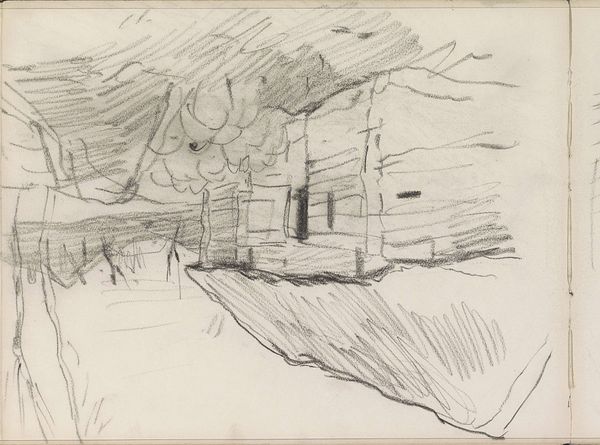
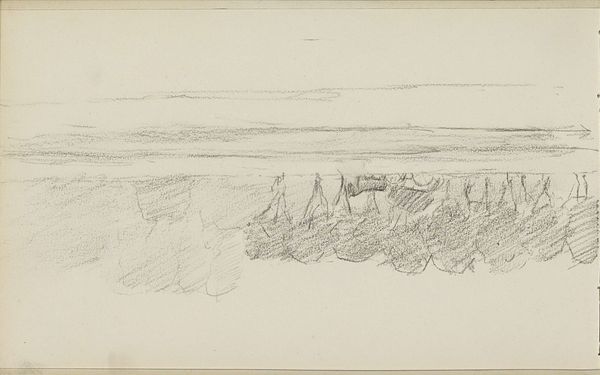
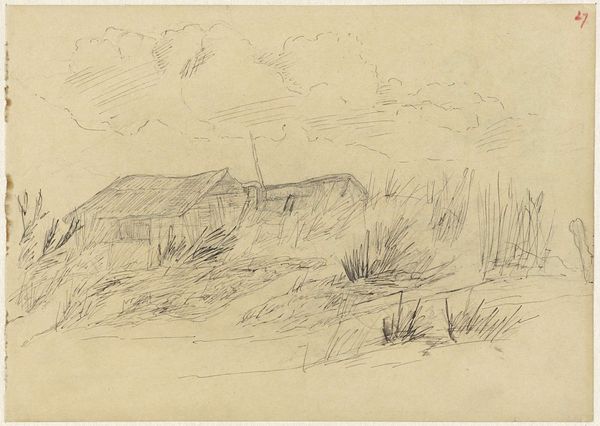
Dimensions: height 205 mm, width 294 mm
Copyright: Rijks Museum: Open Domain
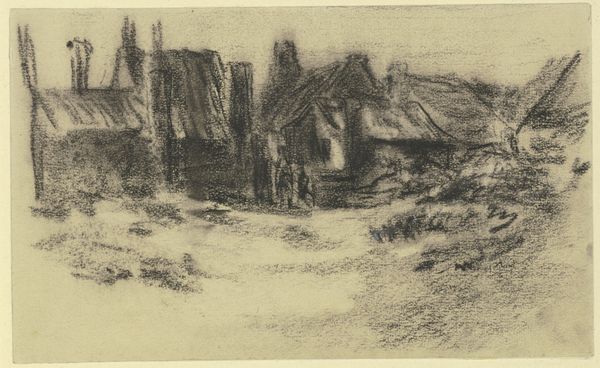
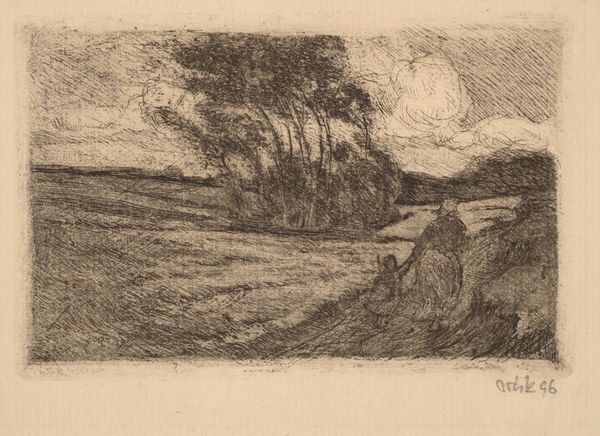
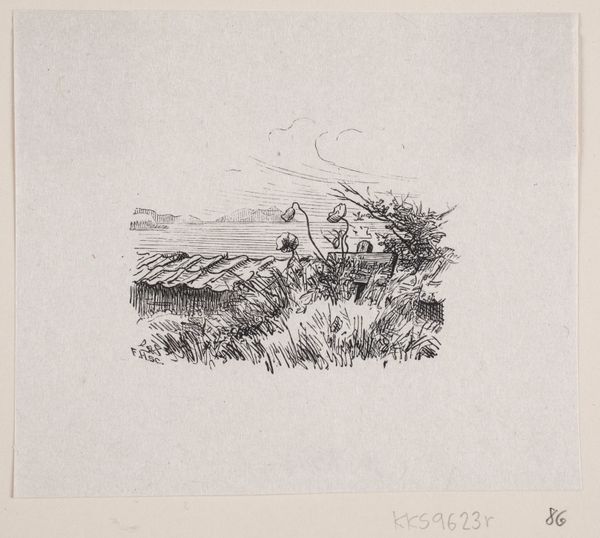
Curator: Sientje Mesdag-van Houten's "Landschap met hut", or "Landscape with Hut," likely created between 1844 and 1909, offers a glimpse into the rural life of the Netherlands through simple means. Editor: It strikes me as quite stark, almost desolate. The muted grays, the solitary hut… it speaks of a hardscrabble existence, doesn’t it? Curator: Definitely. The pencil strokes are economical but create a surprisingly textural representation of the thatched roof, and the way she renders the land feels authentic to agricultural practice. Think of the labor involved in building the structure and how tied to specific resources of that land it must have been. Editor: It brings to mind the plight of rural workers at the turn of the century. This wasn’t a picturesque landscape for everyone; for many, it represented daily toil and marginalization. Are we romanticizing this depiction of "peasant life" or does it highlight social realities? I see the horizon and feel social confinement. Curator: I think she found dignity and functionality in it. Look at the layering, it suggests constant repair, reinforcing a sense of material and structural necessity. The placement and building techniques offer insights into rural living during this period in the Netherlands. Editor: And let's consider Sientje Mesdag-van Houten's own positionality. As a woman artist in the 19th century, depicting these rural scenes perhaps gave her a way to comment on the overlooked labor that sustained society, which intersects with debates about who is authorized to represent it and on what terms. Is the work celebratory, documenting the scene, or is there a nuanced criticality? Curator: Perhaps it's about access to representation, given both gender and subject matter. This pencil study is more direct and grounded than many grand history paintings of the era. By simply documenting what’s there, it pushes against an academic focus on mythological topics. Editor: I appreciate the idea that art of humble origins can still prompt critical discussions on identity, place, and social inequality. It challenges our perceptions of beauty. Curator: Agreed. Mesdag-van Houten offers a valuable glimpse into how structures shape lives, and labor literally underpins our everyday landscapes. Editor: And her lens forces us to reconsider whose lives are rendered, valued, and seen.
Comments
No comments
Be the first to comment and join the conversation on the ultimate creative platform.
 Collect
 React
React Comment
More like this