About this artwork
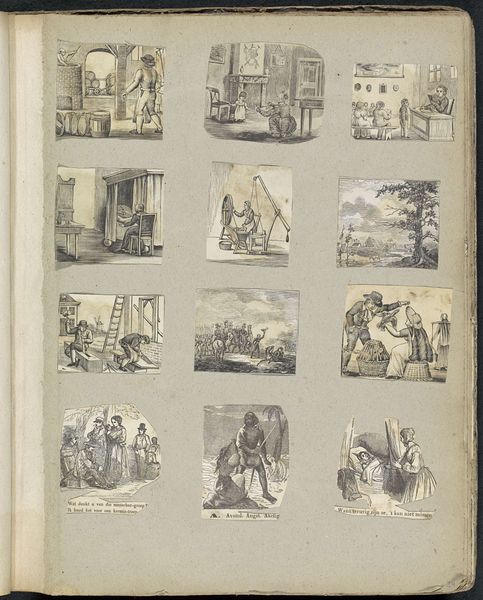
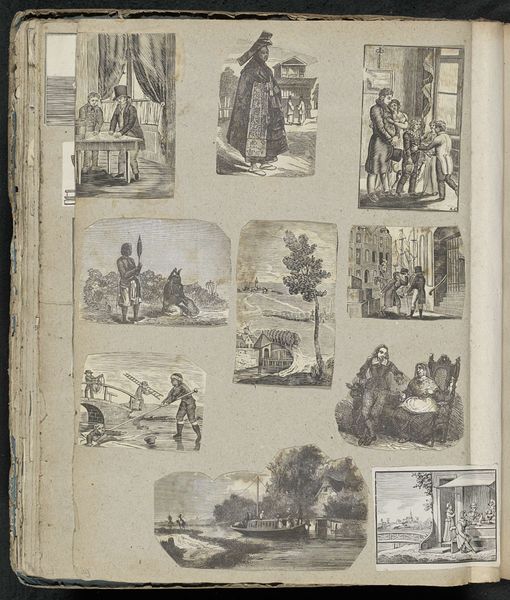
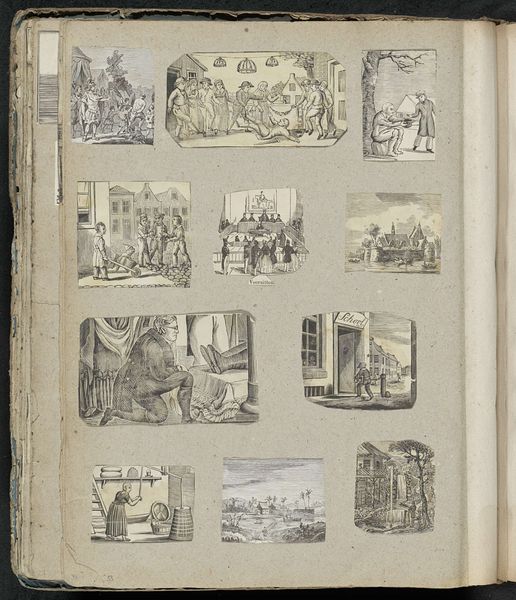
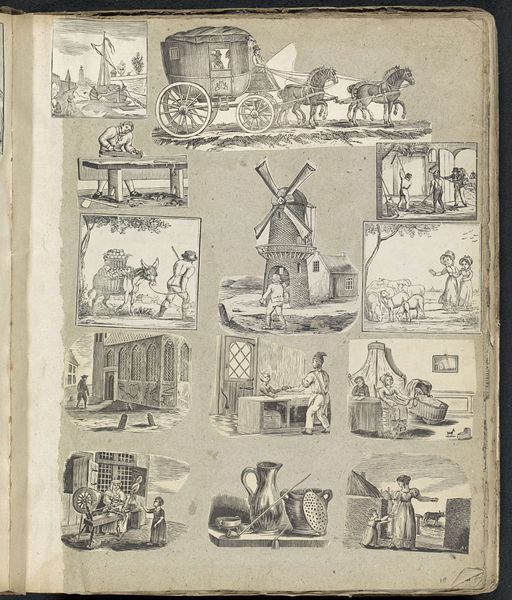
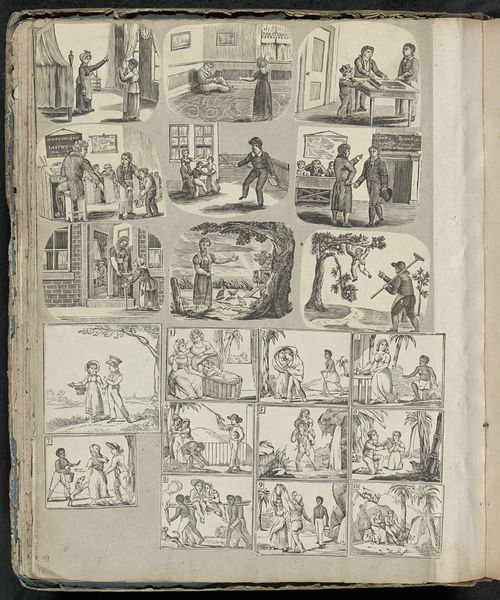
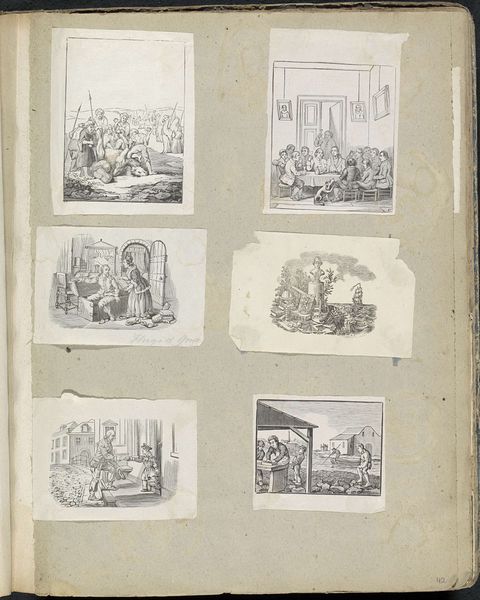
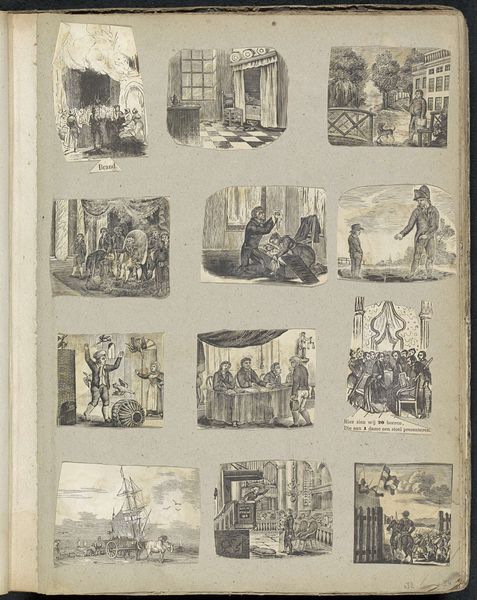
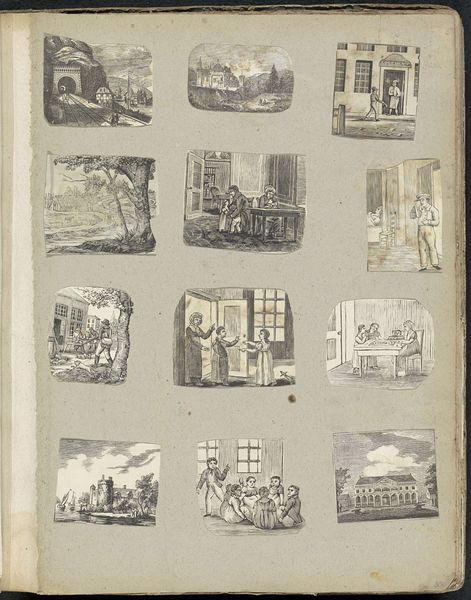
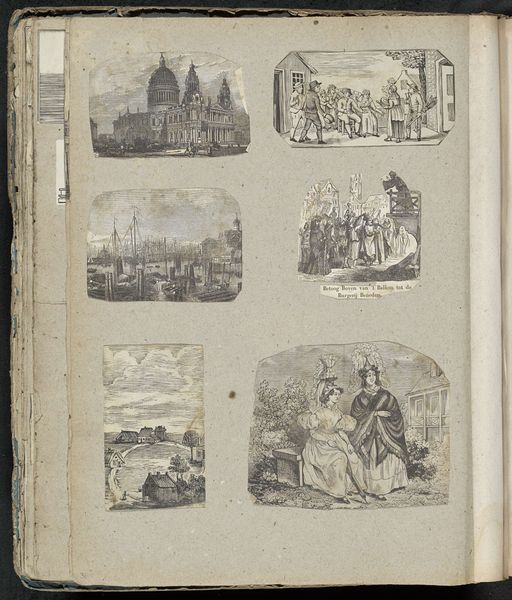
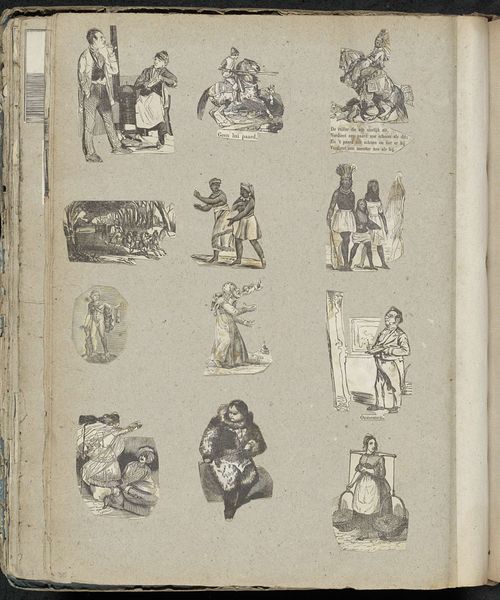
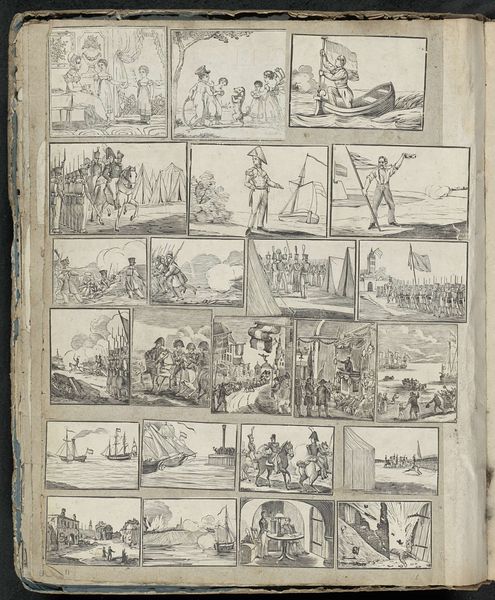
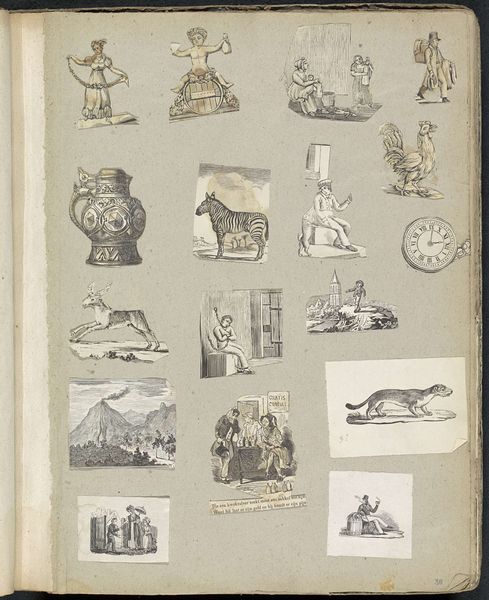
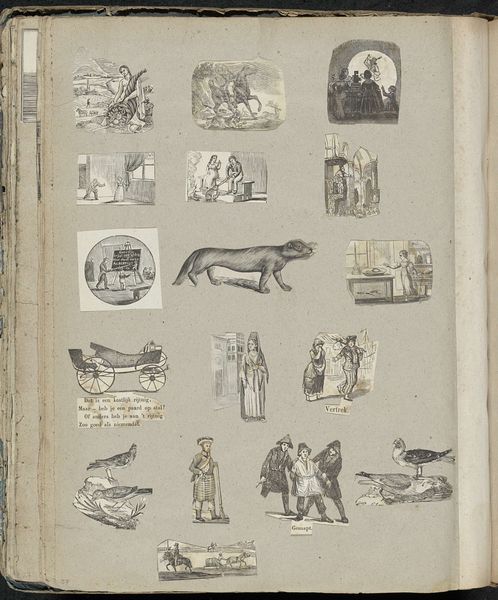
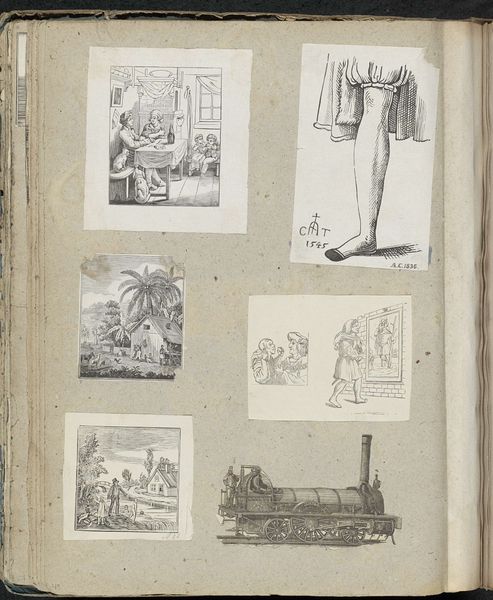
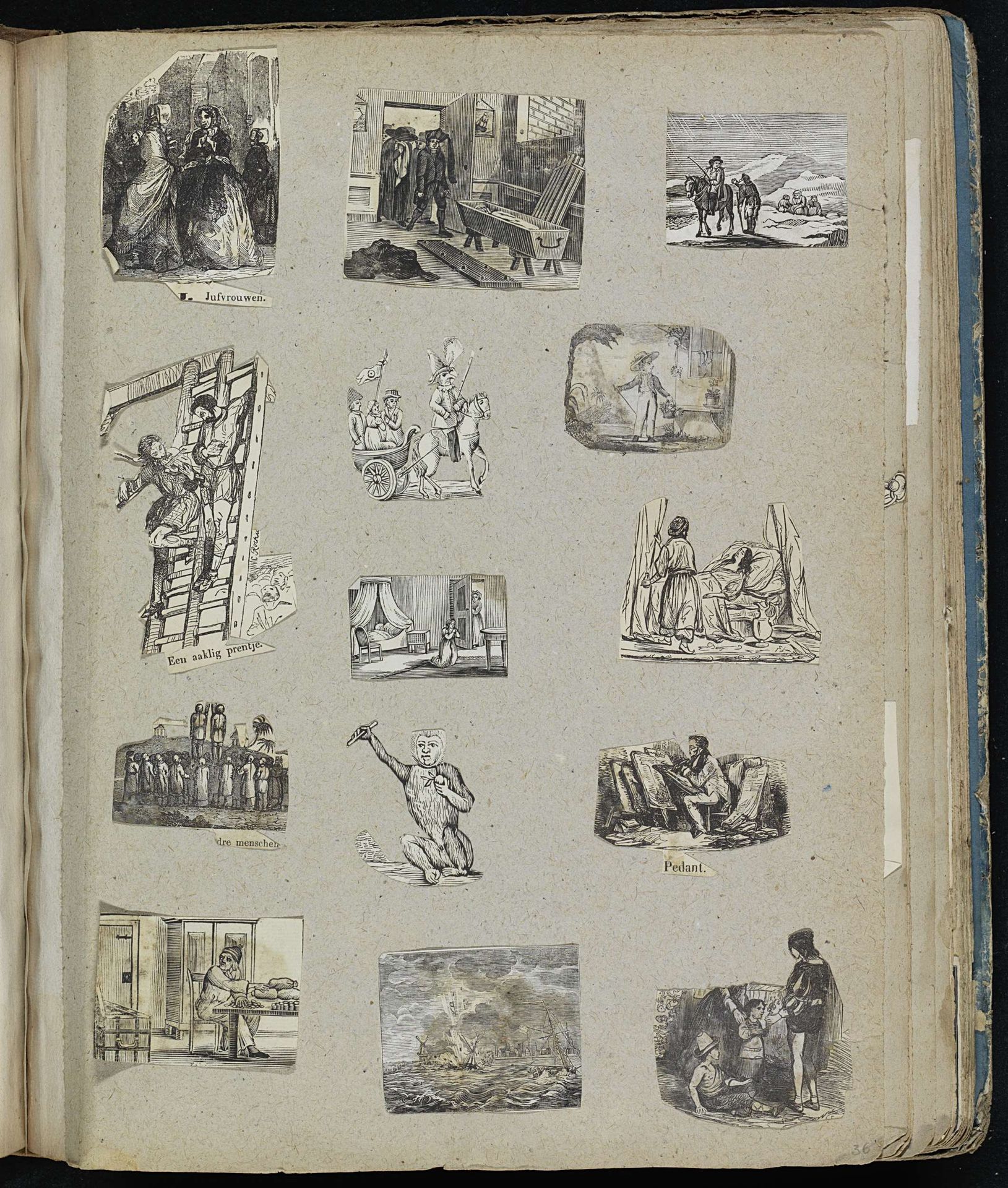
This is a page from an album with various depictions by Alexander Cranendoncq, made sometime in the 19th century. The album leaf presents a collection of small scenes, meticulously rendered in ink. The varying sizes and subjects suggest a pastiche-like arrangement, where the relationships are as important as the individual scenes themselves. Note the contrast between the elaborate scenes of figures in costume and simpler, more introspective images like a man sitting at a table. This juxtaposition invites us to question the structure of narrative and representation itself. The arrangement destabilizes any single reading, instead fostering multiple interpretations. Each image, with its specific composition and detail, invites a semiotic analysis, yet their placement resists a unified narrative, and the individual vignettes function as cultural codes. It is the interplay between these signs and their arrangement that opens up a space for reinterpretation.
Albumblad met diverse voorstellingen
1814 - 1869

Alexander Cranendoncq
1799 - 1869Location
RijksmuseumArtwork details
- Medium
- drawing, mixed-media, lithograph, print, paper, ink
- Dimensions
- height 402 mm, width 336 mm
- Location
- Rijksmuseum
- Copyright
- Rijks Museum: Open Domain
Tags
Comments
Share your thoughts
About this artwork
This is a page from an album with various depictions by Alexander Cranendoncq, made sometime in the 19th century. The album leaf presents a collection of small scenes, meticulously rendered in ink. The varying sizes and subjects suggest a pastiche-like arrangement, where the relationships are as important as the individual scenes themselves. Note the contrast between the elaborate scenes of figures in costume and simpler, more introspective images like a man sitting at a table. This juxtaposition invites us to question the structure of narrative and representation itself. The arrangement destabilizes any single reading, instead fostering multiple interpretations. Each image, with its specific composition and detail, invites a semiotic analysis, yet their placement resists a unified narrative, and the individual vignettes function as cultural codes. It is the interplay between these signs and their arrangement that opens up a space for reinterpretation.
Comments
Share your thoughts