
Curatorial notes
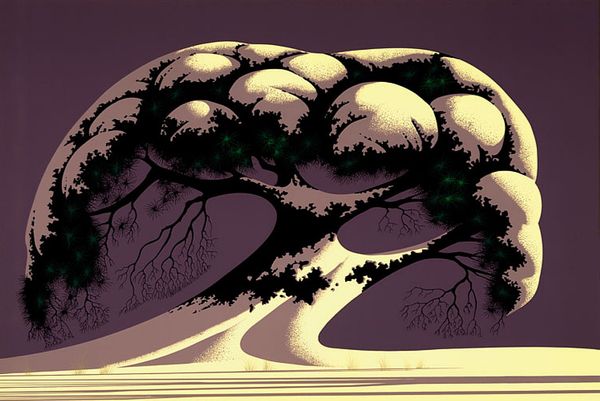
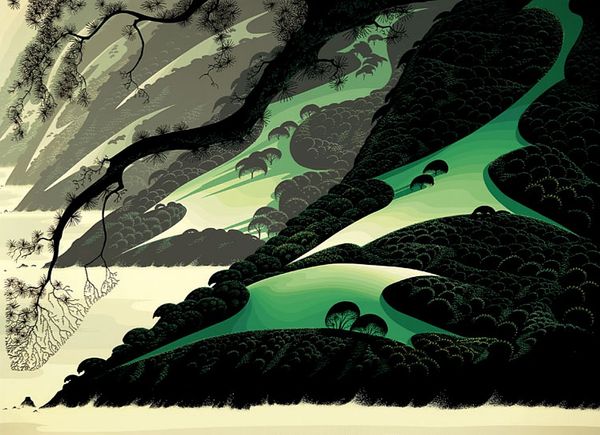
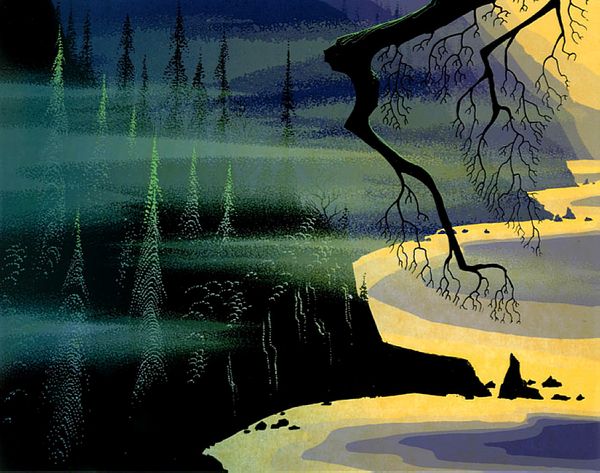
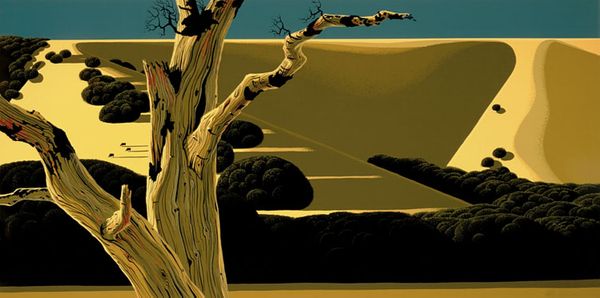
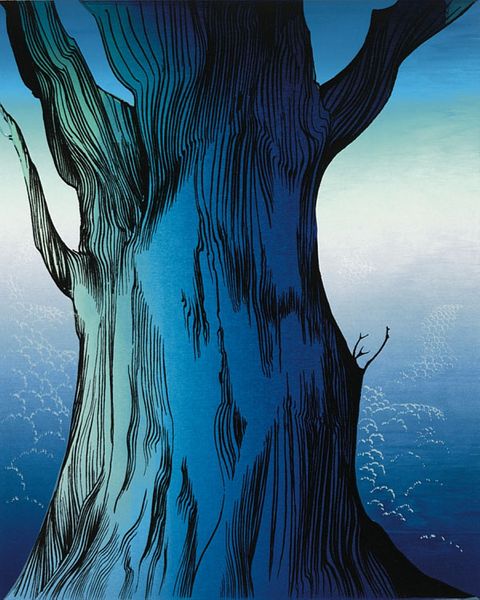
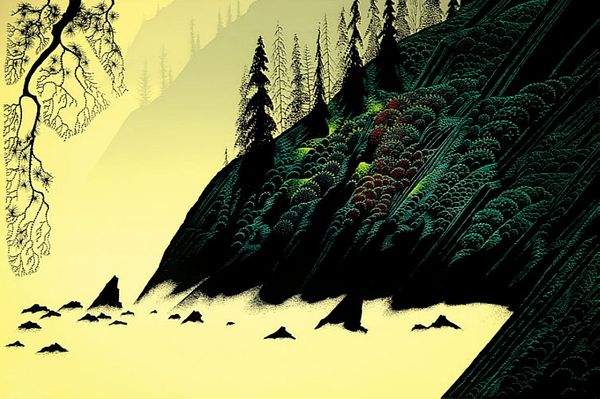
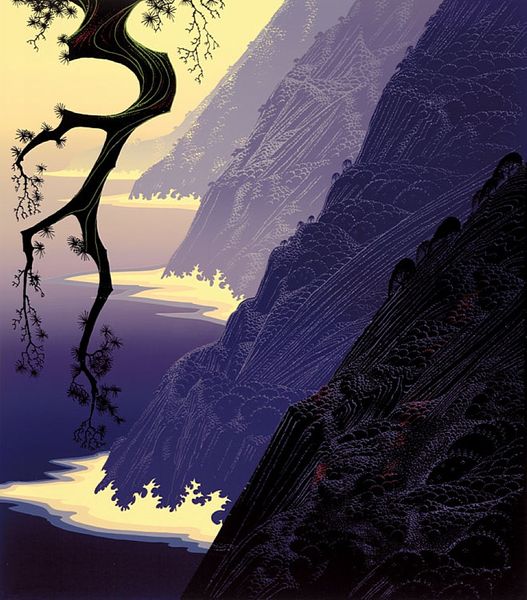
Editor: So, this is Eyvind Earle’s "Quiet Evening," from 1996, made with acrylic paint. It’s so striking how Earle simplifies the landscape into these geometric shapes. There’s a sense of serenity, but also something a little...distant? How do you interpret this work? Curator: Earle's landscapes often romanticize nature, but I agree; there’s an interesting tension. Consider the social and political climate of the late 20th century: globalization, increasing urbanization. Could this idealized, almost flattened landscape be read as a commentary on our disconnect from the natural world? It lacks figures, right? Is it for us or a monument? Editor: That’s a thought-provoking angle! I was so focused on the stylistic elements, the flat planes and limited color palette. I hadn’t really considered what the absence of people might signify. But, given the rise of environmental awareness around that time, I wonder if it's a warning about losing these pristine spaces. Curator: Exactly! Think about modernism’s utopian ideals, the desire for a purified world. This almost "perfect" scene is perhaps unattainable, a critique of that very pursuit. The geometric shapes and controlled palette—are they celebrating nature, or containing it? Is that starkness a utopia or a dystopia? Editor: I never thought of landscape art being able to be a dystopia. I can see how a place void of humanity and controlled so strictly can become cold. So much to consider! Thanks for your insights. I'll never see landscapes the same way again. Curator: My pleasure. Art invites us to question, to challenge our assumptions. Hopefully it has shown you there are no real separations from any of our academic and social realities.