About this artwork
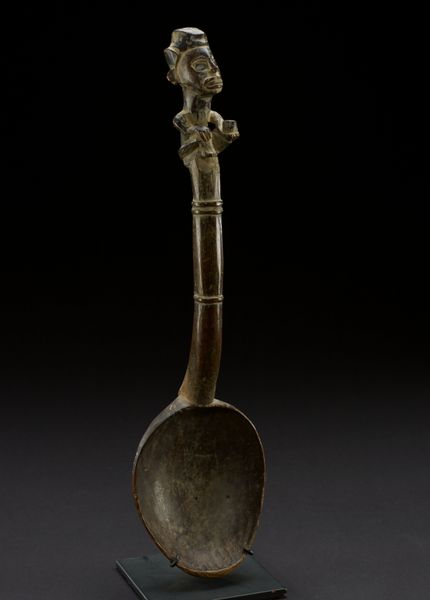
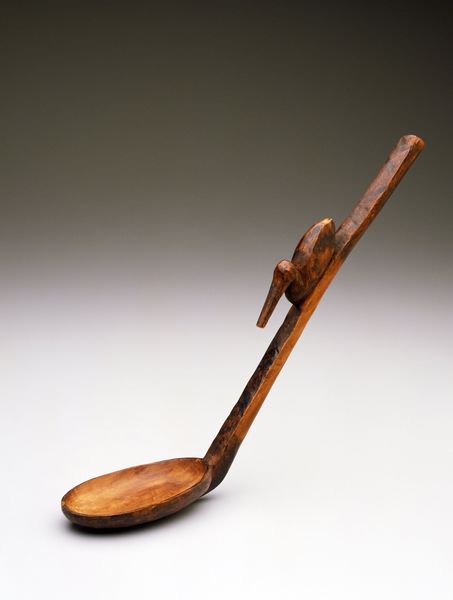
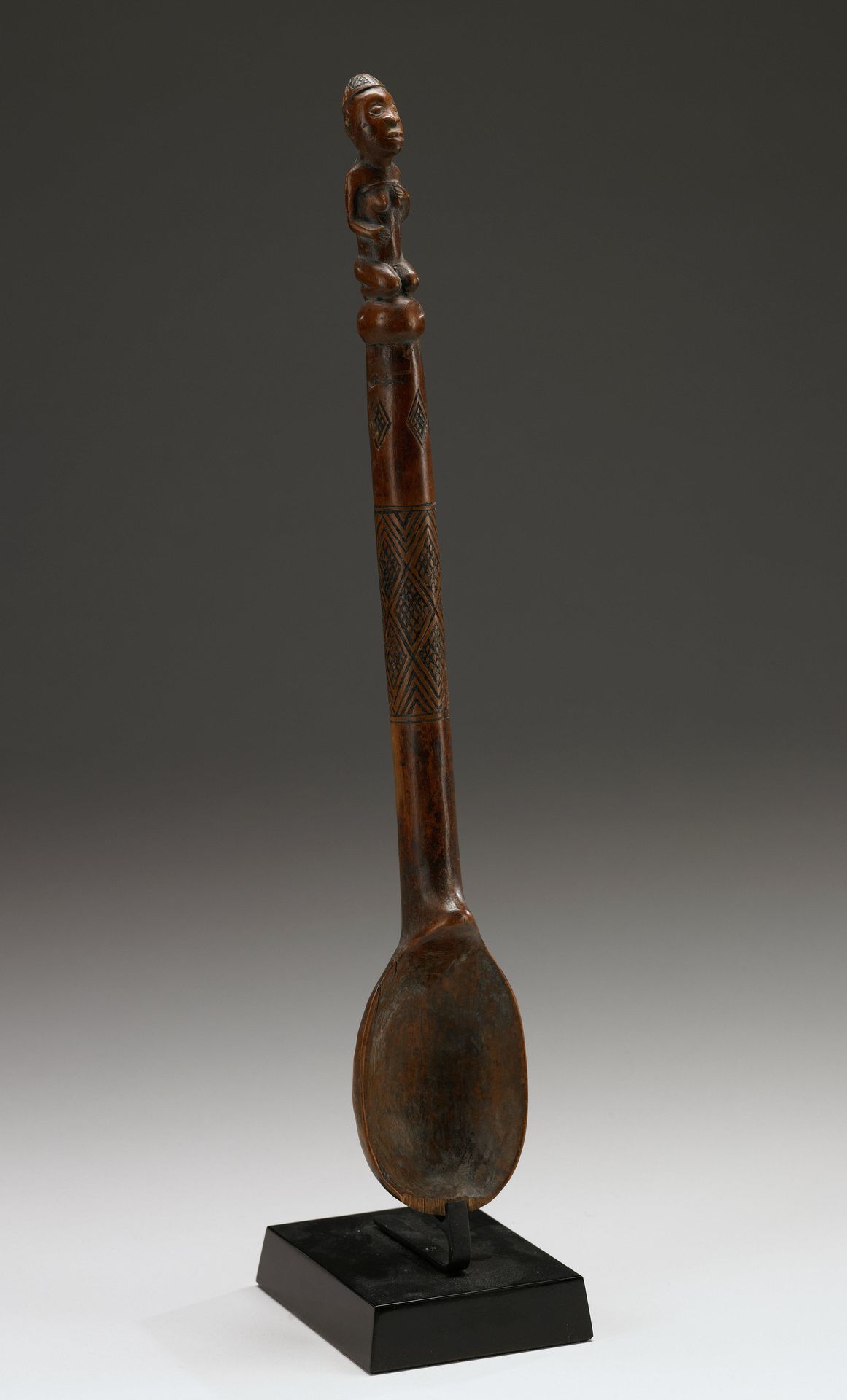
This ceremonial spoon was carved by an artist of the Yombe people, from wood. The material's influence on the spoon's appearance is clear; the carver would have needed expertise to avoid splitting it, working with its grain. Notice the figure at the spoon's apex, and the geometric patterns etched into the handle. These would have required focused skill, time, and labor using specialized tools. This wasn't just an aesthetic act, but also one with social and cultural significance. Utilitarian objects like spoons can be art, charged with meaning. This one likely played a key role in rituals, perhaps associated with nourishment, status, or communal identity. It prompts us to reconsider the place of craft alongside art, moving beyond traditional hierarchies.
Ceremonial Spoon
c. 19th century


Artwork details
- Medium
- carving, sculpture, wood
- Dimensions
- 17 x 3 5/16 x 4 in. (43.18 x 8.41 x 10.16 cm) (including attached base)
- Location
- Minneapolis Institute of Art
- Copyright
- Public Domain
Tags
Comments
Share your thoughts
About this artwork
This ceremonial spoon was carved by an artist of the Yombe people, from wood. The material's influence on the spoon's appearance is clear; the carver would have needed expertise to avoid splitting it, working with its grain. Notice the figure at the spoon's apex, and the geometric patterns etched into the handle. These would have required focused skill, time, and labor using specialized tools. This wasn't just an aesthetic act, but also one with social and cultural significance. Utilitarian objects like spoons can be art, charged with meaning. This one likely played a key role in rituals, perhaps associated with nourishment, status, or communal identity. It prompts us to reconsider the place of craft alongside art, moving beyond traditional hierarchies.
Comments
Share your thoughts