About this artwork
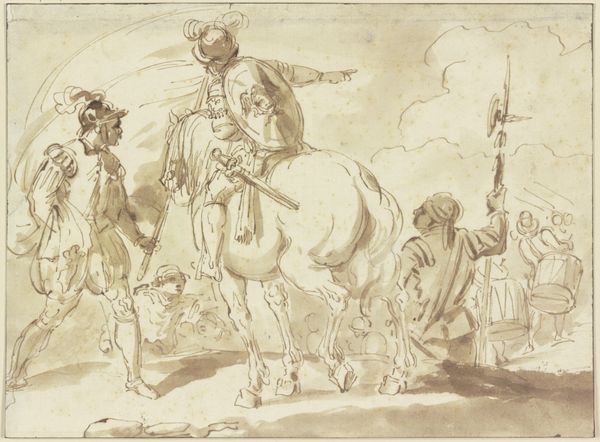
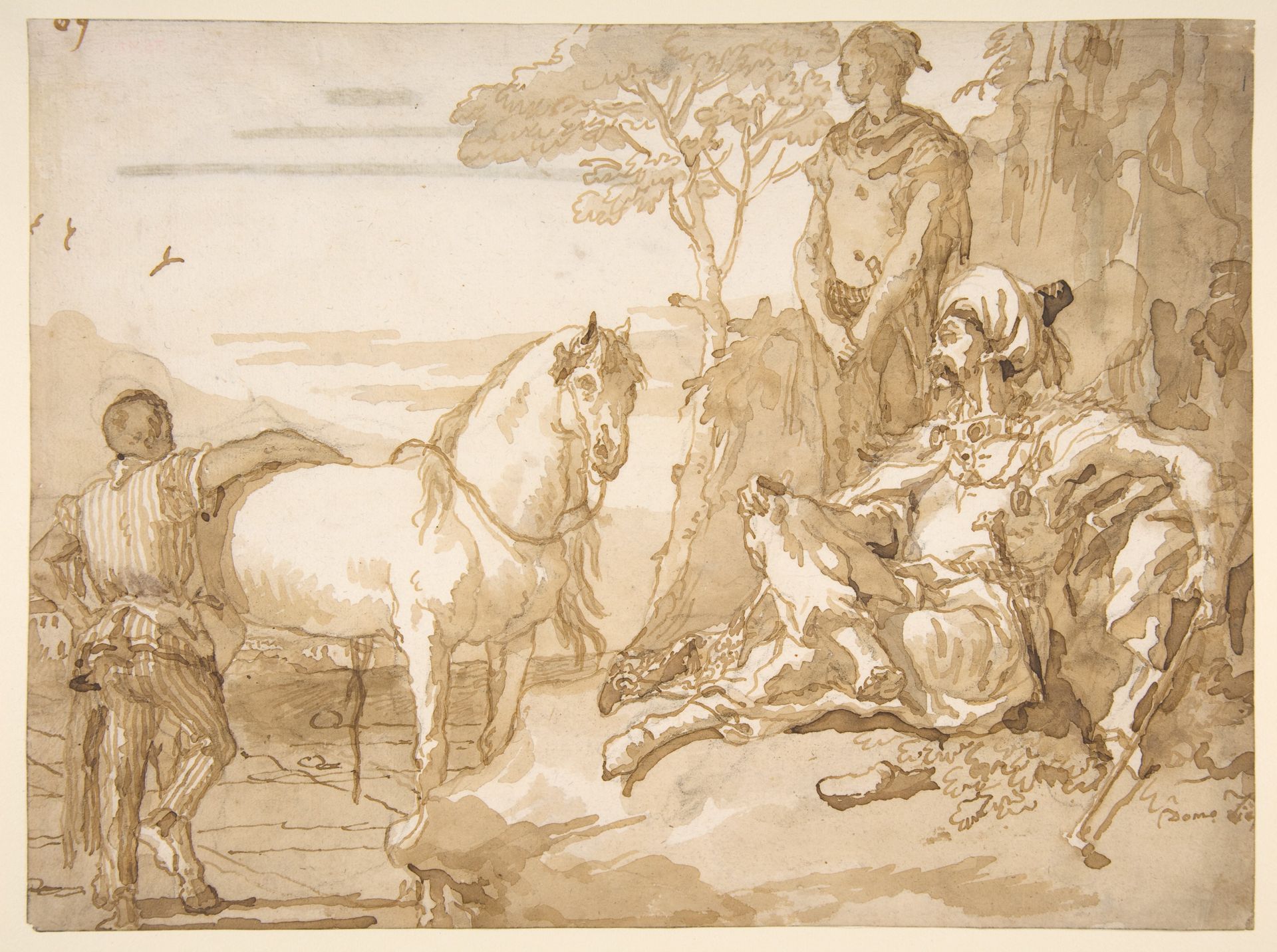
Giovanni Domenico Tiepolo created this ink drawing, "An Oriental Chieftain Resting," with a striking, sepia wash. The monochromatic palette unites the diverse figures and landscape into a cohesive visual experience. Tiepolo's composition arranges the figures in a pyramidal structure, drawing the eye from the standing attendant on the left, to the resting chieftain, and up to the figures in the background. This structured arrangement creates a sense of balance. The loose, flowing lines and the use of wash give the scene a dynamic, almost dreamlike quality, contrasting with the formal arrangement of elements. We might interpret the chieftain's relaxed pose and the exotic details of his attire through the lens of Orientalism, a Western fascination with the East. The artist uses line and shading to explore themes of power, exoticism, and the relationship between the observer and the observed. The drawing remains open to interpretation, inviting us to consider how its formal elements shape our understanding of cultural representation and artistic expression.
An Oriental Chieftain Resting 1727 - 1804

Giovanni Domenico Tiepolo
1727 - 1804
The Metropolitan Museum of Art
Metropolitan Museum of Art, New York, NYArtwork details
- Dimensions
- sheet: 7 13/16 x 10 9/16 in. (19.9 x 26.8 cm)
- Location
- Metropolitan Museum of Art, New York, NY
- Copyright
- Public Domain
Comments
No comments
About this artwork
Giovanni Domenico Tiepolo created this ink drawing, "An Oriental Chieftain Resting," with a striking, sepia wash. The monochromatic palette unites the diverse figures and landscape into a cohesive visual experience. Tiepolo's composition arranges the figures in a pyramidal structure, drawing the eye from the standing attendant on the left, to the resting chieftain, and up to the figures in the background. This structured arrangement creates a sense of balance. The loose, flowing lines and the use of wash give the scene a dynamic, almost dreamlike quality, contrasting with the formal arrangement of elements. We might interpret the chieftain's relaxed pose and the exotic details of his attire through the lens of Orientalism, a Western fascination with the East. The artist uses line and shading to explore themes of power, exoticism, and the relationship between the observer and the observed. The drawing remains open to interpretation, inviting us to consider how its formal elements shape our understanding of cultural representation and artistic expression.
Comments
No comments