About this artwork
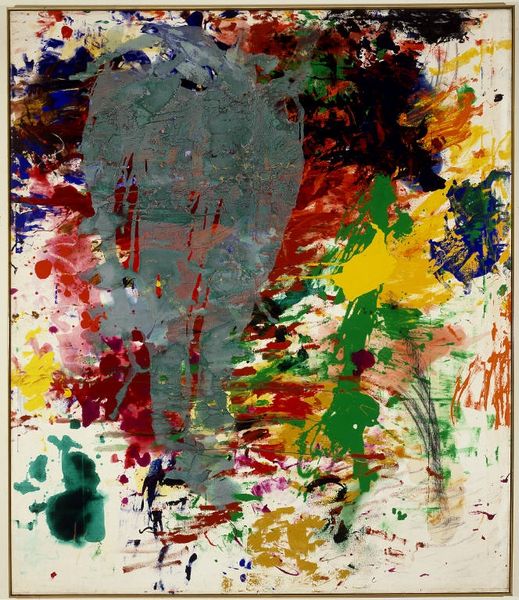
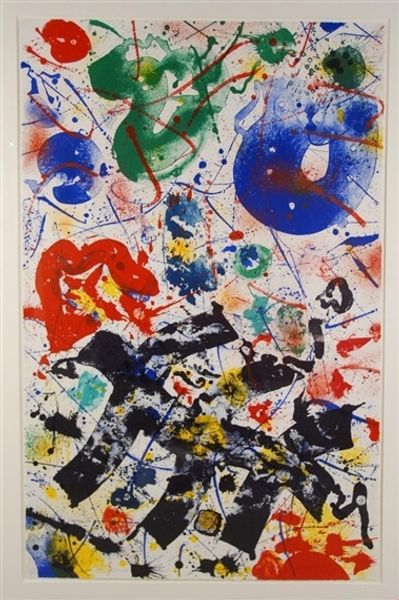
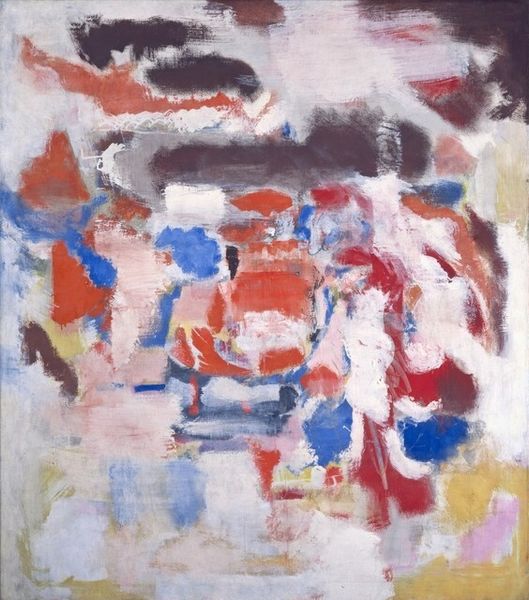
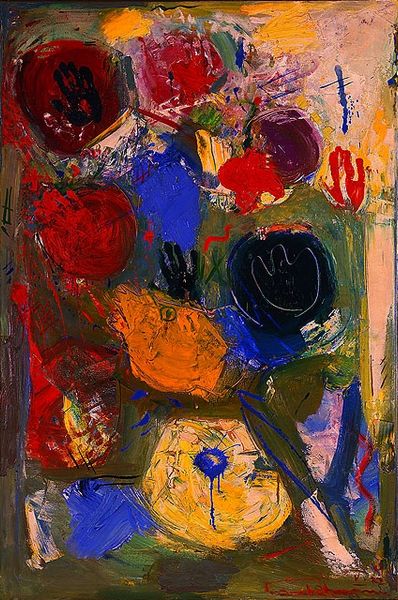
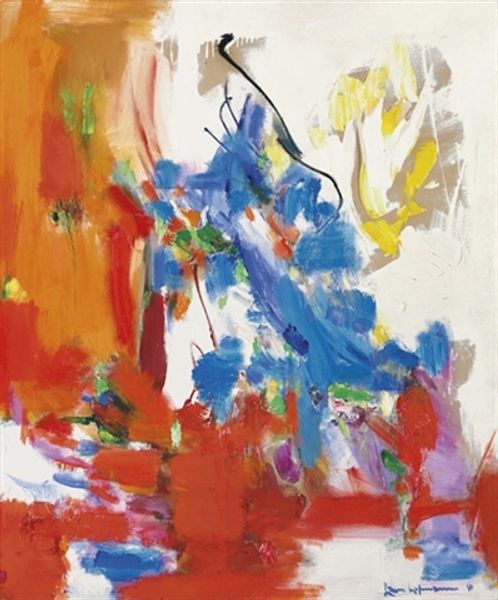
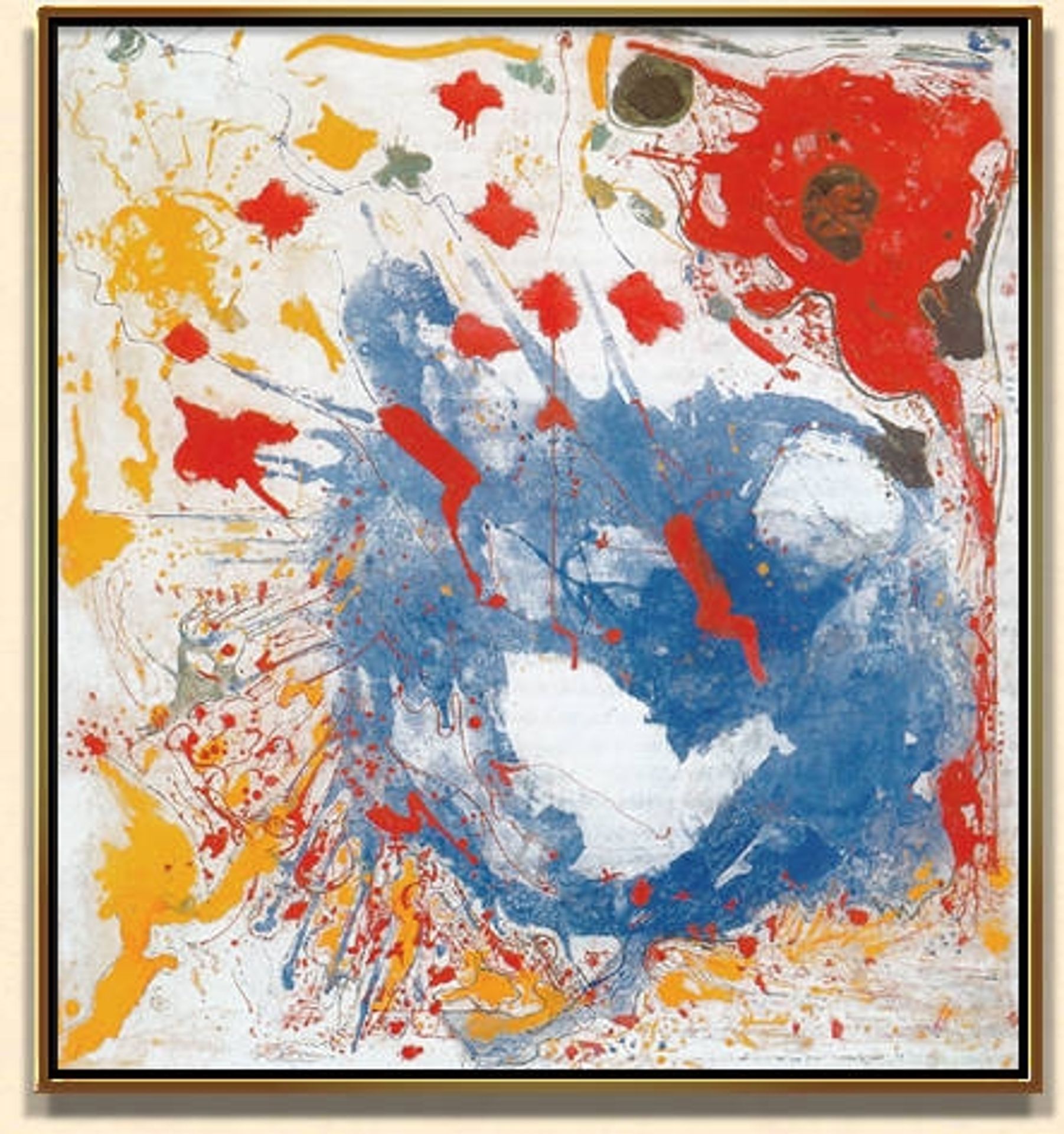
Editor: Here we have Hans Hofmann's *Cataclysm*, created in 1945. It's an explosion of color and texture using, it seems, acrylic on canvas. The overall impression I get is of chaos, of something being ripped apart. What strikes you when you look at this piece? Curator: Given the historical context of 1945, immediately following the Second World War, the title itself, "Cataclysm," resonates powerfully. Hofmann, as a German émigré in America, was acutely aware of the socio-political upheavals of the time. How might the cultural anxieties of that era be reflected in his artistic choices, do you think? Editor: I can see that. The shattering effect of the colors and their arrangement maybe a direct emotional response to that instability and destruction that existed in 1945. Does that link to why Hofmann chose such explosive techniques with the paint, with dripping and splashing? Curator: Precisely. Hofmann was experimenting with pushing and pulling colors, creating spatial tensions that mirrored the psychological tensions of the post-war world. We also have to consider the growing prominence of abstract expressionism as a rejection of traditional, representational art forms. Could *Cataclysm* also be interpreted as a declaration of a new artistic and social order? Editor: I hadn’t considered that it could be a conscious move away from what was considered traditional art, rather than just responding to what he felt at the time. Curator: Think of the institutional shifts. Museums and galleries in New York were increasingly showcasing abstract art, establishing America as a new center for avant-garde art. *Cataclysm* became part of this movement. The politics of imagery was really shifting then. Editor: I'm learning so much about looking at the background as much as at the brushstrokes. Thanks, that gives me plenty to think about! Curator: Indeed! Seeing art as interwoven with its time gives us new perspectives.

Artwork details
- Copyright
- Hans Hofmann,Fair Use
Tags
natural stone pattern
abstract expressionism
abstract painting
egg art
handmade artwork painting
tile art
fluid art
acrylic on canvas
paint stroke
watercolor
Comments
Be the first to share your thoughts about this work.
About this artwork
Editor: Here we have Hans Hofmann's *Cataclysm*, created in 1945. It's an explosion of color and texture using, it seems, acrylic on canvas. The overall impression I get is of chaos, of something being ripped apart. What strikes you when you look at this piece? Curator: Given the historical context of 1945, immediately following the Second World War, the title itself, "Cataclysm," resonates powerfully. Hofmann, as a German émigré in America, was acutely aware of the socio-political upheavals of the time. How might the cultural anxieties of that era be reflected in his artistic choices, do you think? Editor: I can see that. The shattering effect of the colors and their arrangement maybe a direct emotional response to that instability and destruction that existed in 1945. Does that link to why Hofmann chose such explosive techniques with the paint, with dripping and splashing? Curator: Precisely. Hofmann was experimenting with pushing and pulling colors, creating spatial tensions that mirrored the psychological tensions of the post-war world. We also have to consider the growing prominence of abstract expressionism as a rejection of traditional, representational art forms. Could *Cataclysm* also be interpreted as a declaration of a new artistic and social order? Editor: I hadn’t considered that it could be a conscious move away from what was considered traditional art, rather than just responding to what he felt at the time. Curator: Think of the institutional shifts. Museums and galleries in New York were increasingly showcasing abstract art, establishing America as a new center for avant-garde art. *Cataclysm* became part of this movement. The politics of imagery was really shifting then. Editor: I'm learning so much about looking at the background as much as at the brushstrokes. Thanks, that gives me plenty to think about! Curator: Indeed! Seeing art as interwoven with its time gives us new perspectives.
Comments
Be the first to share your thoughts about this work.