c. early to mid 19th century
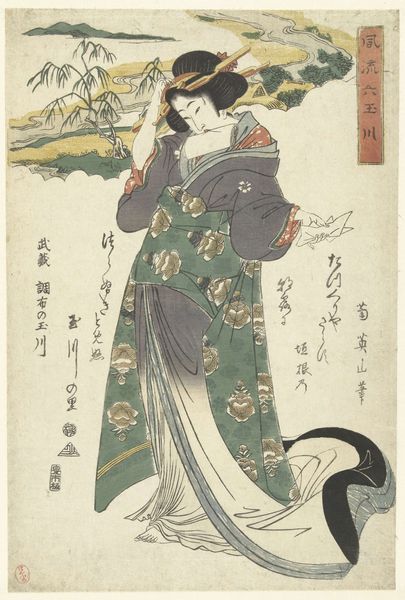
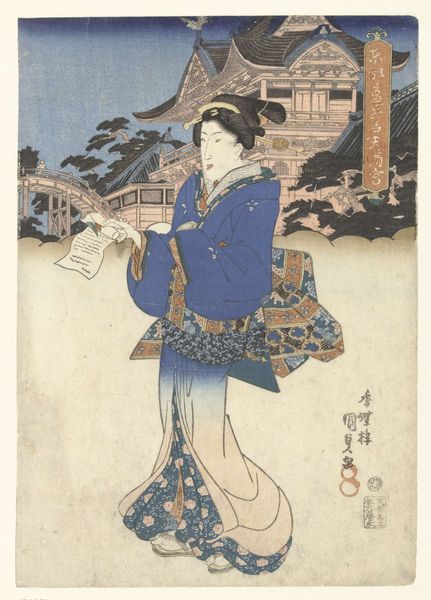
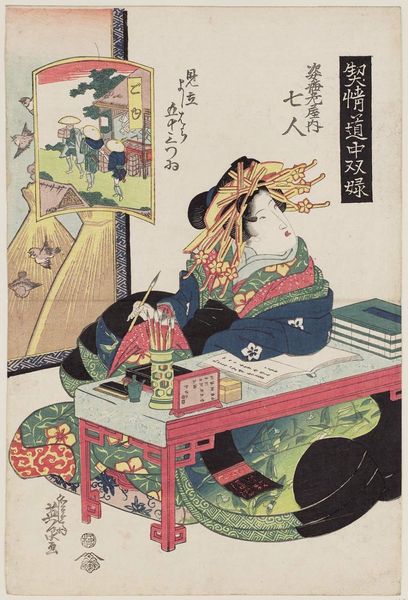
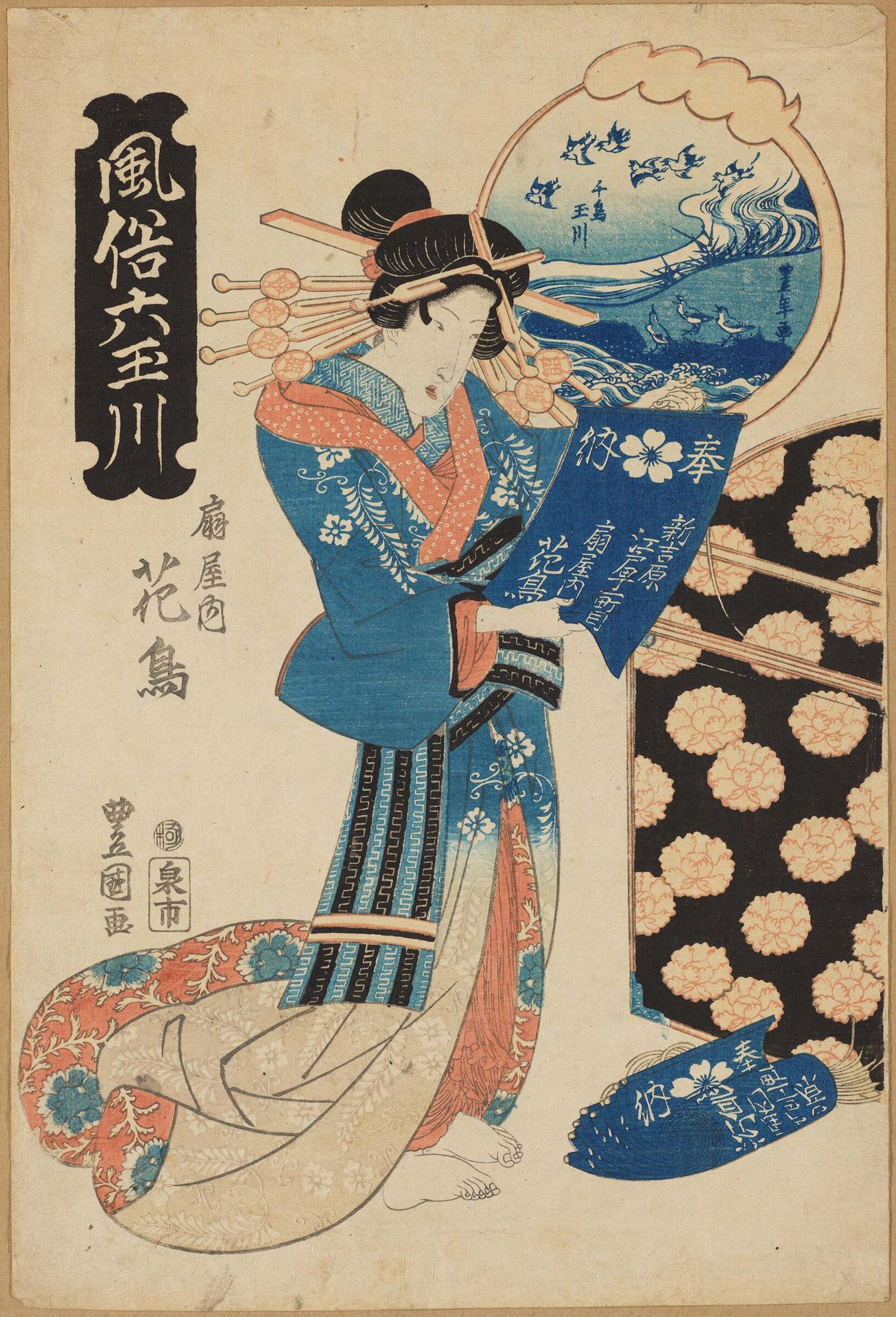
Hanatori of the Ågiya, from the series FÅ«zoku Mu Tamagawa (The Six Jewel Rivers in Popular Customs)

Curatorial notes
Editor: This is Utagawa Toyokuni II's "Hanatori of the Ågiya, from the series FÅ«zoku Mu Tamagawa," printed sometime in the 19th century. It's a woodblock print on paper, and I'm struck by the layered blues and how the woman's figure is framed by patterns. How do you read the symbolism in this piece? Curator: Ah, yes, the layered blues *are* captivating, aren't they? I see echoes of fleeting beauty, like a dream half-remembered. The poem she reads, likely a love poem, contrasts with the reality of her profession, creating a poignant tension, a fleeting reflection of a deeper longing. It's almost like a whisper across centuries, don't you think? Editor: Absolutely, the poem seems to highlight the ephemeral nature of beauty and connection. I hadn't thought of it quite like that – the longing really comes through now! Thanks! Curator: It's always there, in the delicate curve of the neck, the careful placement of the fan. Art, like life, is full of these quiet contradictions, eh?