About this artwork
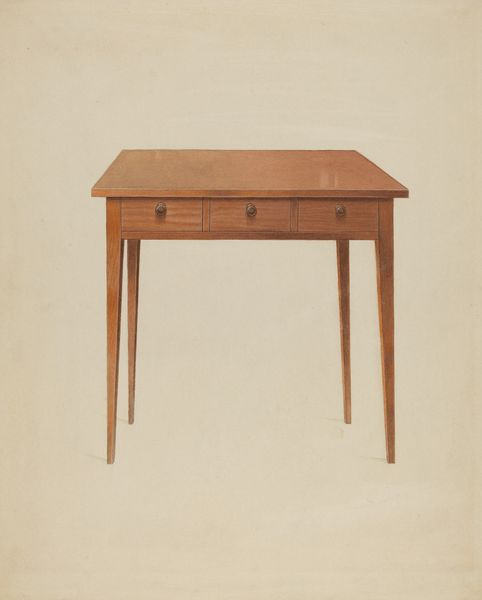
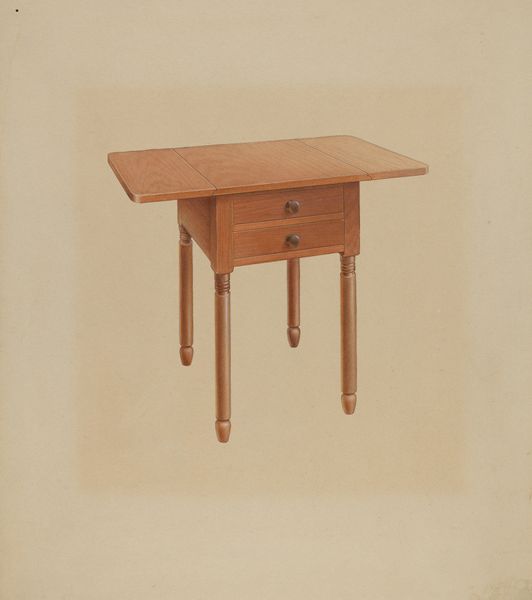
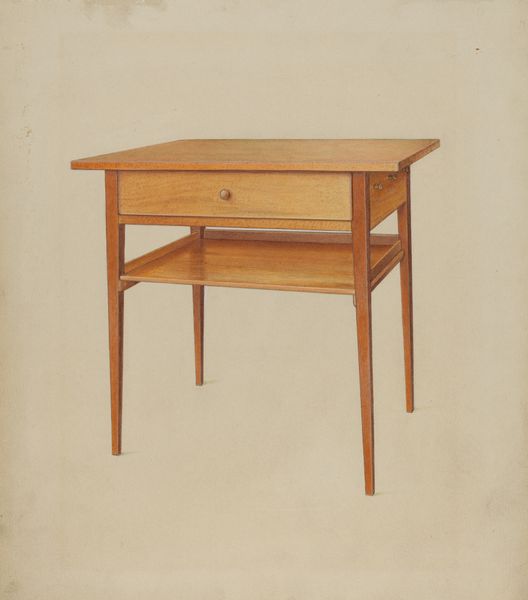
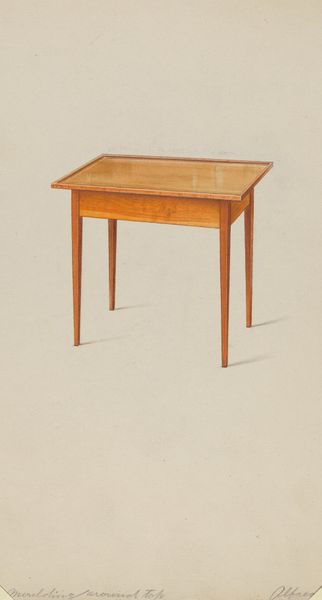
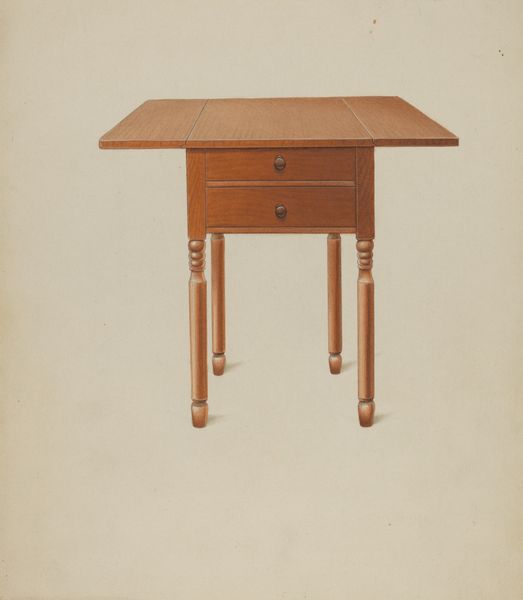
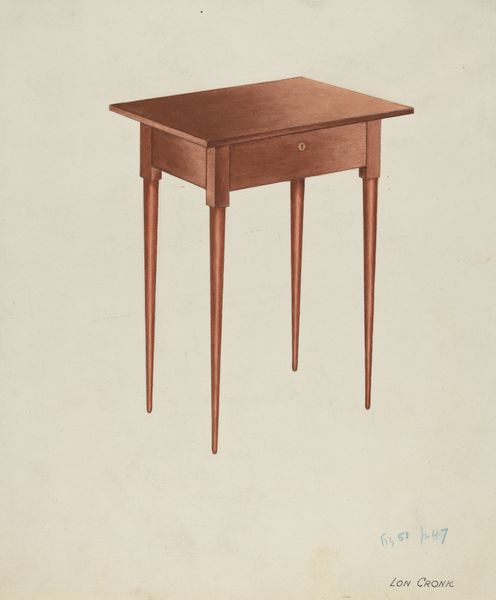
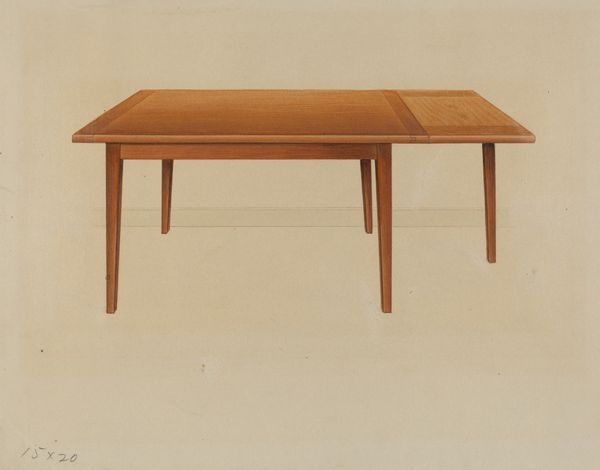
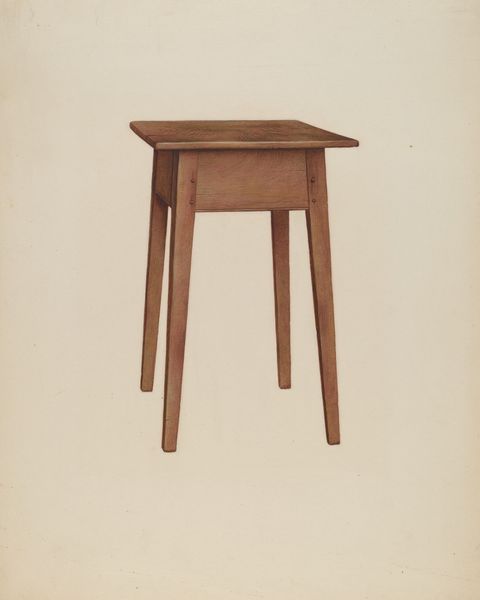
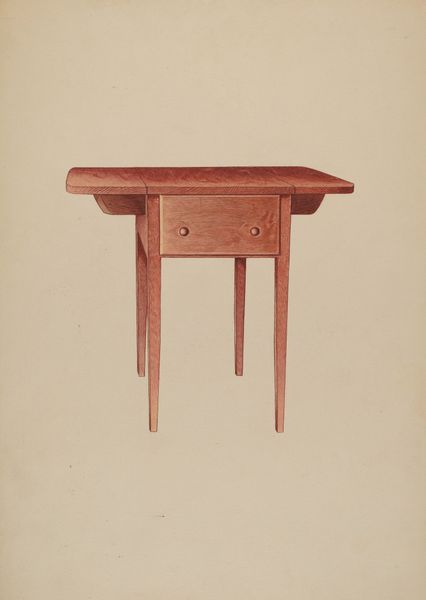
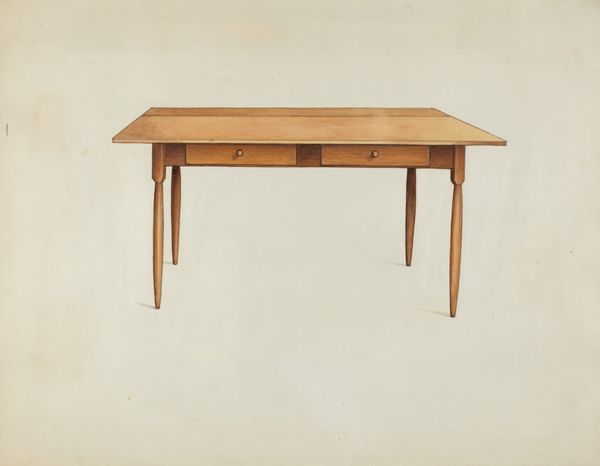
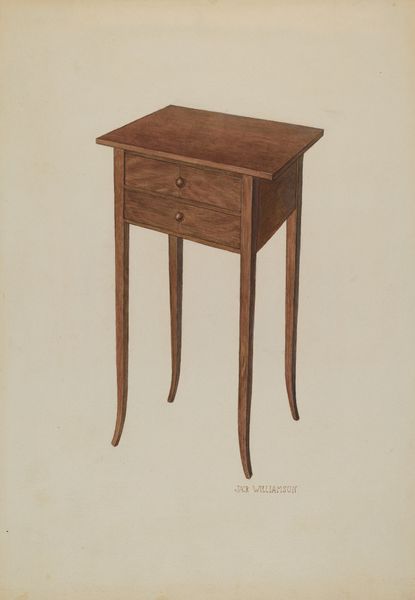
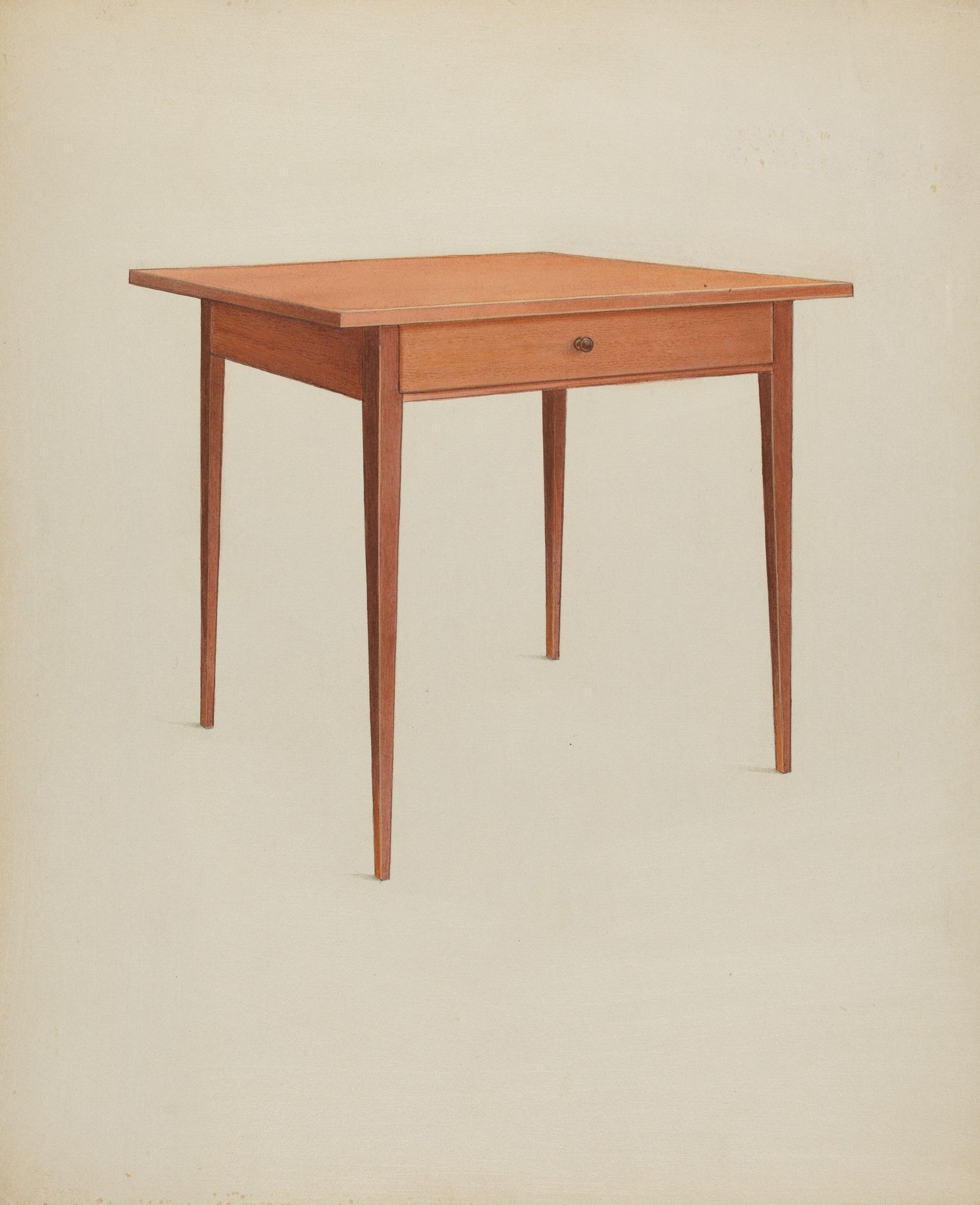
Curator: Our next piece is "Shaker Table", rendered around 1937. The artist, Winslow Rich, chose a meticulous style to capture its wooden form and detail, even crafting a realistic wood grain texture in pencil and watercolor. Editor: It’s almost ethereal; those elongated, tapering legs make it feel like it's barely touching the ground. There's a simplicity that borders on austerity. Curator: That perceived austerity aligns well with the Shaker ethos, a community historically dedicated to simplicity, utility, and honesty in design. Considering their dedication to function, this isn't merely furniture, but a functional statement of community values reflected in their craft. Editor: So, it's a visualization of their beliefs through a tangible, material object. Does this "honesty" extend to the methods of production? Were they utilizing the latest industrial techniques, or adhering to traditional woodworking? Curator: Traditionally, Shaker furniture was made within their own communities, a self-sufficient approach minimizing reliance on external economies. Each piece reflects their devotion to a communal life and self-sustaining industry. You can find similar expressions in the quilts and architecture that carry this common, intersectional thread through their artistic contributions to social change and Utopian communities. Editor: Fascinating to consider it in that light—as a material consequence of a very specific societal structure. The means of its making is entirely tied to its being. I wonder, how did Shaker design influence the broader marketplace and industry outside of their own closed community? Curator: That's an important question. The Shaker dedication to utility and simple forms influenced modernist design significantly, proving that simplicity can achieve complexity. Their approach was indeed radical. Editor: The way we imbue objects with identity, intent, even when these things are conceived as 'simple' – I’ll be thinking about the construction of this table a bit differently now, and the intentionality behind it. Curator: Indeed, hopefully viewers will be left considering the cultural weight held by such a beautifully utilitarian object and the influence of minority utopian design, and will explore the question further through its art.


Artwork details
- Medium
- drawing, pencil, wood
- Dimensions
- overall: 27.9 x 22.8 cm (11 x 9 in.) Original IAD Object: 26 1/2" high; 17" deep; 25" wide
- Copyright
- National Gallery of Art: CC0 1.0
Tags
Comments
Share your thoughts
About this artwork
Curator: Our next piece is "Shaker Table", rendered around 1937. The artist, Winslow Rich, chose a meticulous style to capture its wooden form and detail, even crafting a realistic wood grain texture in pencil and watercolor. Editor: It’s almost ethereal; those elongated, tapering legs make it feel like it's barely touching the ground. There's a simplicity that borders on austerity. Curator: That perceived austerity aligns well with the Shaker ethos, a community historically dedicated to simplicity, utility, and honesty in design. Considering their dedication to function, this isn't merely furniture, but a functional statement of community values reflected in their craft. Editor: So, it's a visualization of their beliefs through a tangible, material object. Does this "honesty" extend to the methods of production? Were they utilizing the latest industrial techniques, or adhering to traditional woodworking? Curator: Traditionally, Shaker furniture was made within their own communities, a self-sufficient approach minimizing reliance on external economies. Each piece reflects their devotion to a communal life and self-sustaining industry. You can find similar expressions in the quilts and architecture that carry this common, intersectional thread through their artistic contributions to social change and Utopian communities. Editor: Fascinating to consider it in that light—as a material consequence of a very specific societal structure. The means of its making is entirely tied to its being. I wonder, how did Shaker design influence the broader marketplace and industry outside of their own closed community? Curator: That's an important question. The Shaker dedication to utility and simple forms influenced modernist design significantly, proving that simplicity can achieve complexity. Their approach was indeed radical. Editor: The way we imbue objects with identity, intent, even when these things are conceived as 'simple' – I’ll be thinking about the construction of this table a bit differently now, and the intentionality behind it. Curator: Indeed, hopefully viewers will be left considering the cultural weight held by such a beautifully utilitarian object and the influence of minority utopian design, and will explore the question further through its art.
Comments
Share your thoughts