About this artwork
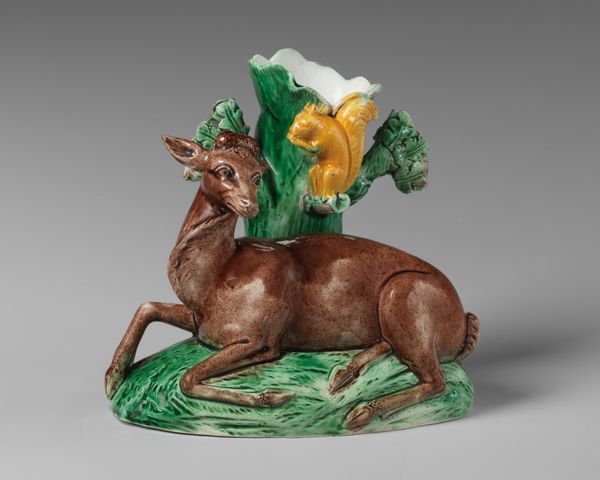
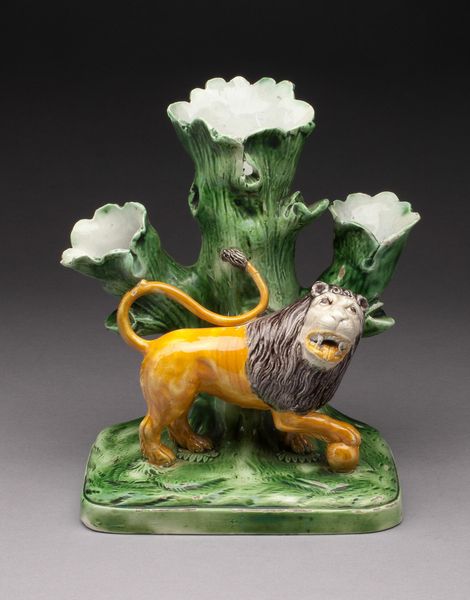
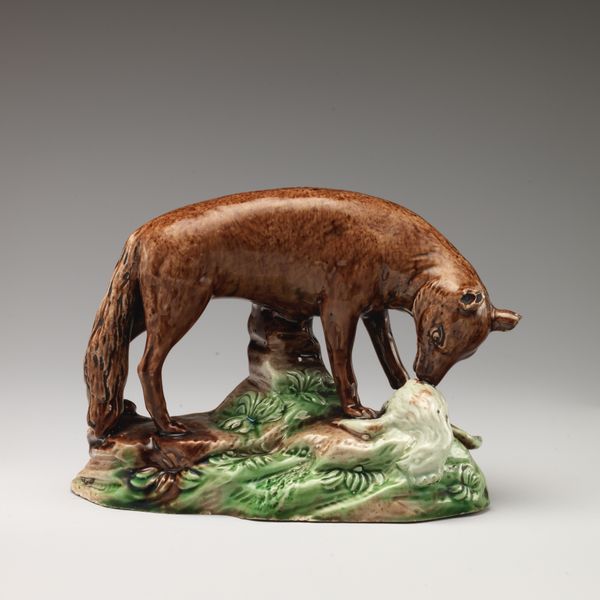
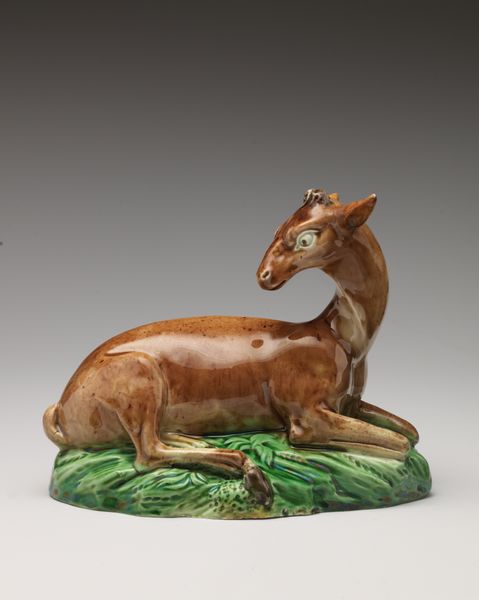
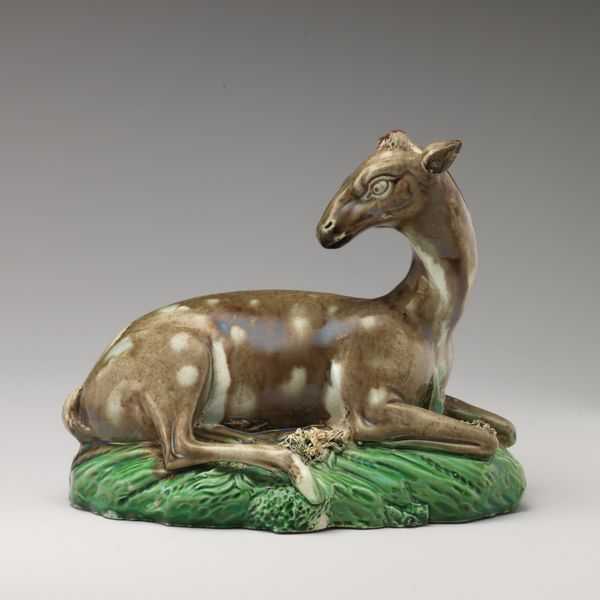
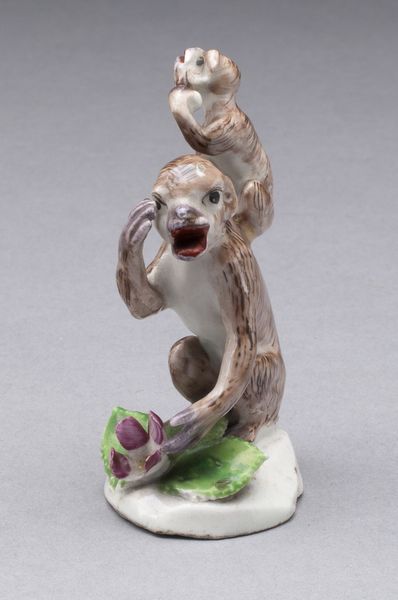
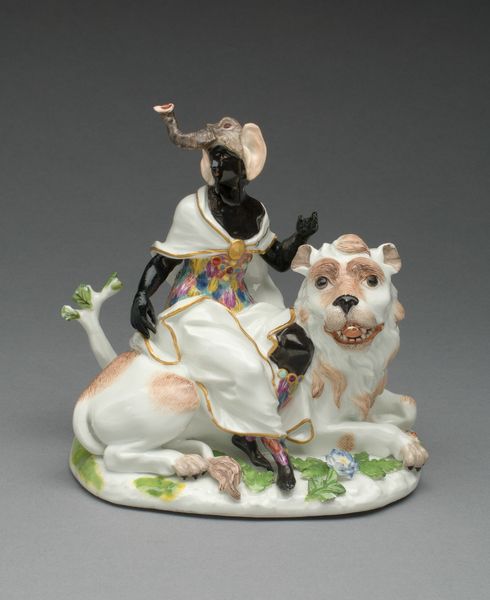
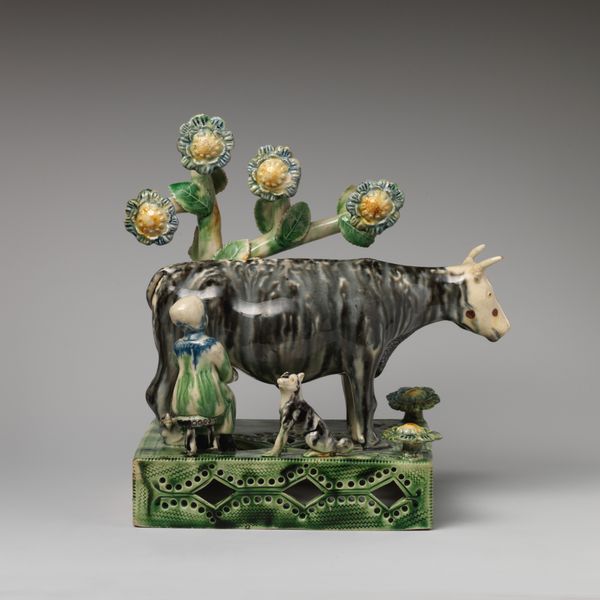
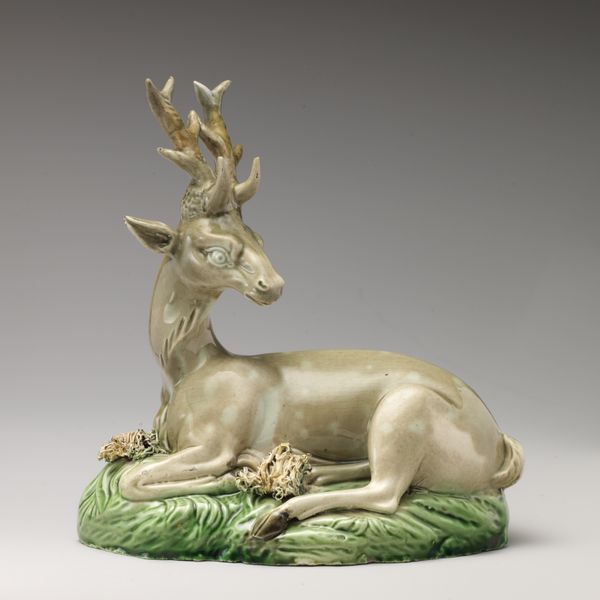
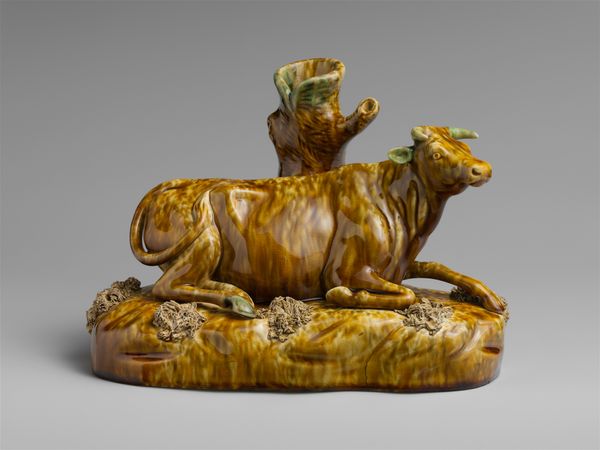
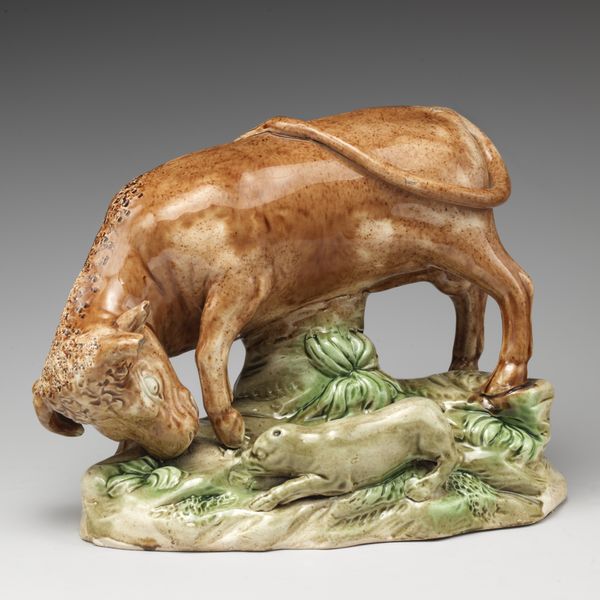
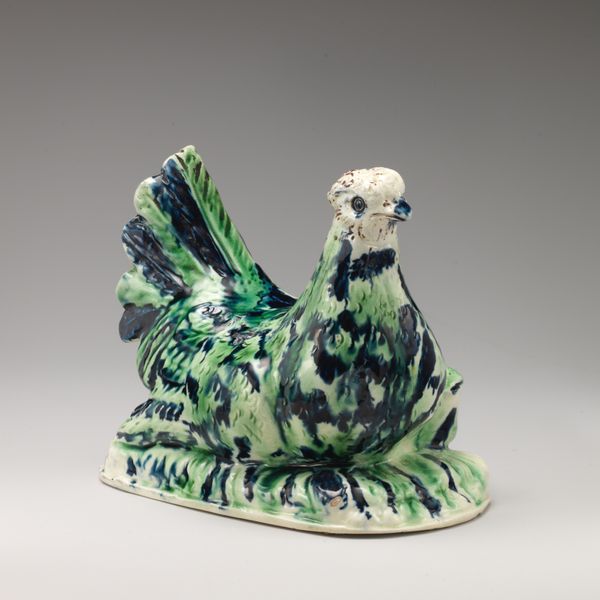
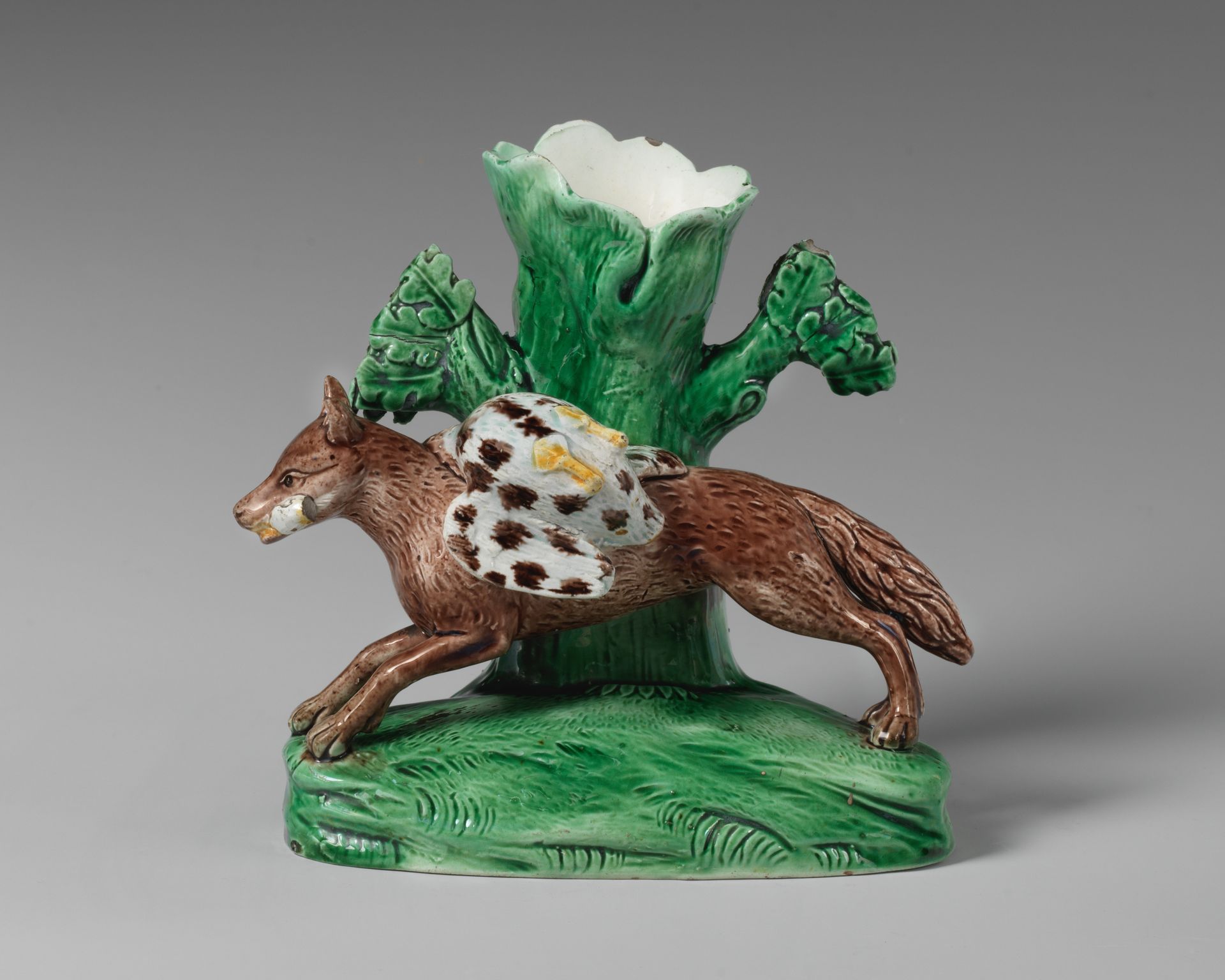
This is Ralph Wood the Younger’s, five-inch high, flower holder. It’s a striking example of late 18th-century British ceramic art. The holder has been shaped with a naturalistic base that rises into a leafy stem from which sprouts a white, stylized flower. What immediately grabs your eye is how Wood combines the organic with the fantastical. The colours are bright, with greens and browns dominating the composition, creating a vivid contrast that emphasizes the artifice of nature. Notice the fox-like creature, perched mid-stride across the base, it seems to defy expectations with its patterned wings. Consider how the scale of the animal subverts our sense of reality. Is it a predator, a familiar, or simply decorative? This uncertainty invites a semiotic interpretation, reflecting the era’s fascination with both scientific classification and fanciful embellishment. The flower holder destabilizes our usual categories of understanding. The piece acts as a site where art, nature, and decoration meet, challenging us to reconsider our relationship with the world around us.
Flower holder
1775 - 1795

Ralph Wood the Younger
1748 - 1795
The Metropolitan Museum of Art
Metropolitan Museum of Art, New York, NYArtwork details
- Dimensions
- Height: 5 in. (12.7 cm)
- Location
- Metropolitan Museum of Art, New York, NY
- Copyright
- Public Domain
Comments
Share your thoughts
About this artwork
This is Ralph Wood the Younger’s, five-inch high, flower holder. It’s a striking example of late 18th-century British ceramic art. The holder has been shaped with a naturalistic base that rises into a leafy stem from which sprouts a white, stylized flower. What immediately grabs your eye is how Wood combines the organic with the fantastical. The colours are bright, with greens and browns dominating the composition, creating a vivid contrast that emphasizes the artifice of nature. Notice the fox-like creature, perched mid-stride across the base, it seems to defy expectations with its patterned wings. Consider how the scale of the animal subverts our sense of reality. Is it a predator, a familiar, or simply decorative? This uncertainty invites a semiotic interpretation, reflecting the era’s fascination with both scientific classification and fanciful embellishment. The flower holder destabilizes our usual categories of understanding. The piece acts as a site where art, nature, and decoration meet, challenging us to reconsider our relationship with the world around us.
Comments
Share your thoughts