1834 - 1911
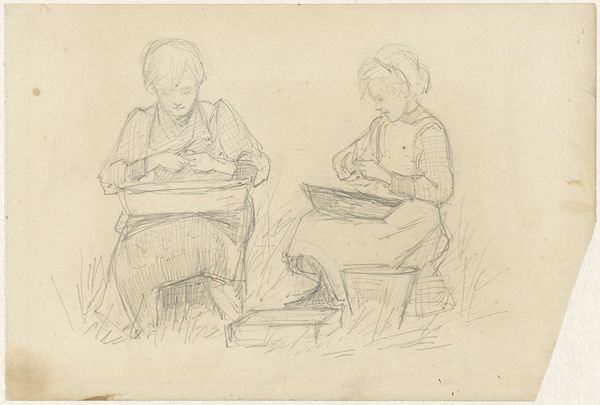
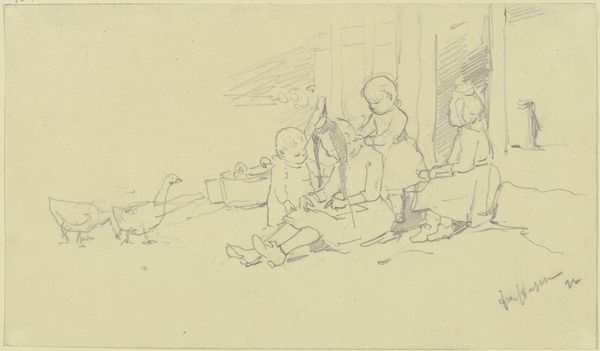
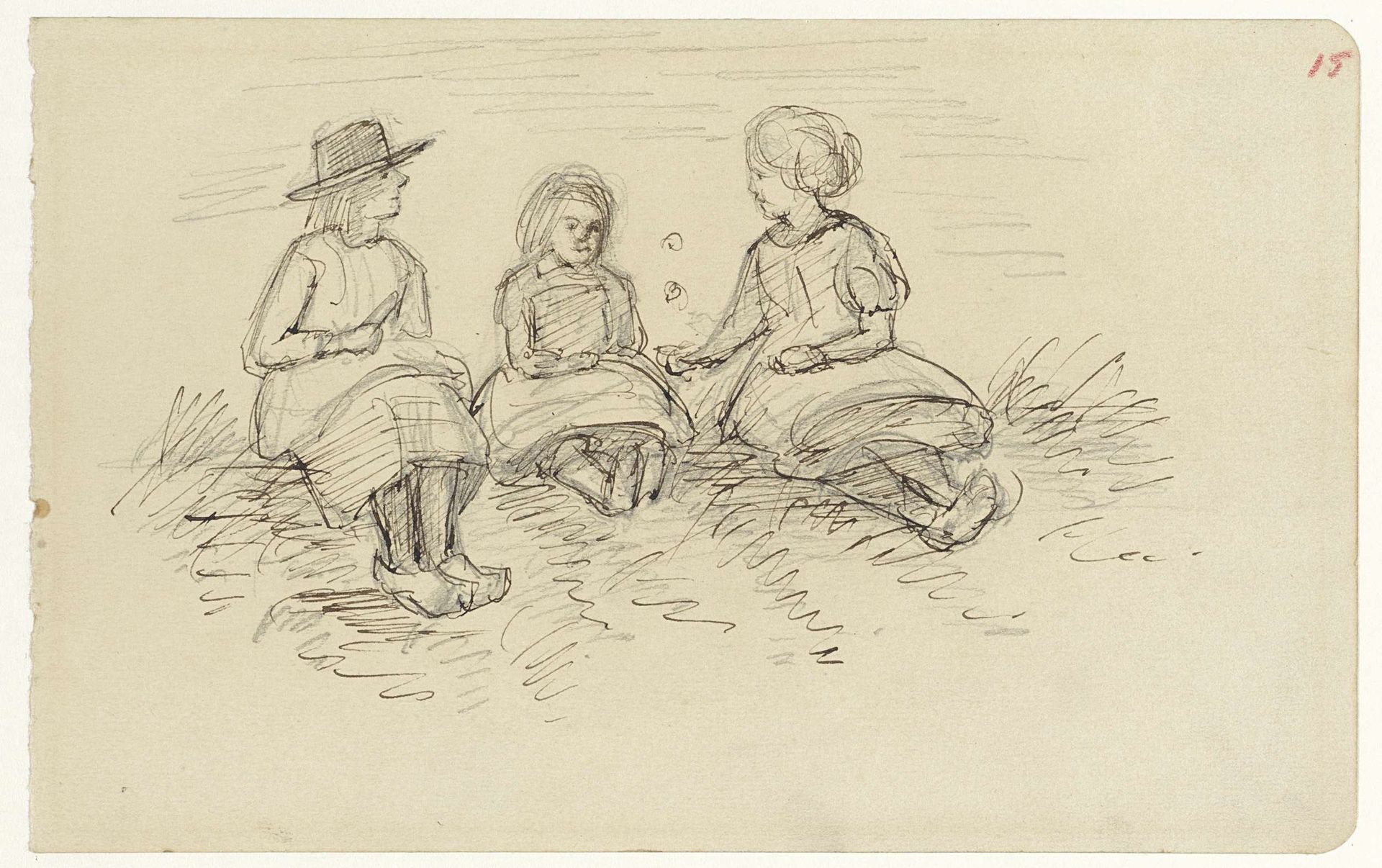
Drie zittende kinderen in het gras

Jozef Israëls
1824 - 1911Location
RijksmuseumListen to curator's interpretation
Curatorial notes
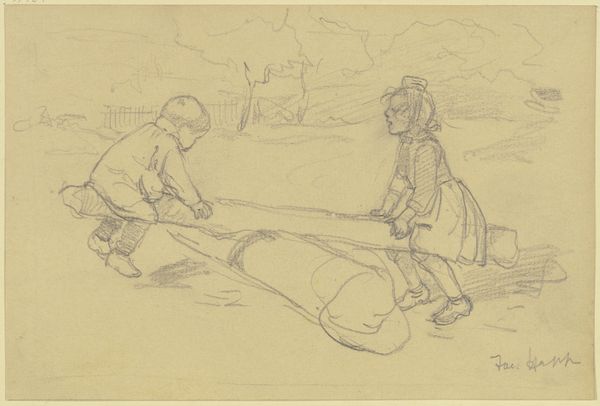
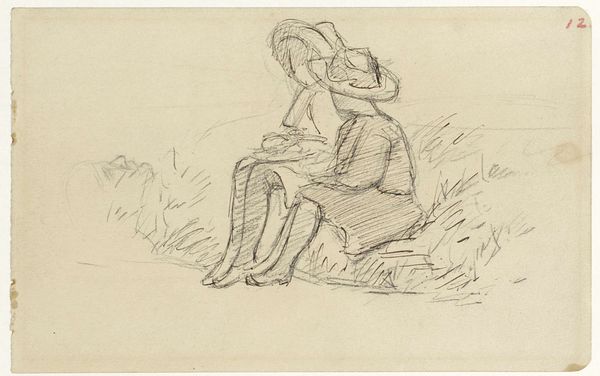
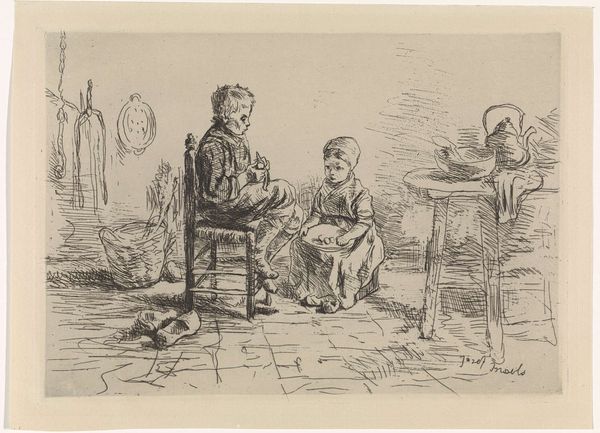
Editor: Here we have Jozef Israëls’ “Three Seated Children in the Grass,” likely dating from sometime between 1834 and 1911. It’s a delicate pencil drawing. The sketch-like quality makes it seem so intimate, like a candid glimpse into childhood. What do you see in this piece beyond its surface charm? Curator: Beyond the immediate sweetness, I see a work deeply rooted in its socio-cultural context. Israëls came from a background marked by social concern. So, in light of that, how might this simple scene reflect broader societal attitudes towards children during that era? Editor: I guess I hadn’t considered that it might be more than just a portrait. You’re suggesting the image might be engaging in the politics of childhood representation at that time? Curator: Exactly. During the late 19th century, childhood was becoming an increasingly politicized subject. Artists started portraying children less as miniature adults, more as vulnerable beings deserving protection and nurturing. Notice Israëls’ rendering—delicate, yes, but also with a certain weight of contemplation, even melancholy, in their postures. Does that change your interpretation? Editor: It does. I see a sense of vulnerability I missed before. But I’m wondering, is it possible we’re reading too much into a simple drawing? Maybe he was just sketching what he saw? Curator: It's a valid question. However, artists are always products of their time. Even a seemingly simple sketch can reveal societal values. Think about how Israëls' works were displayed – within the walls of bourgeois homes, contributing to constructing an image of family and innocence during times of massive industrialization and societal change. These weren’t simply objective snapshots. Editor: So, it's not just about what's in the drawing, but how it circulated and what cultural work it performed? Curator: Precisely. Israëls' sketchbook becomes a social document. Editor: I see, I was focused on the artist’s intention, but the social life of the artwork matters just as much. Thanks!