About this artwork
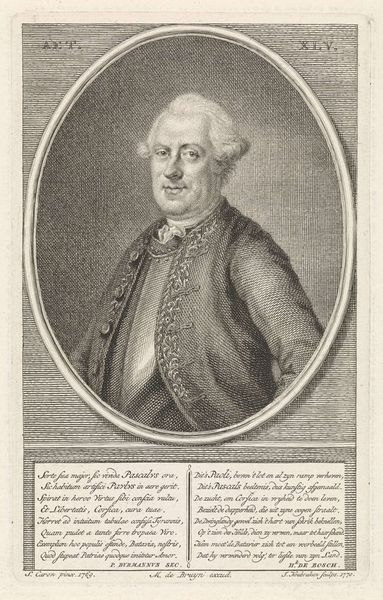
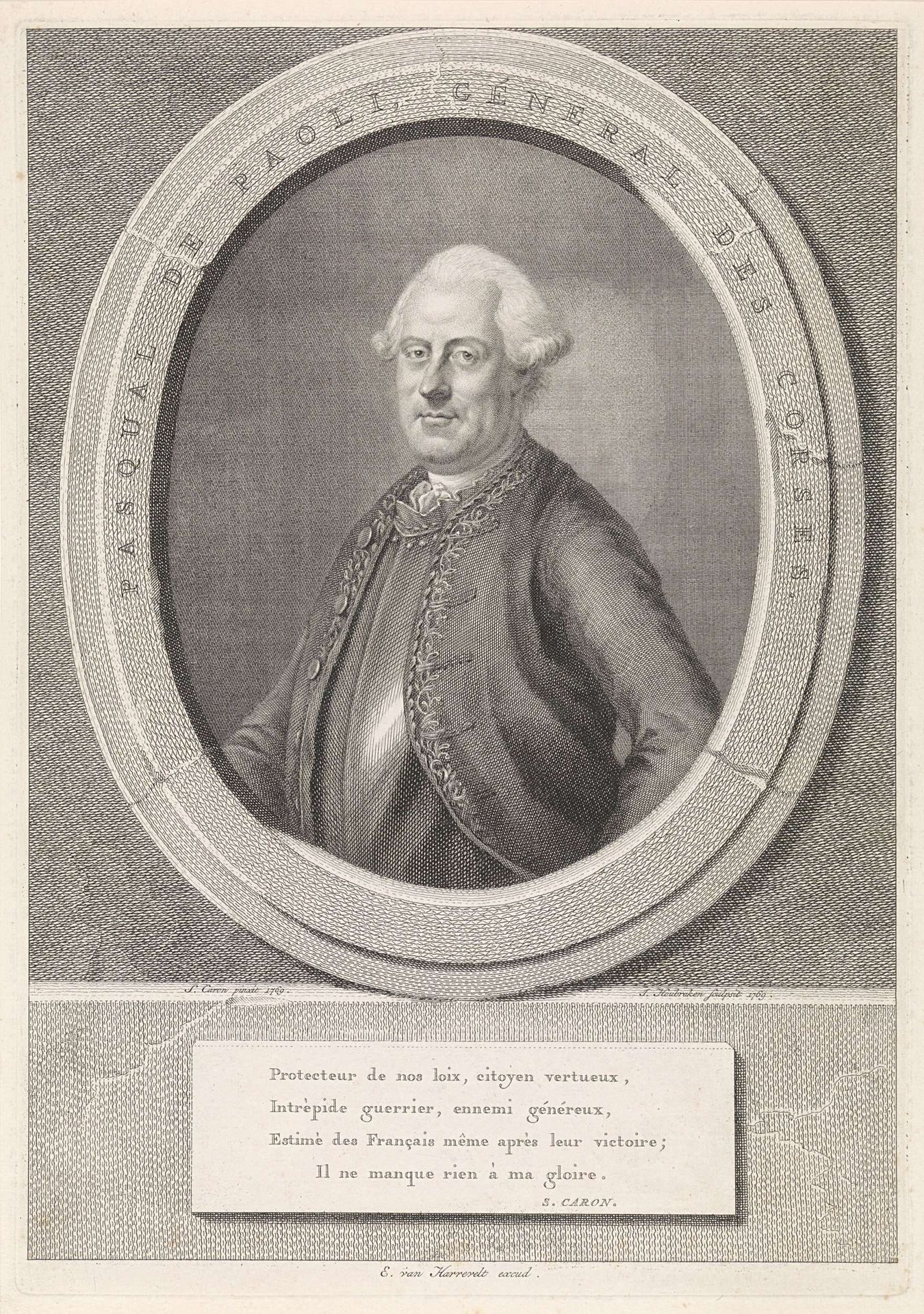
Editor: This is "Portret van Pasquale Paoli," a 1769 engraving on metal by Jacob Houbraken, housed in the Rijksmuseum. It’s striking how formal and posed it is, like a historical record. What kind of statement was Houbraken making with this portrait? Curator: It's more than just a record. Consider Pasquale Paoli as a figure. He was a Corsican patriot, a revolutionary leader fighting for independence. This portrait, produced in the Baroque style, lionizes him – but we need to think about who commissioned it and why. It places him within a tradition of representing power, even as he stood against established European powers. How might this image function as propaganda, even today? Editor: So, it's both a portrait and a political statement? The inscription underneath it is pretty laudatory. I see phrases such as "intrepid warrior." Curator: Exactly! The portrait itself creates a narrative. Houbraken's choice to use the Baroque style – known for its grandeur – frames Paoli as a heroic figure. But the engraving also invites a critical examination of power structures and resistance, even decolonisation. In what ways do you think images like these influence how we understand historical figures? Editor: That's a really good point. It kind of freezes Paoli as this stoic, unwavering figure which isn't likely the entire reality of who he was as a person. Curator: Right. It encourages us to look beyond the surface, to understand the politics inherent in representation, the forces at play behind even what looks like a straightforward portrait. Editor: This was quite eye-opening. I never thought about portraits being used for propaganda, but the context really shows the purpose and motivation. Curator: Indeed. Hopefully it's been useful in enriching our perception of not only the piece itself, but its historical reverberations as well.

Artwork details
- Dimensions
- height 349 mm, width 248 mm
- Location
- Rijksmuseum
- Copyright
- Rijks Museum: Open Domain
Comments
Share your thoughts
About this artwork
Editor: This is "Portret van Pasquale Paoli," a 1769 engraving on metal by Jacob Houbraken, housed in the Rijksmuseum. It’s striking how formal and posed it is, like a historical record. What kind of statement was Houbraken making with this portrait? Curator: It's more than just a record. Consider Pasquale Paoli as a figure. He was a Corsican patriot, a revolutionary leader fighting for independence. This portrait, produced in the Baroque style, lionizes him – but we need to think about who commissioned it and why. It places him within a tradition of representing power, even as he stood against established European powers. How might this image function as propaganda, even today? Editor: So, it's both a portrait and a political statement? The inscription underneath it is pretty laudatory. I see phrases such as "intrepid warrior." Curator: Exactly! The portrait itself creates a narrative. Houbraken's choice to use the Baroque style – known for its grandeur – frames Paoli as a heroic figure. But the engraving also invites a critical examination of power structures and resistance, even decolonisation. In what ways do you think images like these influence how we understand historical figures? Editor: That's a really good point. It kind of freezes Paoli as this stoic, unwavering figure which isn't likely the entire reality of who he was as a person. Curator: Right. It encourages us to look beyond the surface, to understand the politics inherent in representation, the forces at play behind even what looks like a straightforward portrait. Editor: This was quite eye-opening. I never thought about portraits being used for propaganda, but the context really shows the purpose and motivation. Curator: Indeed. Hopefully it's been useful in enriching our perception of not only the piece itself, but its historical reverberations as well.
Comments
Share your thoughts