About this artwork
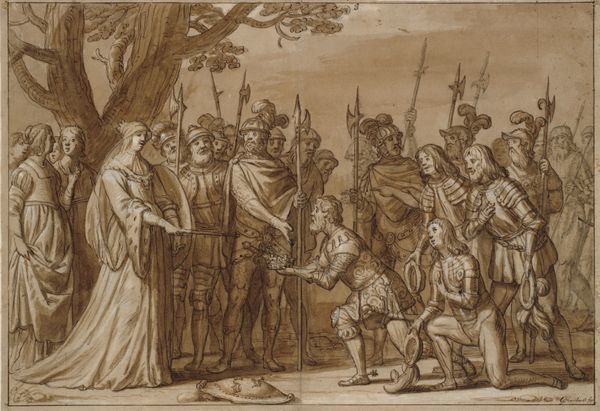
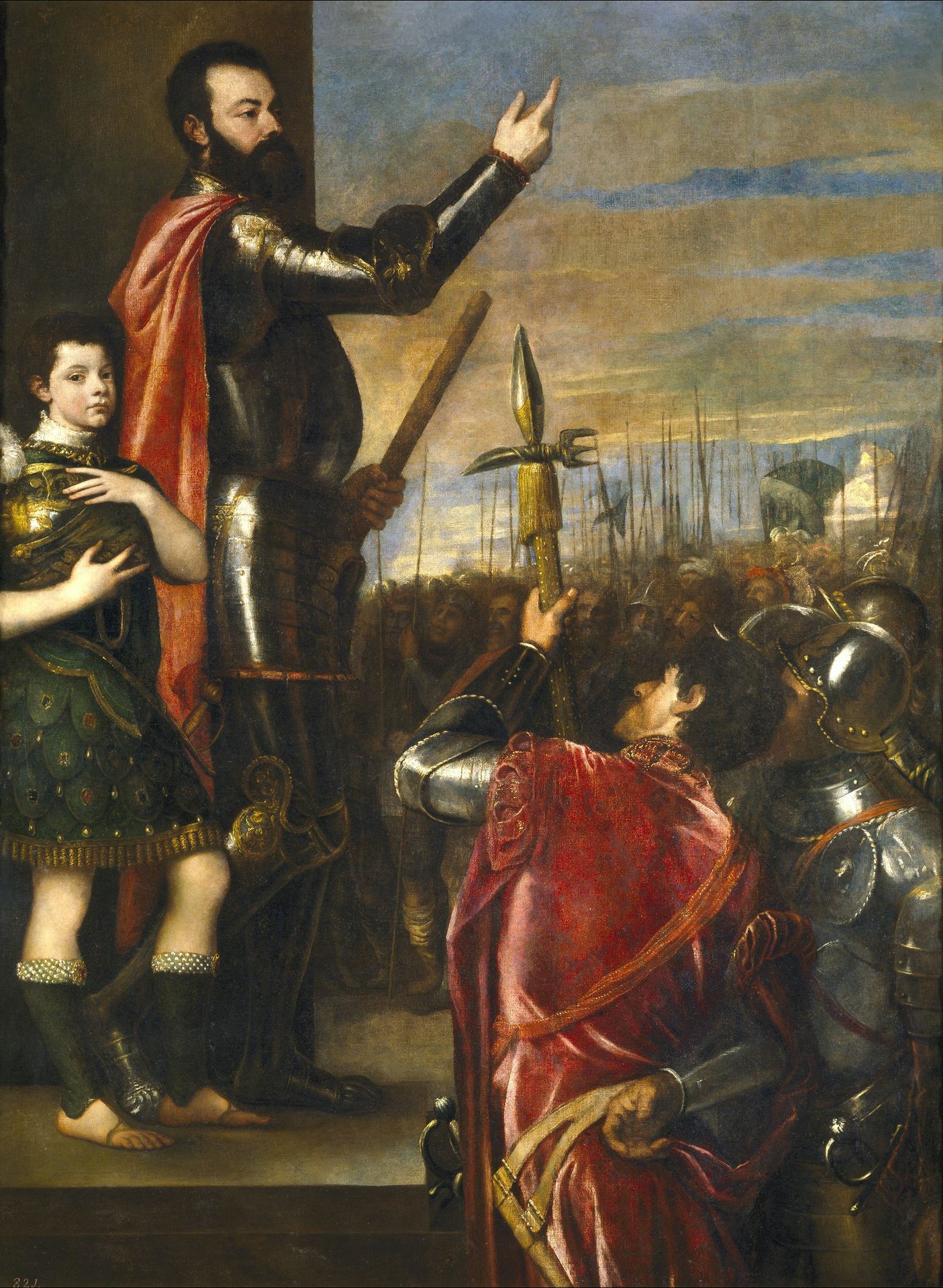
Titian painted 'The Marchese del Vasto Addressing his Troops,' an oil on canvas, in the 16th century. The painting depicts Alfonso d'Avalos, the Marchese del Vasto, a nobleman and military leader of the Italian Renaissance, addressing his troops. The power dynamic in the portrait speaks volumes about social hierarchies and masculinity during this period. The Marchese, clad in shining armor, stands tall, embodying strength and authority. The gaze of the soldiers in the background reveals how leaders inspire loyalty through displays of status. Standing beside him is a young page who represents the inheritance and continuation of power within aristocratic families. Titian's portrait not only immortalizes a powerful figure but also invites us to think about the narratives of leadership and social class. It captures the essence of a society deeply structured around power and lineage.
The Marchese del Vasto Addressing his Troops
1541

Titian
1488 - 1576Location
Museo del Prado, Madrid, SpainArtwork details
- Dimensions
- 233 x 165 cm
- Location
- Museo del Prado, Madrid, Spain
- Copyright
- Public domain
Comments
Share your thoughts
About this artwork
Titian painted 'The Marchese del Vasto Addressing his Troops,' an oil on canvas, in the 16th century. The painting depicts Alfonso d'Avalos, the Marchese del Vasto, a nobleman and military leader of the Italian Renaissance, addressing his troops. The power dynamic in the portrait speaks volumes about social hierarchies and masculinity during this period. The Marchese, clad in shining armor, stands tall, embodying strength and authority. The gaze of the soldiers in the background reveals how leaders inspire loyalty through displays of status. Standing beside him is a young page who represents the inheritance and continuation of power within aristocratic families. Titian's portrait not only immortalizes a powerful figure but also invites us to think about the narratives of leadership and social class. It captures the essence of a society deeply structured around power and lineage.
Comments
Share your thoughts