About this artwork
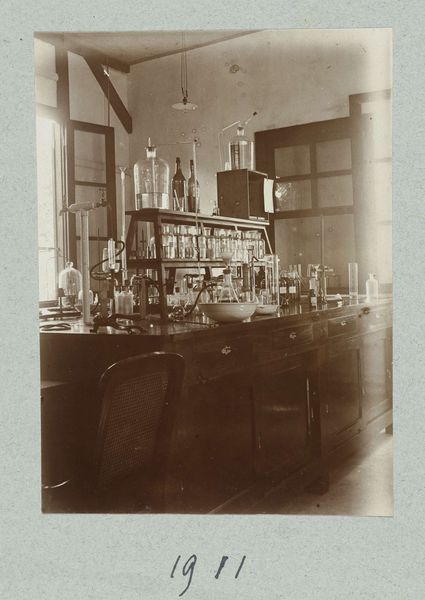
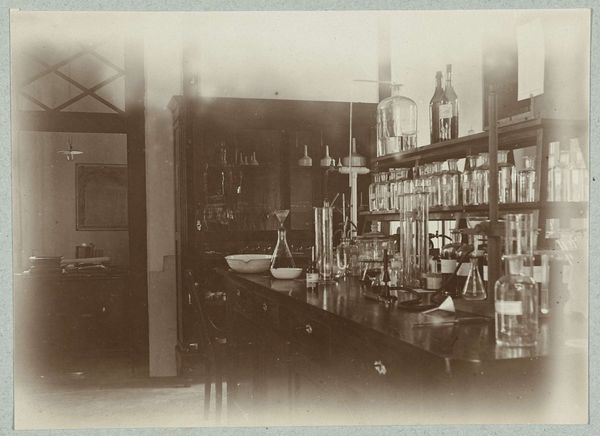
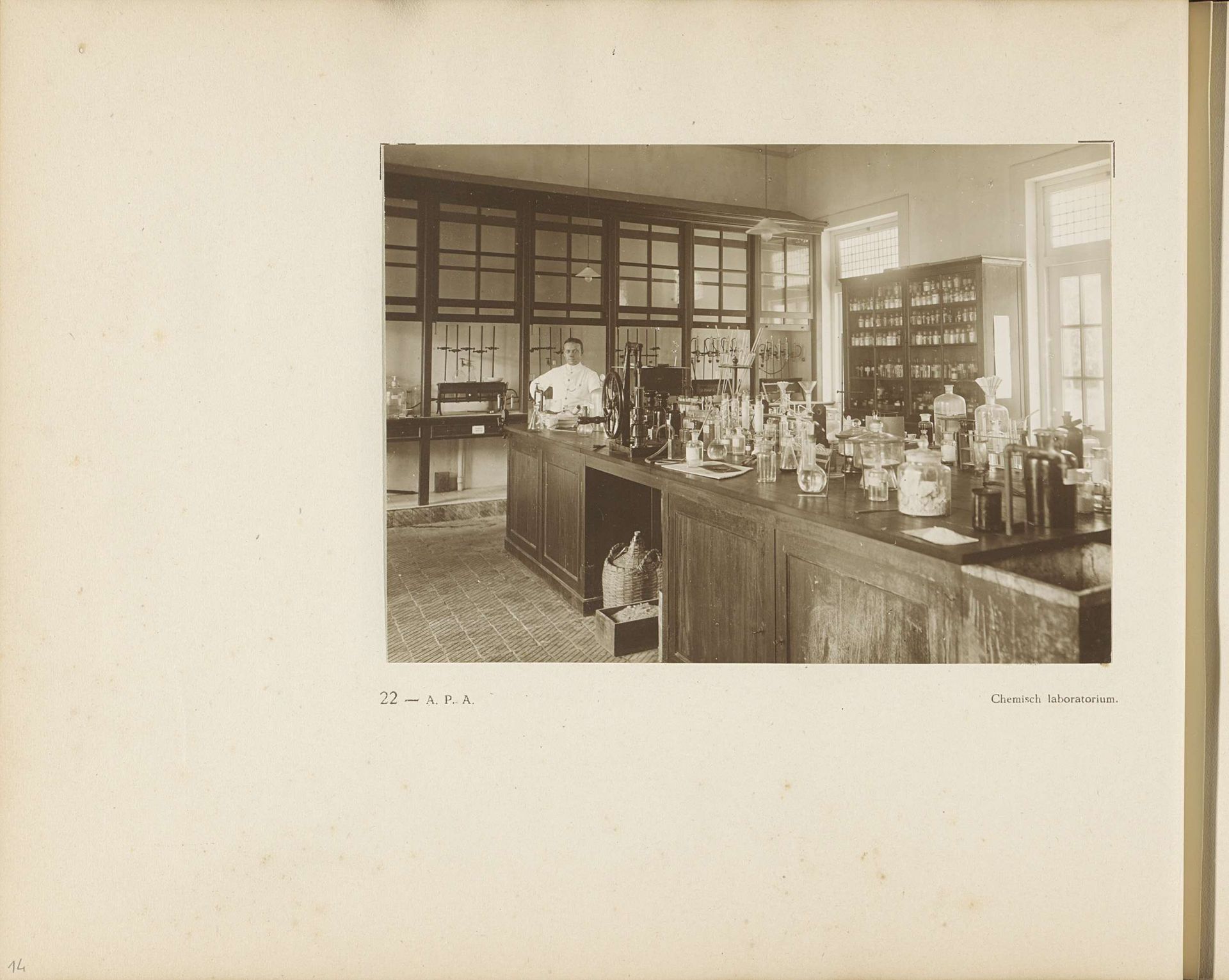
This photobook page from the Algemeene Vereeniging van Rubberplanters, taken by J.W. Meyster, presents a chemical laboratory with a meticulous composition. The sepia tones and sharp lines create a sense of depth and order, inviting us into the workspace. The photograph’s structure is defined by the geometric grid of shelves filled with vials, balanced by the solid mass of the central worktable. The arrangement of equipment is not merely functional; it is a constructed tableau. Consider how this reflects a broader cultural drive to categorize and control knowledge through visual representation. The scientist, a figure almost lost amidst the apparatus, becomes part of this constructed system. The formal qualities here—the play of light and shadow, the precise arrangement of objects—suggest a world where science and industry intersect. This page then, functions as a study of form and a comment on the era’s worldview, one where meaning is derived not only from what is seen but how it is arranged.
Pagina 22 van fotoboek van de Algemeene Vereeniging van Rubberplanters ter Oostkust van Sumatra (A.V.R.O.S.)
c. 1924 - 1925

J.W. Meyster
1887 - 1945Location
RijksmuseumArtwork details
- Medium
- photography, gelatin-silver-print
- Dimensions
- height 240 mm, width 310 mm
- Location
- Rijksmuseum
- Copyright
- Rijks Museum: Open Domain
Tags
Comments
Share your thoughts
About this artwork
This photobook page from the Algemeene Vereeniging van Rubberplanters, taken by J.W. Meyster, presents a chemical laboratory with a meticulous composition. The sepia tones and sharp lines create a sense of depth and order, inviting us into the workspace. The photograph’s structure is defined by the geometric grid of shelves filled with vials, balanced by the solid mass of the central worktable. The arrangement of equipment is not merely functional; it is a constructed tableau. Consider how this reflects a broader cultural drive to categorize and control knowledge through visual representation. The scientist, a figure almost lost amidst the apparatus, becomes part of this constructed system. The formal qualities here—the play of light and shadow, the precise arrangement of objects—suggest a world where science and industry intersect. This page then, functions as a study of form and a comment on the era’s worldview, one where meaning is derived not only from what is seen but how it is arranged.
Comments
Share your thoughts