About this artwork
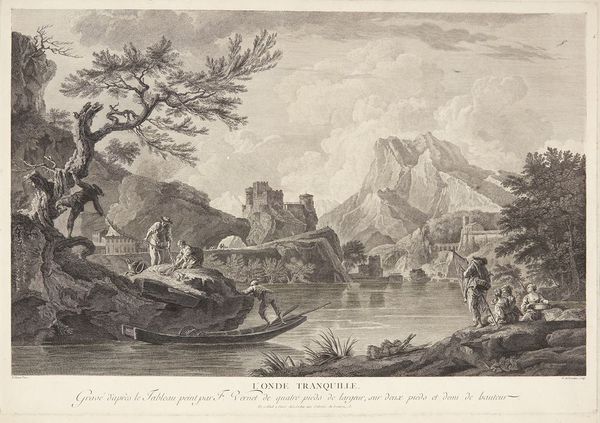
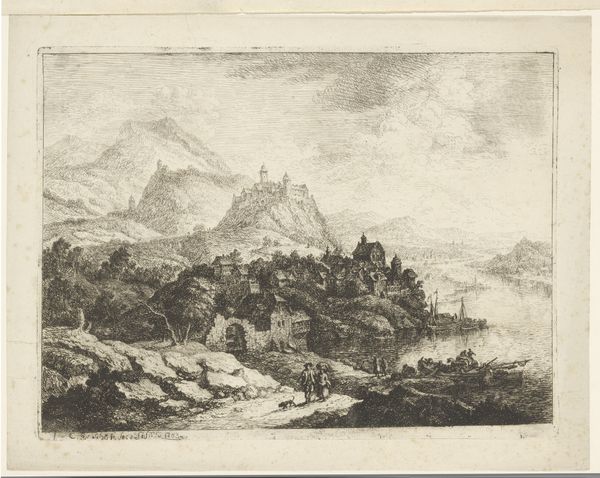
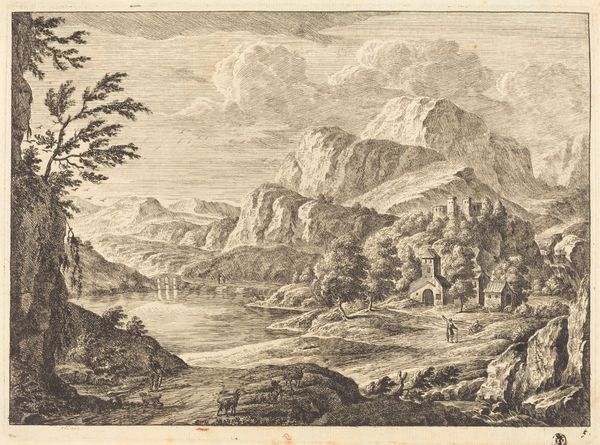
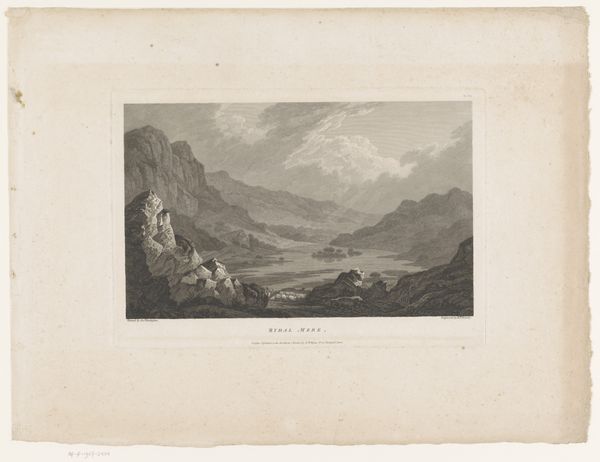
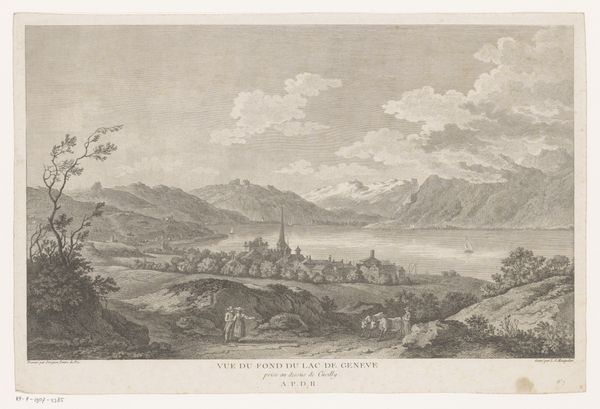
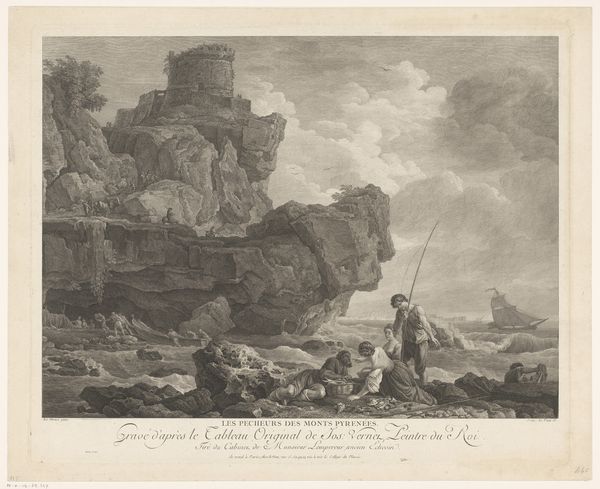
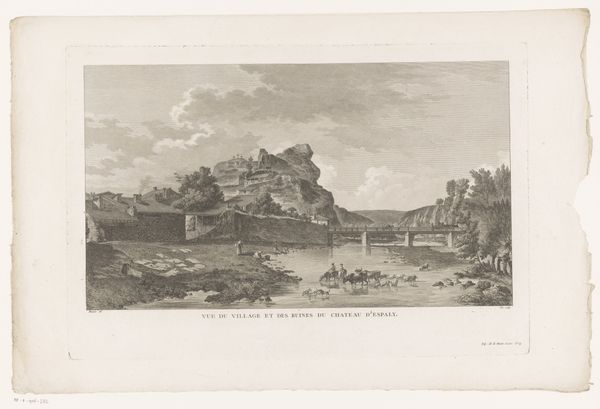
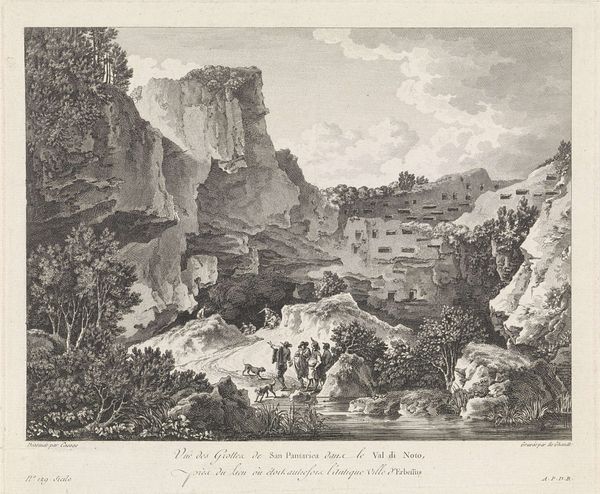
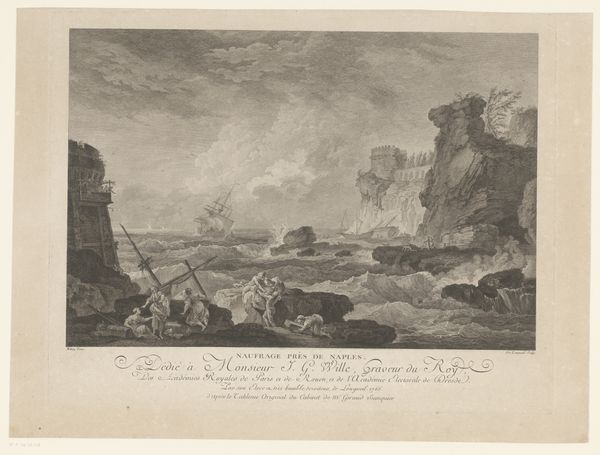
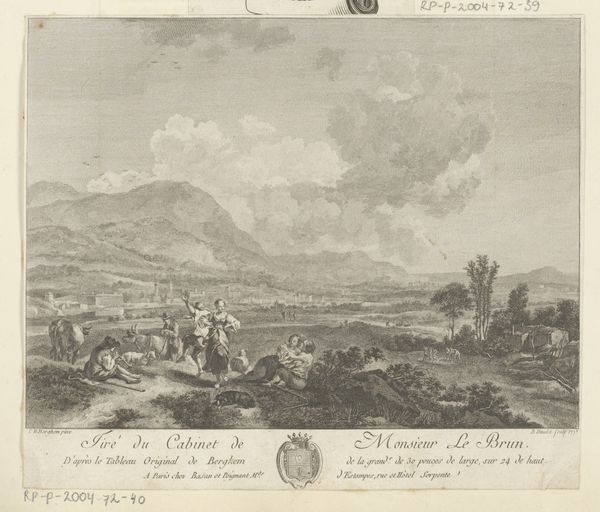
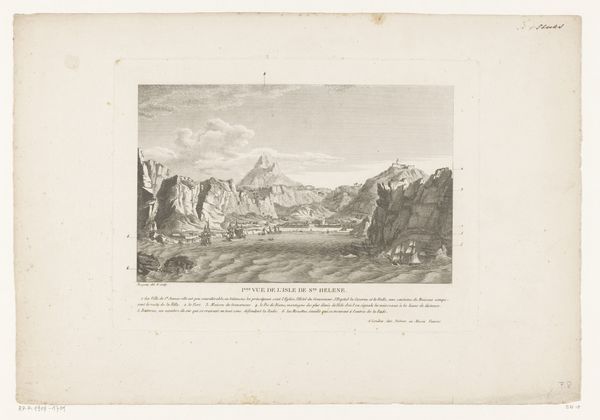
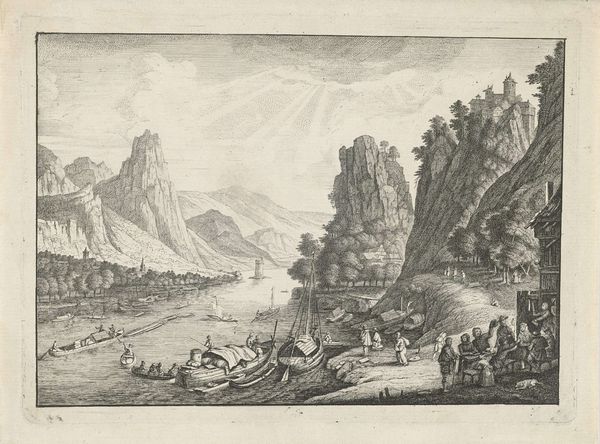
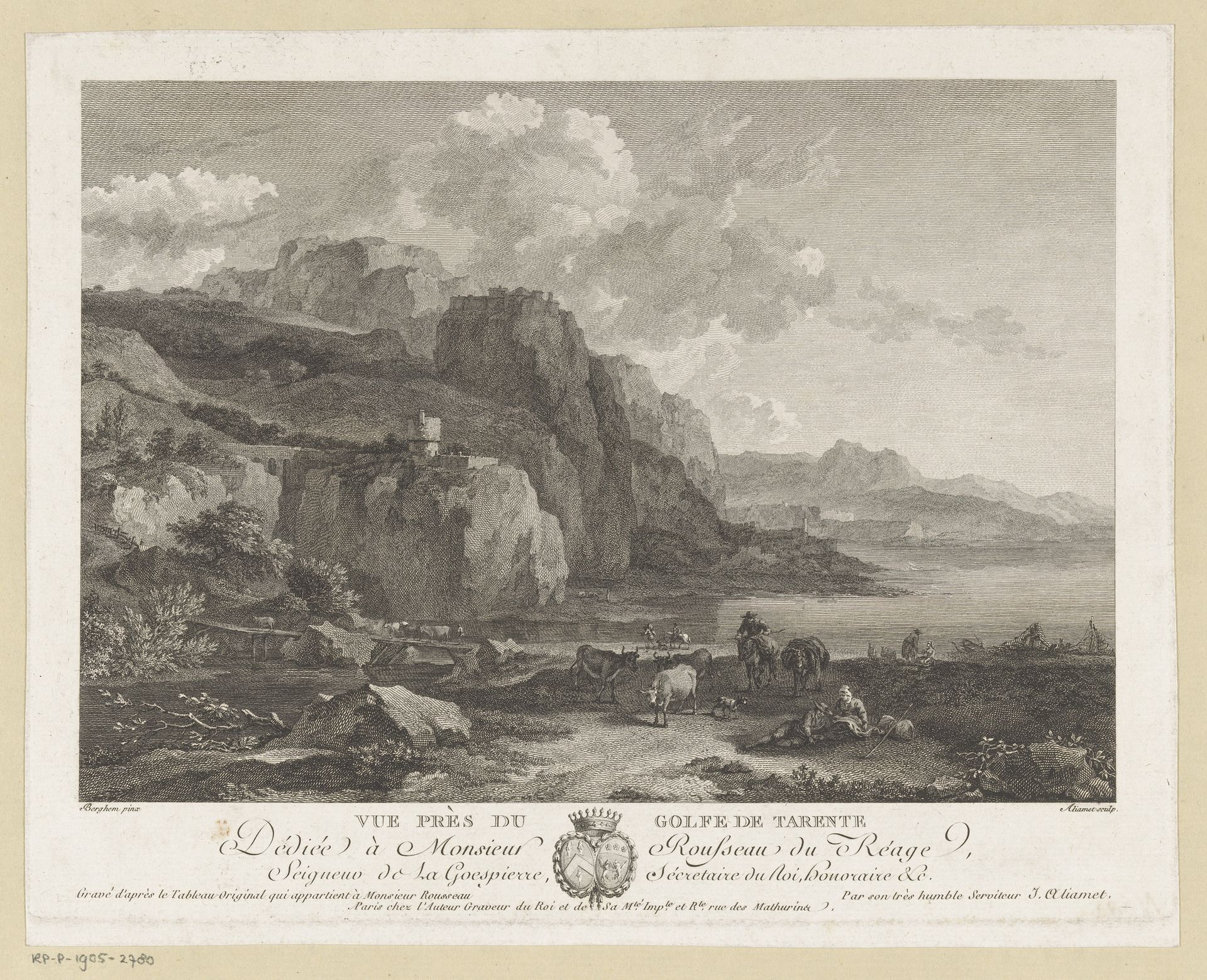
Curator: Tell me, what captures your attention when you first look at Jacques Aliamet’s "View of the Gulf of Taranto"? Editor: It's the layering, the way the eye travels from the foreground figures up to the imposing cliffs and then out to the sea. It feels like a carefully constructed stage for… well, I’m not entirely sure what. How do you interpret this work? Curator: It's interesting that you perceive it as a stage. This work reflects a particular moment when representations of landscape became intertwined with notions of property, power, and the picturesque. What stories might this landscape conceal or, perhaps, inadvertently reveal about the political and economic structures of 18th-century Italy? Who are these figures, and what is their relationship to this carefully composed scene? Editor: I hadn't considered the "power" element so directly, I guess I was viewing it more innocently. It's interesting how this seemingly peaceful scene could have all sorts of social dynamics. Are there ways the artist is signaling something with his choice of elements? Curator: Absolutely. The placement of the figures, their scale relative to the landscape, and the details included—or excluded—can all speak to underlying narratives about land ownership, labor, and social hierarchy. The picturesque was often about framing the 'natural' world in ways that justified existing power structures, domesticating even the potentially sublime aspects of nature. Don’t you find it striking, perhaps even disturbing, how easily beauty can mask inequity? Editor: That's a really important point; now I see so much more than just a pretty picture. Curator: Precisely. This work can provoke us to examine not only the artist's intentions but also the larger societal forces at play in shaping both the land and its representation. What started as a "peaceful scene" is fraught with questions about wealth, power, and representation. Editor: Thanks. I’ll never look at landscape art quite the same way again.

Artwork details
- Dimensions
- height 204 mm, width 265 mm
- Location
- Rijksmuseum
- Copyright
- Rijks Museum: Open Domain
Tags
Comments
Share your thoughts
About this artwork
Curator: Tell me, what captures your attention when you first look at Jacques Aliamet’s "View of the Gulf of Taranto"? Editor: It's the layering, the way the eye travels from the foreground figures up to the imposing cliffs and then out to the sea. It feels like a carefully constructed stage for… well, I’m not entirely sure what. How do you interpret this work? Curator: It's interesting that you perceive it as a stage. This work reflects a particular moment when representations of landscape became intertwined with notions of property, power, and the picturesque. What stories might this landscape conceal or, perhaps, inadvertently reveal about the political and economic structures of 18th-century Italy? Who are these figures, and what is their relationship to this carefully composed scene? Editor: I hadn't considered the "power" element so directly, I guess I was viewing it more innocently. It's interesting how this seemingly peaceful scene could have all sorts of social dynamics. Are there ways the artist is signaling something with his choice of elements? Curator: Absolutely. The placement of the figures, their scale relative to the landscape, and the details included—or excluded—can all speak to underlying narratives about land ownership, labor, and social hierarchy. The picturesque was often about framing the 'natural' world in ways that justified existing power structures, domesticating even the potentially sublime aspects of nature. Don’t you find it striking, perhaps even disturbing, how easily beauty can mask inequity? Editor: That's a really important point; now I see so much more than just a pretty picture. Curator: Precisely. This work can provoke us to examine not only the artist's intentions but also the larger societal forces at play in shaping both the land and its representation. What started as a "peaceful scene" is fraught with questions about wealth, power, and representation. Editor: Thanks. I’ll never look at landscape art quite the same way again.
Comments
Share your thoughts