About this artwork
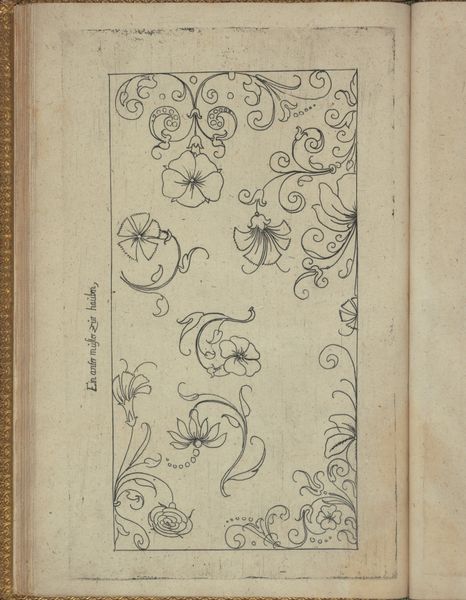
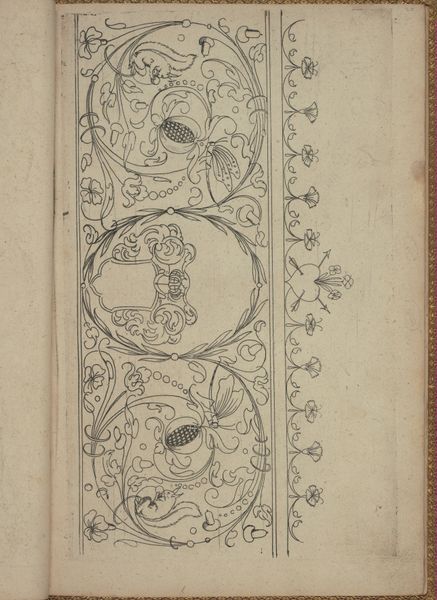
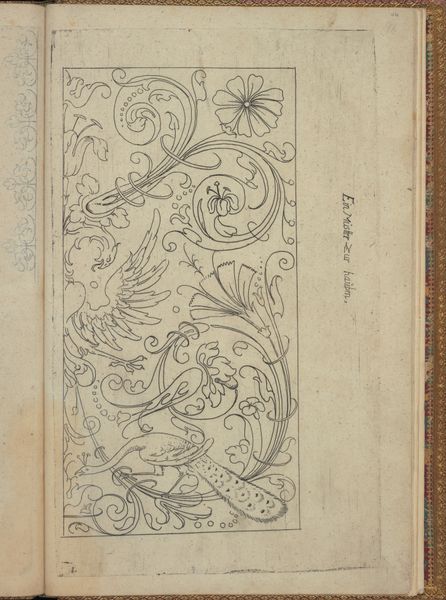
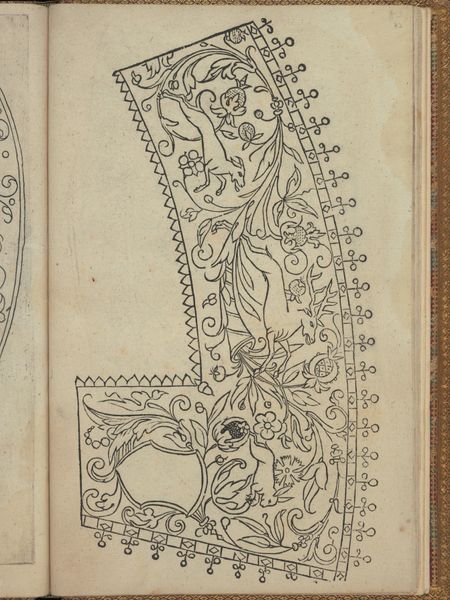
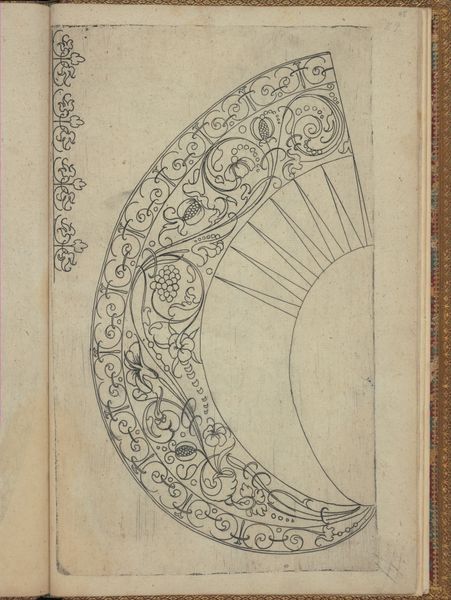
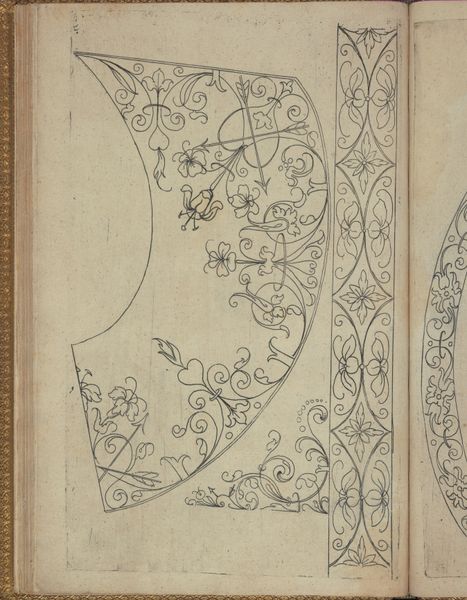
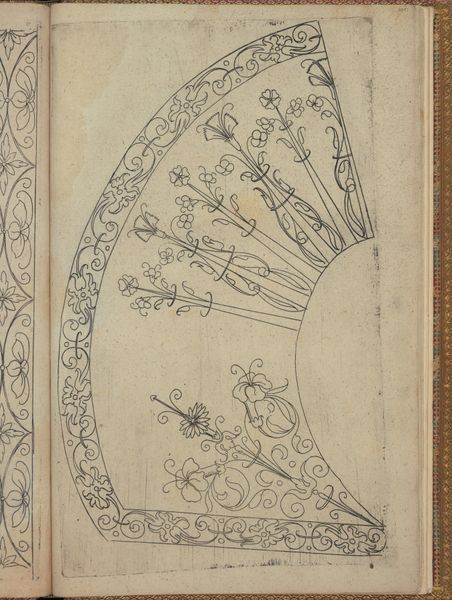
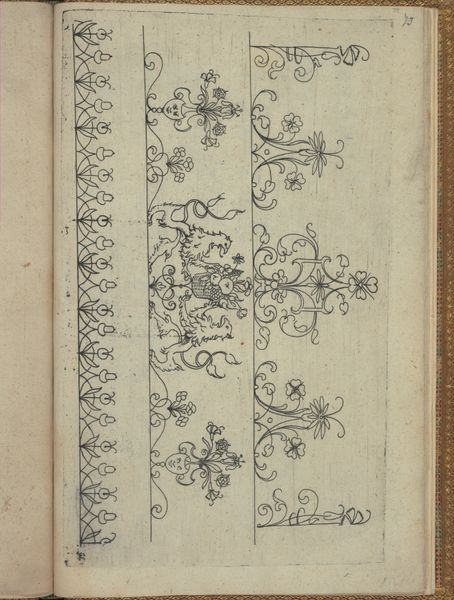
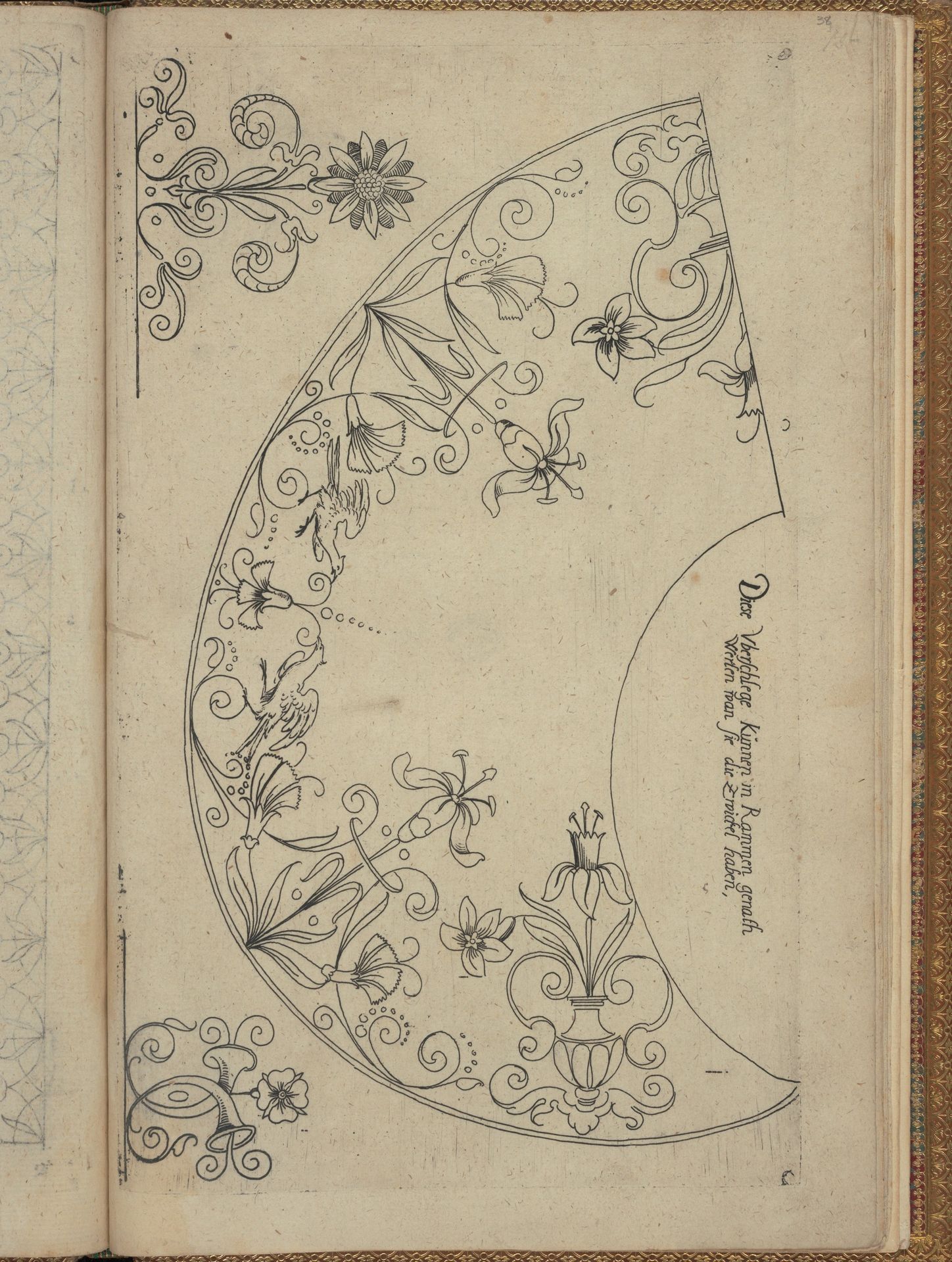
This is page 38 verso from Andreas Bretschneider’s "New Modelbüch," a book of design patterns from the early 17th century. The neutral ground allows the elegant floral motifs, rendered in delicate pen lines, to take center stage. The composition is dominated by a semi-circular shape, reminiscent of a fan, filled with stylized flowers and curling tendrils. Bretschneider’s work exists in a liminal space between pure representation and abstraction. Each element functions as a signifier, pointing to the natural world, yet reconfigured into decorative forms. The artist uses semiotic codes to convey a sense of beauty and order, characteristic of the late Renaissance aesthetic. These patterns served as templates, embodying the period's interest in both naturalism and symbolic meaning. Note how the symmetry and the placement of elements create a structured harmony. This is not merely decorative; it reflects a deeper engagement with the era’s philosophical concerns, where art was seen as a means of revealing the underlying order of the cosmos.
New Modelbüch (Page 38v) 1615

Andreas Bretschneider
1573 - 1645
The Metropolitan Museum of Art
Metropolitan Museum of Art, New York, NYArtwork details
- Medium
- drawing, ornament, print, paper
- Dimensions
- Overall: 12 x 8 1/16 in. (30.5 x 20.5 cm)
- Location
- Metropolitan Museum of Art, New York, NY
- Copyright
- Public Domain
Tags
drawing
ornament
paper
11_renaissance
coloured pencil
line
Comments
No comments
About this artwork
This is page 38 verso from Andreas Bretschneider’s "New Modelbüch," a book of design patterns from the early 17th century. The neutral ground allows the elegant floral motifs, rendered in delicate pen lines, to take center stage. The composition is dominated by a semi-circular shape, reminiscent of a fan, filled with stylized flowers and curling tendrils. Bretschneider’s work exists in a liminal space between pure representation and abstraction. Each element functions as a signifier, pointing to the natural world, yet reconfigured into decorative forms. The artist uses semiotic codes to convey a sense of beauty and order, characteristic of the late Renaissance aesthetic. These patterns served as templates, embodying the period's interest in both naturalism and symbolic meaning. Note how the symmetry and the placement of elements create a structured harmony. This is not merely decorative; it reflects a deeper engagement with the era’s philosophical concerns, where art was seen as a means of revealing the underlying order of the cosmos.
Comments
No comments