About this artwork
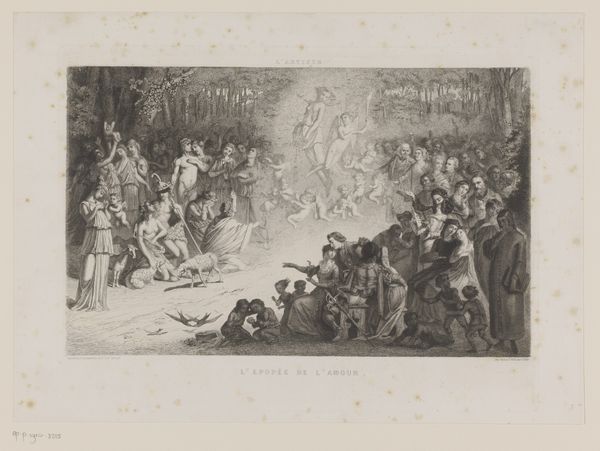
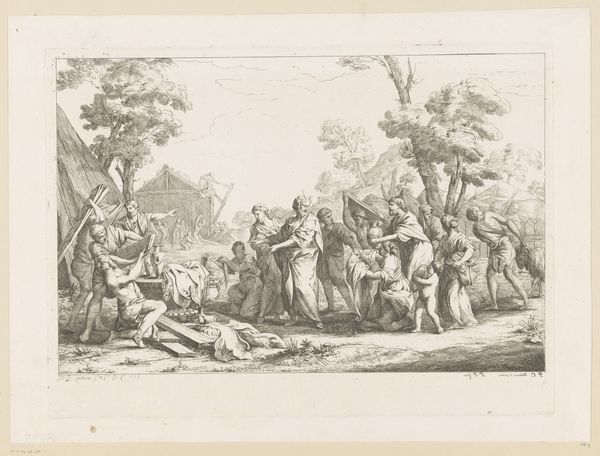
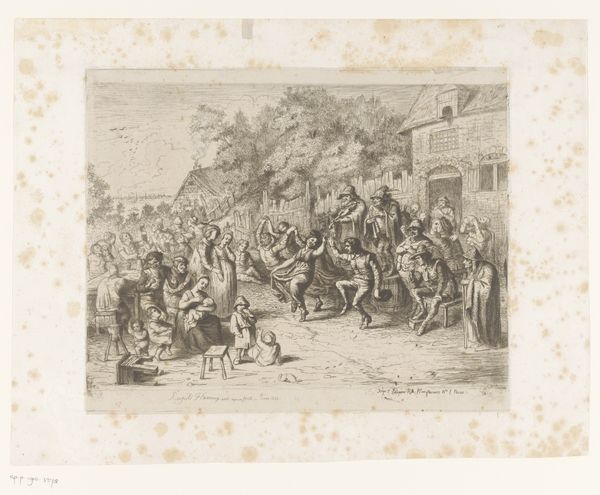
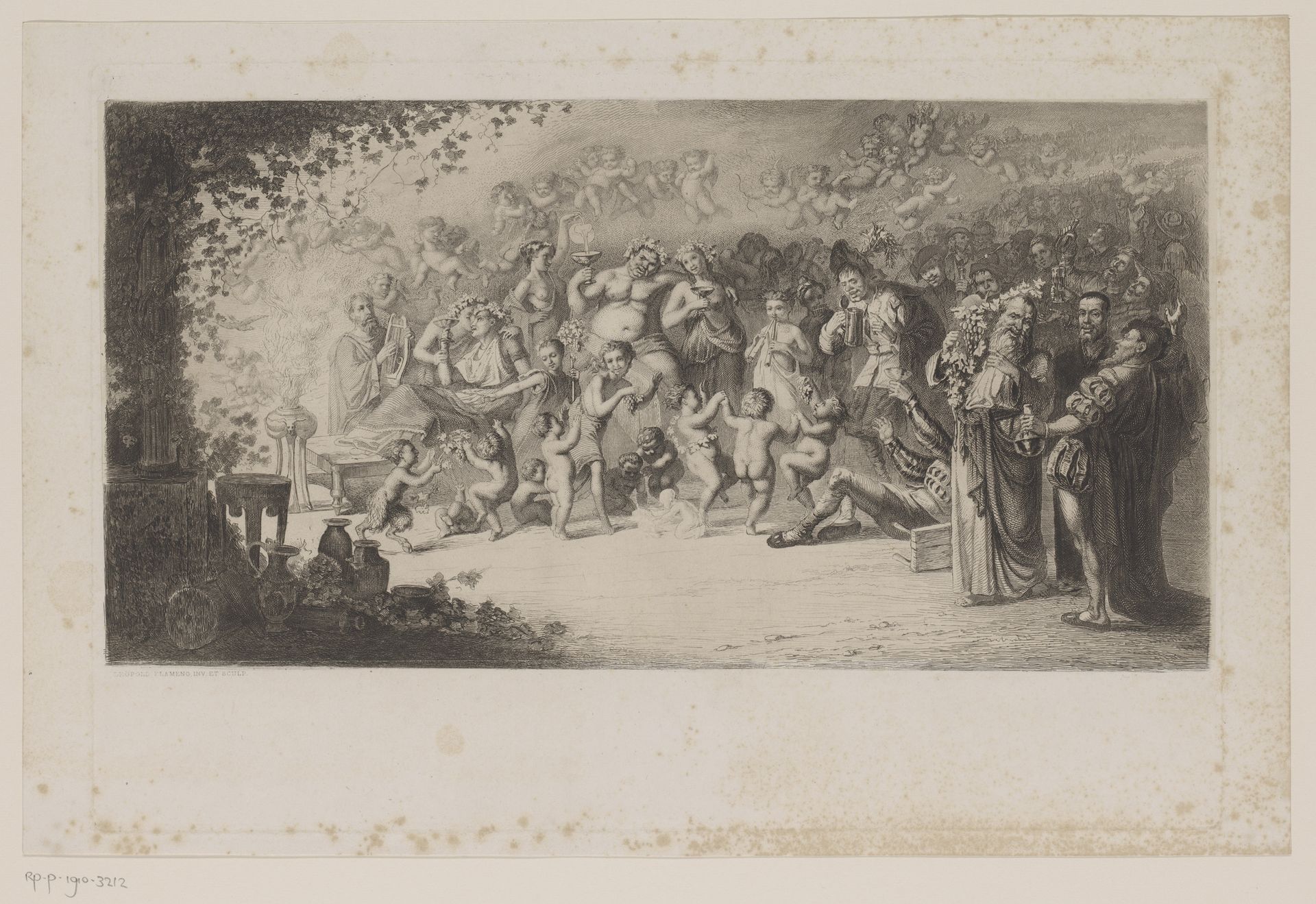
Léopold Flameng made this print, titled "Bacchusfeest," in the 19th century using etching. It depicts a bacchanal, a Roman festival for Bacchus, the god of wine, fertility, and theatre. It is full of mythological references and symbols that were especially popular during the 1800s. The Bacchus festival represented a temporary suspension of social restrictions in the ancient world. In the 19th century, the print medium contributed to the emergence of a mass culture and the commodification of art. The social context of the print as a medium is important. It was easily reproduced and distributed, which made it accessible to a broader audience. Flameng’s print, with its classical and mythological imagery, reflects an interest in the past. Looking at exhibition records and art criticism from the time can help us understand how contemporaries interpreted Flameng's imagery. The print's iconography speaks to the enduring appeal of classical themes and the ongoing negotiation between tradition and modernity in 19th-century French art.

Artwork details
- Medium
- print, etching
- Dimensions
- height 236 mm, width 348 mm
- Copyright
- Rijks Museum: Open Domain
Tags
Comments
Share your thoughts
About this artwork
Léopold Flameng made this print, titled "Bacchusfeest," in the 19th century using etching. It depicts a bacchanal, a Roman festival for Bacchus, the god of wine, fertility, and theatre. It is full of mythological references and symbols that were especially popular during the 1800s. The Bacchus festival represented a temporary suspension of social restrictions in the ancient world. In the 19th century, the print medium contributed to the emergence of a mass culture and the commodification of art. The social context of the print as a medium is important. It was easily reproduced and distributed, which made it accessible to a broader audience. Flameng’s print, with its classical and mythological imagery, reflects an interest in the past. Looking at exhibition records and art criticism from the time can help us understand how contemporaries interpreted Flameng's imagery. The print's iconography speaks to the enduring appeal of classical themes and the ongoing negotiation between tradition and modernity in 19th-century French art.
Comments
Share your thoughts