c. 1903 - 1904
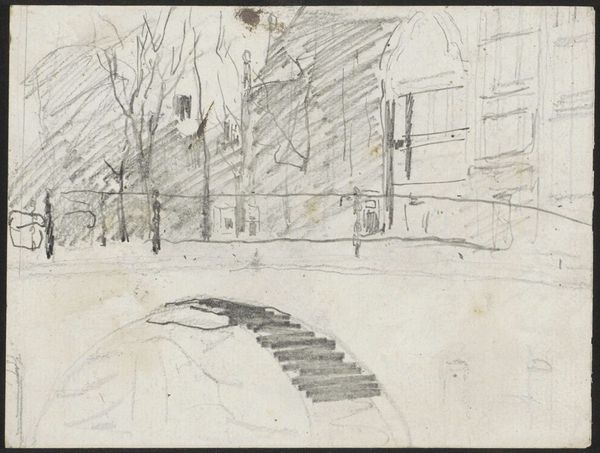
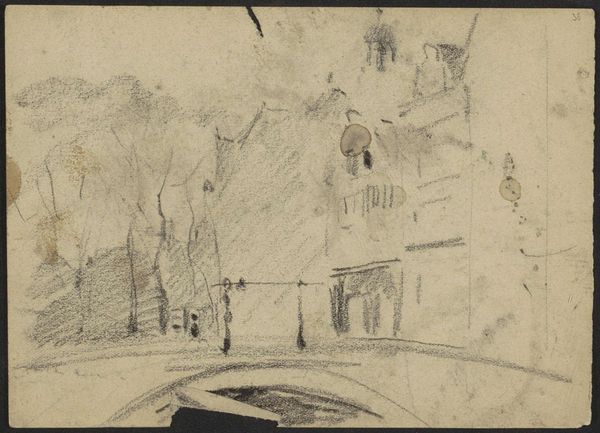
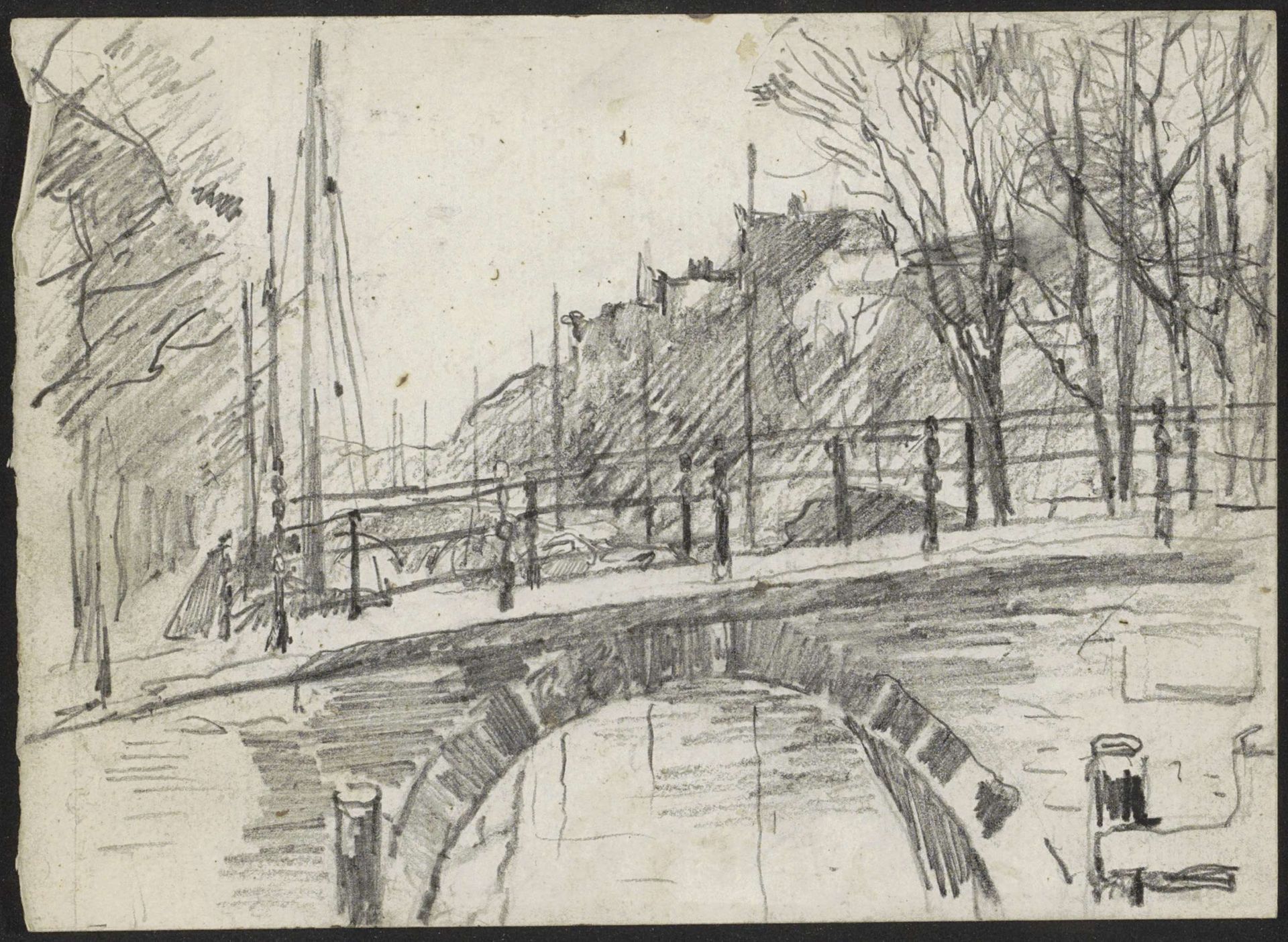
Gezicht op de brug Lekkeresluis te Amsterdam

Willem Witsen
1860 - 1923Location
RijksmuseumListen to curator's interpretation
Curatorial notes
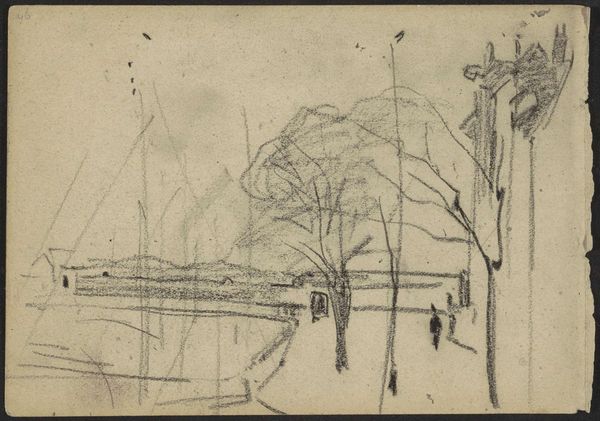
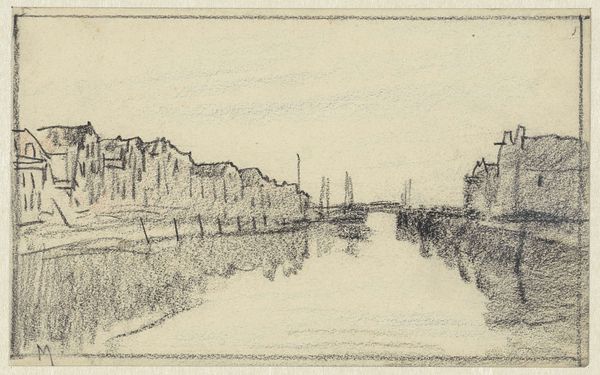
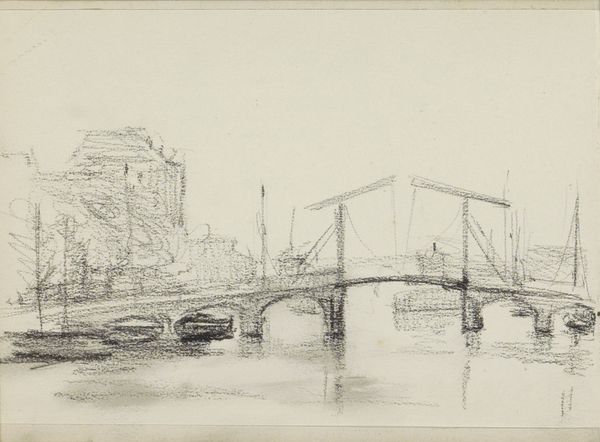
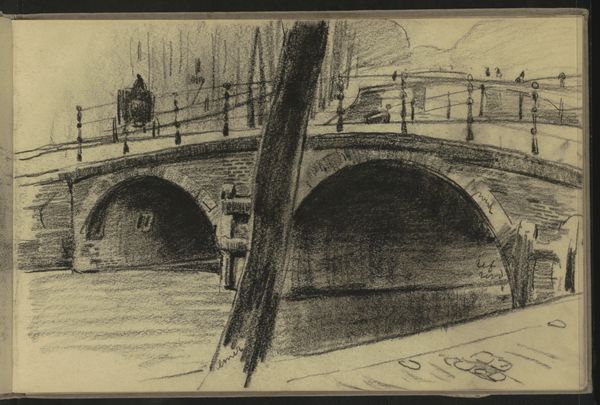
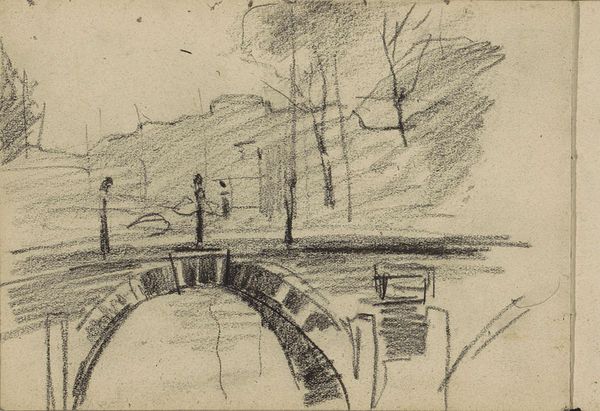
Editor: Here we have Willem Witsen's "Gezicht op de brug Lekkeresluis te Amsterdam," dating from around 1903-1904. It's a drawing using pencil and pen and ink. The scene is muted, a bit melancholic even. What do you see in this piece? Curator: I see the quiet echo of a city's pulse, a visual poem about Amsterdam rendered in delicate lines. The Lekkeresluis bridge acts as more than just a physical connection; it becomes a symbol of transition, a threshold between spaces, between waking and dreaming. What do the bare trees evoke for you? Editor: They add to the bleakness, I think. They almost feel like silent witnesses. Curator: Precisely! Witsen captures the psychological weight of a specific locale, transforming it into a mirror reflecting the viewer's own emotional landscape. Consider the bridge’s arch— a form often associated with stability, yet rendered here with tentative, almost ephemeral strokes. Does this tension resonate with you? Editor: Yes, it's not just a factual representation; it is an experience of the city, a subjective rendering. The sketchiness also makes it feel like a memory. Curator: Exactly! It’s a captured fragment of a lived reality. And the repetition of vertical lines—the masts of unseen ships, the bare tree trunks, the bridge railings—suggest a sense of rhythm, but also confinement. How do those repeating verticals affect your sense of space within the image? Editor: I hadn’t thought of it that way, but I think it gives it a closed-in feeling despite the open sky. It feels more intimate and confined rather than expansive and open. Curator: Precisely! And understanding these symbolic readings enriches our perception, drawing us deeper into the cultural memory embedded within the image. Editor: I see that. I’ll definitely look for the symbolic context in similar works.