![Shields of Fürer von Haimendorf and His Two Wives [reverse] by Johann Bartholomäus Braun](https://d2w8kbdekdi1gv.cloudfront.net/eyJidWNrZXQiOiAiYXJ0ZXJhLWltYWdlcy1idWNrZXQiLCAia2V5IjogImFydHdvcmtzL2RmYjM3MTRkLTJkOTQtNDkyZC04ZTA3LTA0NTY1ZTdjZGIyYi9kZmIzNzE0ZC0yZDk0LTQ5MmQtOGUwNy0wNDU2NWU3Y2RiMmJfZnVsbC5qcGciLCAiZWRpdHMiOiB7InJlc2l6ZSI6IHsid2lkdGgiOiAxOTIwLCAiaGVpZ2h0IjogMTkyMCwgImZpdCI6ICJpbnNpZGUifX19)
About this artwork
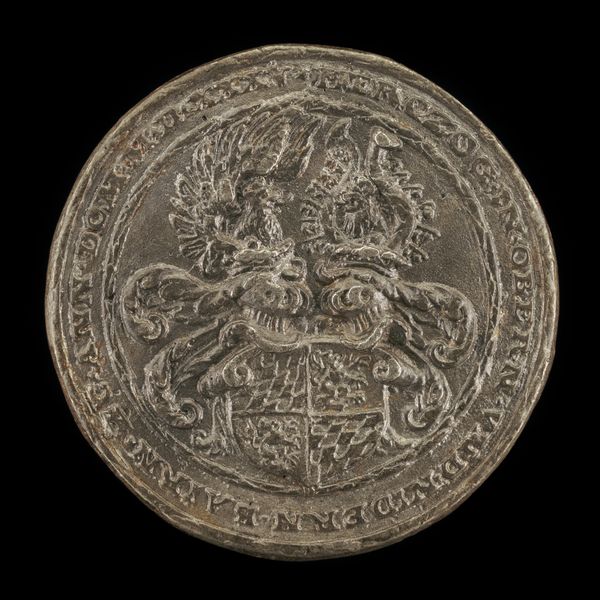
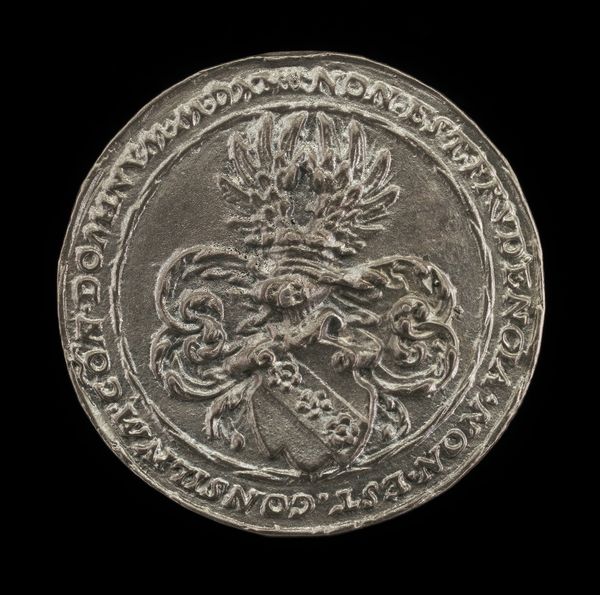
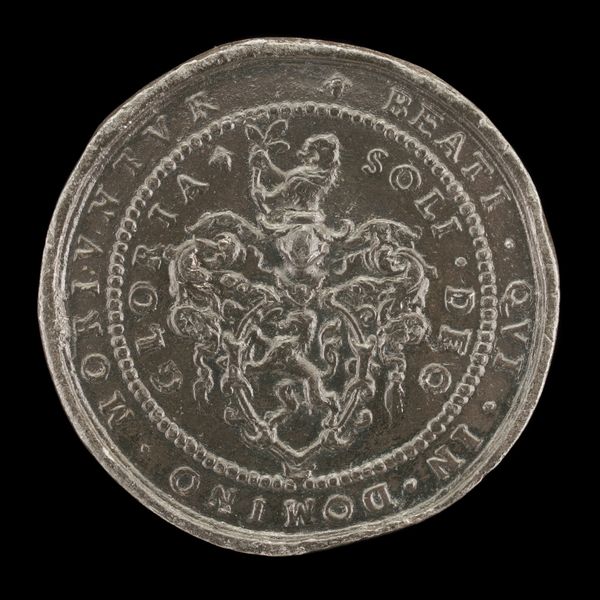
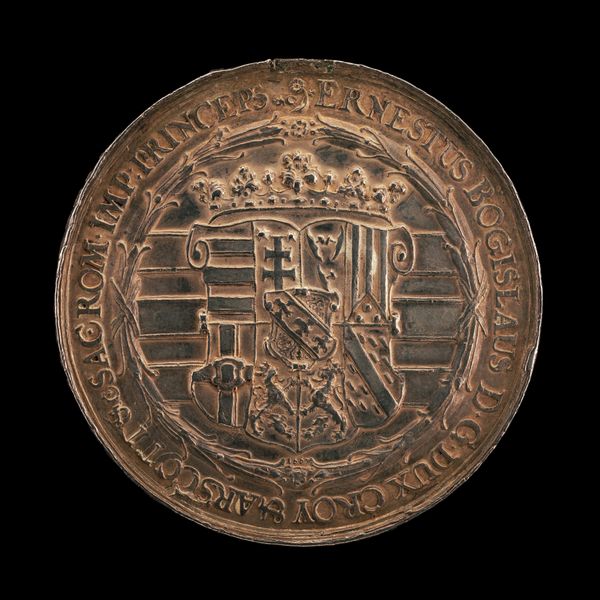
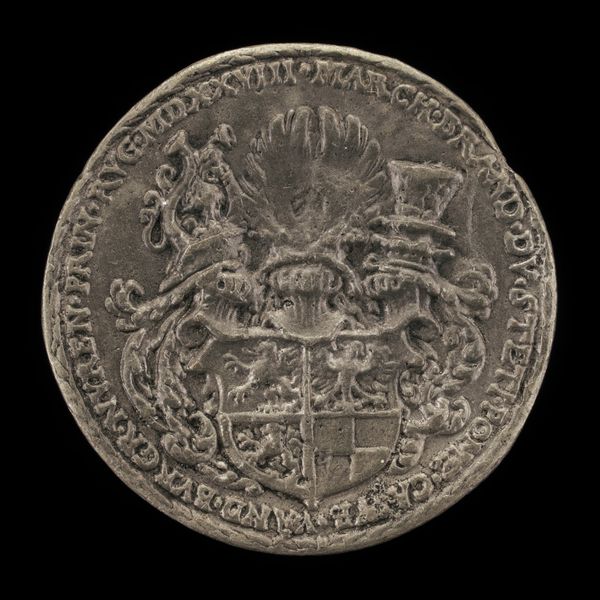
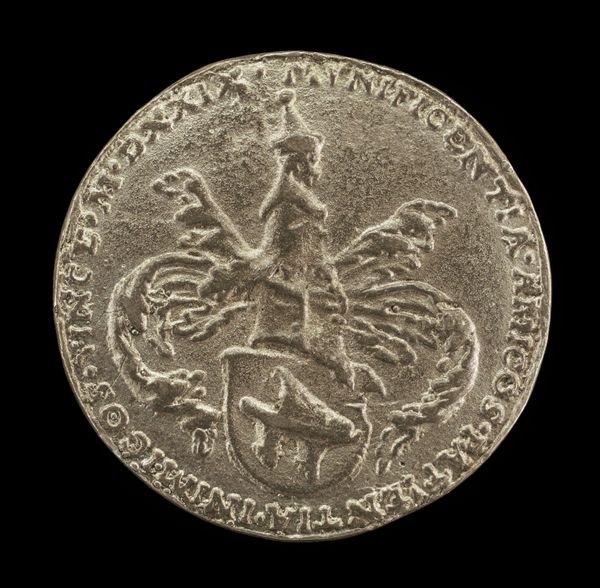
This silver medal, created by Johann Bartholomäus Braun, presents three shields arranged in a triangular composition, each meticulously engraved with distinct heraldic symbols. The textured surface and the interplay of light and shadow give the piece a tangible depth. The arrangement of these shields isn't merely decorative; it speaks to a structured hierarchy. The dominant shield at the apex, adorned with intricate details, suggests lineage and power. The two shields beneath, each with its own unique emblems, introduce a dimension of duality, perhaps reflecting alliances or unions. The dates 1645 and 1667, inscribed near the base, ground the artwork in a specific historical context. Braun's work is more than a display of heraldry; it's a study in symbolic representation, where each element contributes to a larger narrative about identity, relationships, and time. The circular form of the medal reinforces a sense of unity, encapsulating these diverse elements within a singular, cohesive frame.
Shields of Fürer von Haimendorf and His Two Wives [reverse]
1645


Artwork details
- Medium
- metal, relief, sculpture
- Dimensions
- overall (diameter): 3.93 cm (1 9/16 in.) gross weight: 30.09 gr (0.066 lb.) axis: 12:00
- Copyright
- National Gallery of Art: CC0 1.0
Tags
Comments
Share your thoughts
About this artwork
This silver medal, created by Johann Bartholomäus Braun, presents three shields arranged in a triangular composition, each meticulously engraved with distinct heraldic symbols. The textured surface and the interplay of light and shadow give the piece a tangible depth. The arrangement of these shields isn't merely decorative; it speaks to a structured hierarchy. The dominant shield at the apex, adorned with intricate details, suggests lineage and power. The two shields beneath, each with its own unique emblems, introduce a dimension of duality, perhaps reflecting alliances or unions. The dates 1645 and 1667, inscribed near the base, ground the artwork in a specific historical context. Braun's work is more than a display of heraldry; it's a study in symbolic representation, where each element contributes to a larger narrative about identity, relationships, and time. The circular form of the medal reinforces a sense of unity, encapsulating these diverse elements within a singular, cohesive frame.
Comments
Share your thoughts