About this artwork
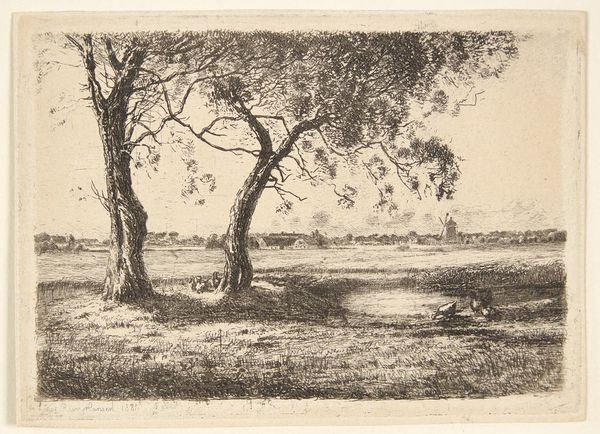
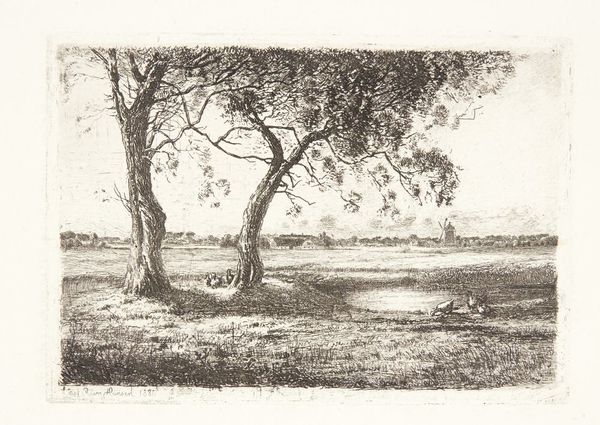
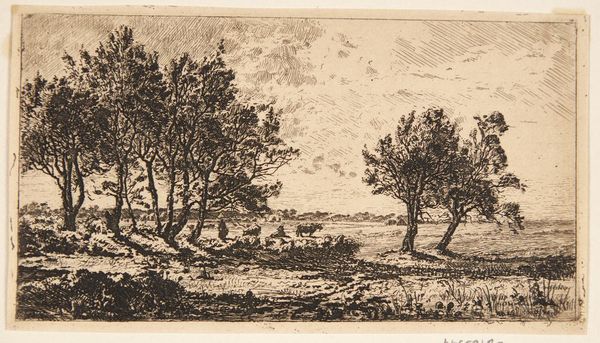
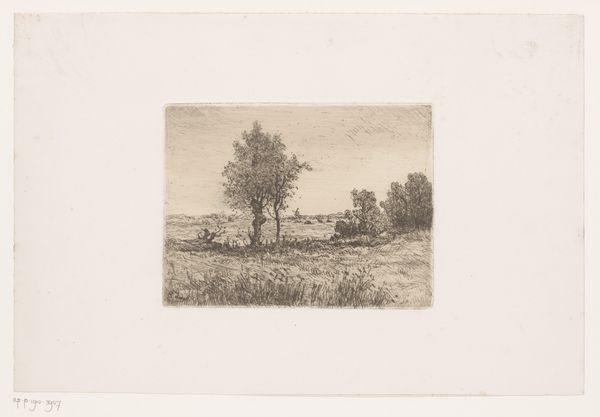
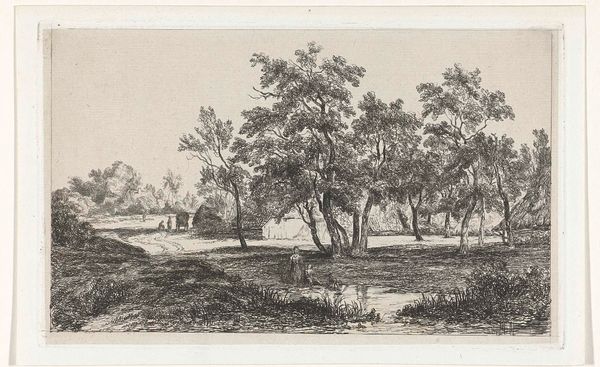
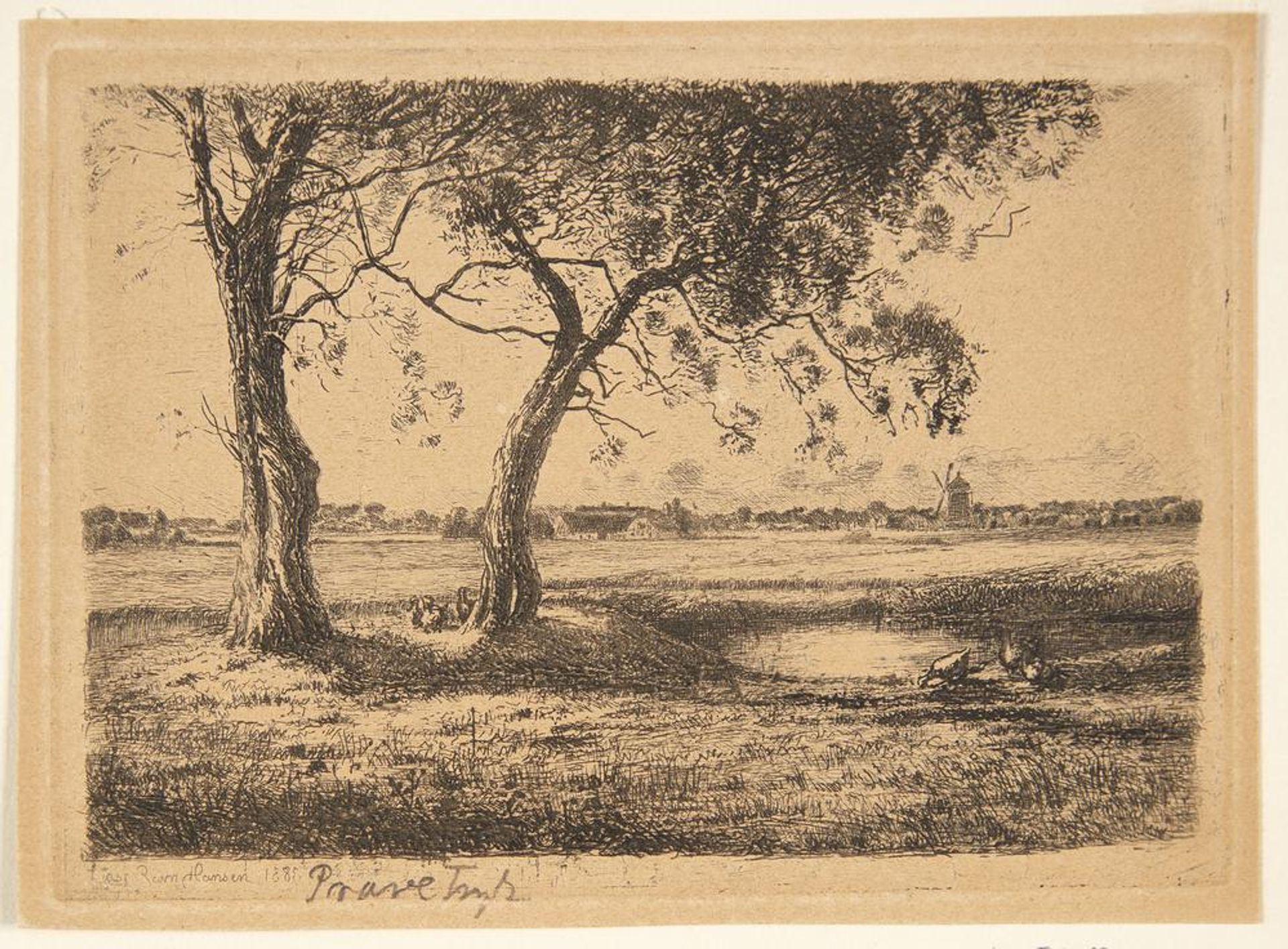
Louise Ravn-Hansen made this small etching called "Sommerdag" which translates to "Summer Day", sometime between 1881 and 1909. Ravn-Hansen lived in a period of significant change for women in Denmark, who fought for suffrage and access to education. This print captures an emotional and experiential aspect of a summer's day in the countryside, focusing on themes of nature and leisure, and the figures dotted across the landscape suggest quiet contemplation. Ravn-Hansen's work offers a narrative of everyday life, capturing the nuances of nature. The artist's choice of etching, a medium often associated with detailed and intimate portrayals, is a wonderful way to see the world through the eyes of a woman artist navigating the cultural landscape of her time. Ravn-Hansen moves away from traditional representations towards a personal and sensory experience of the Danish countryside. In doing so, "Sommerdag" serves as a reflection of societal changes and also Ravn-Hansen's own artistic journey.
Sommerdag 1888


Artwork details
- Medium
- etching, plein-air
- Dimensions
- 98 mm (height) x 138 mm (width) (plademål)
- Location
- SMK - Statens Museum for Kunst
Tags
ink drawing
impressionism
etching
plein-air
landscape
etching
Comments
No comments
About this artwork
Louise Ravn-Hansen made this small etching called "Sommerdag" which translates to "Summer Day", sometime between 1881 and 1909. Ravn-Hansen lived in a period of significant change for women in Denmark, who fought for suffrage and access to education. This print captures an emotional and experiential aspect of a summer's day in the countryside, focusing on themes of nature and leisure, and the figures dotted across the landscape suggest quiet contemplation. Ravn-Hansen's work offers a narrative of everyday life, capturing the nuances of nature. The artist's choice of etching, a medium often associated with detailed and intimate portrayals, is a wonderful way to see the world through the eyes of a woman artist navigating the cultural landscape of her time. Ravn-Hansen moves away from traditional representations towards a personal and sensory experience of the Danish countryside. In doing so, "Sommerdag" serves as a reflection of societal changes and also Ravn-Hansen's own artistic journey.
Comments
No comments