About this artwork
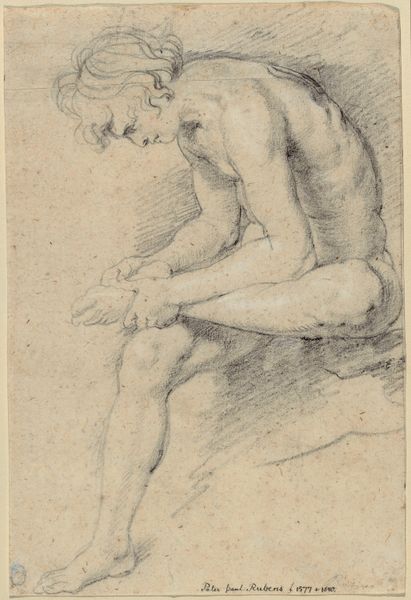
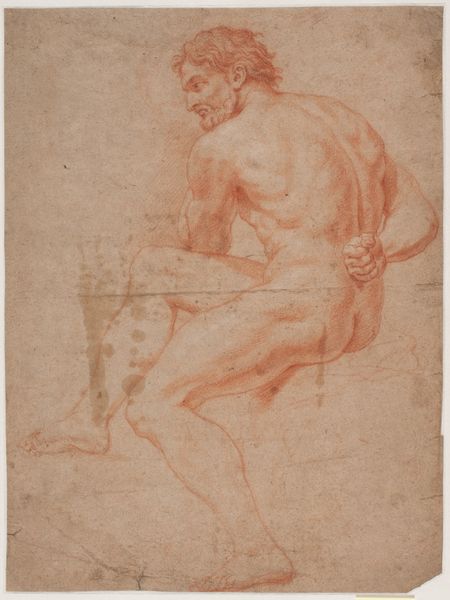
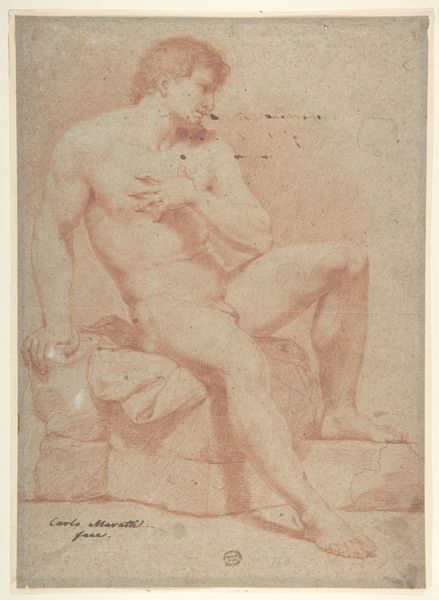
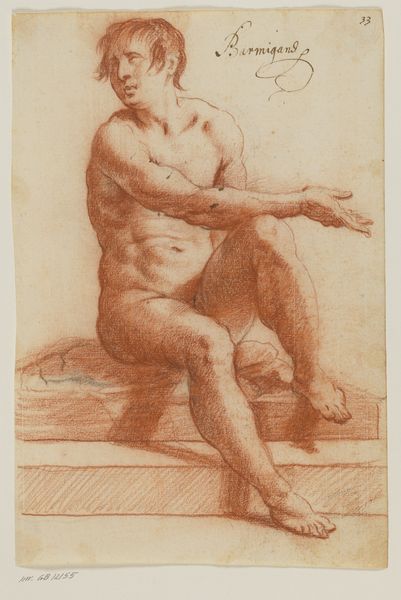
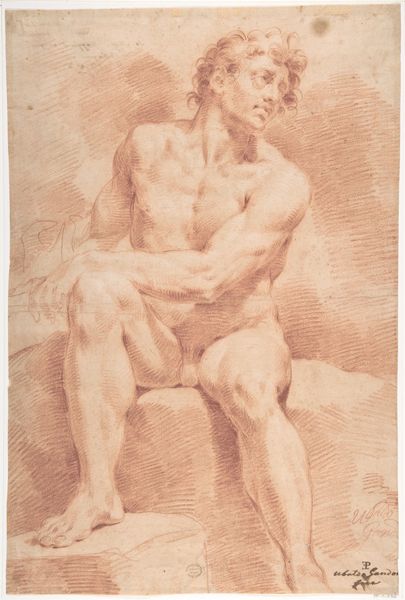
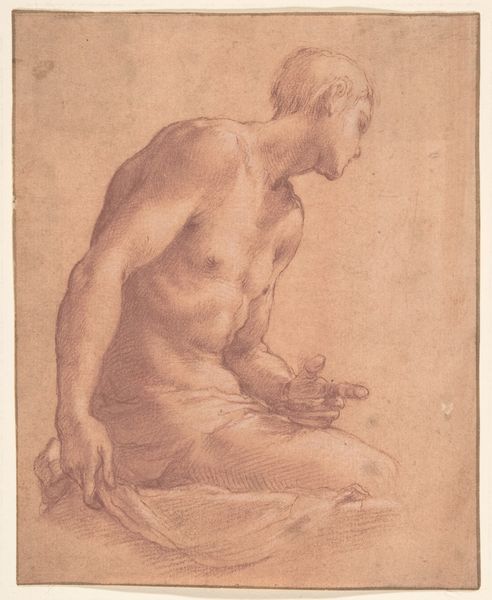
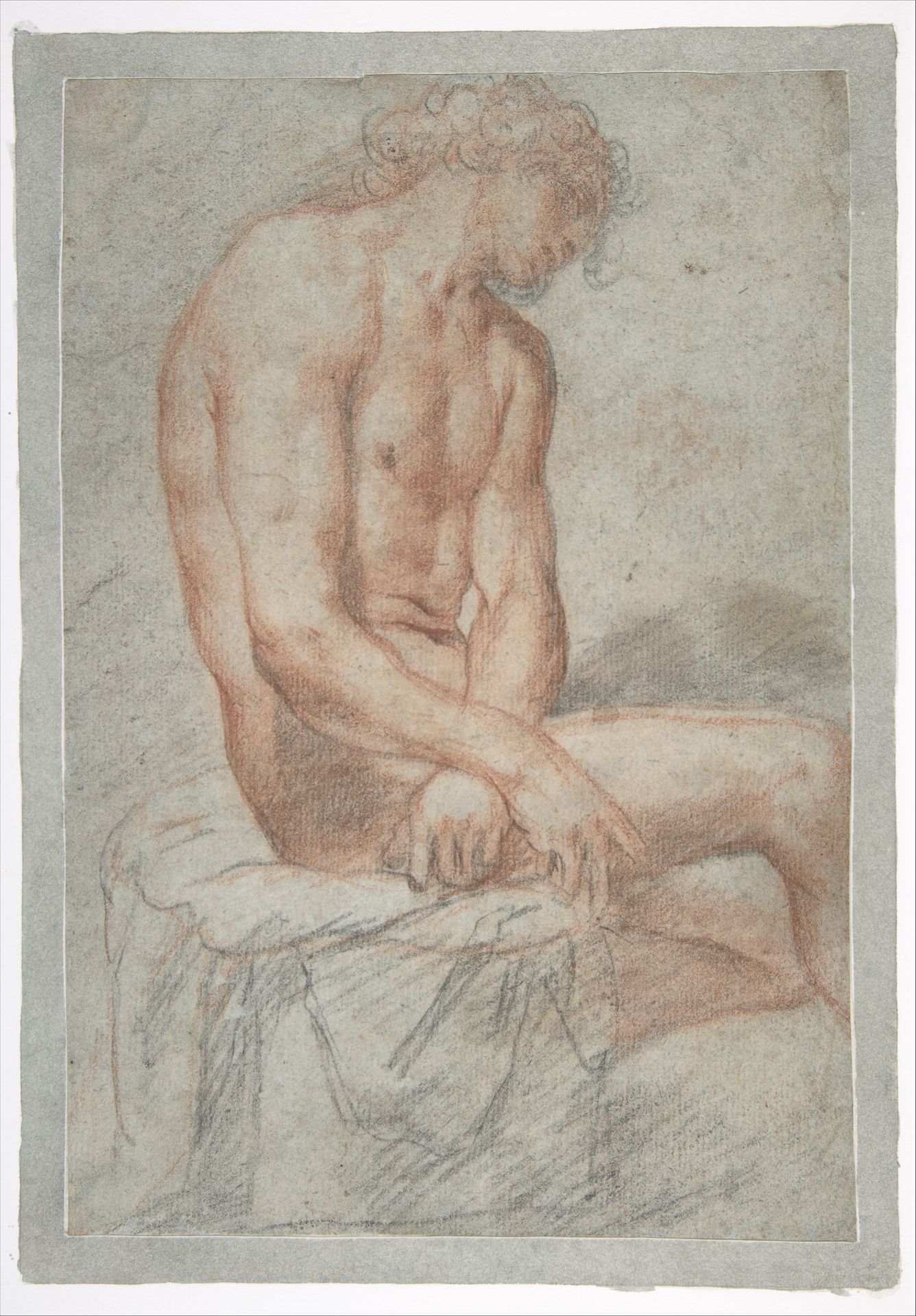
This is Juan Carreño de Miranda's drawing of a seated male figure, made with red chalk on paper, now at the Metropolitan Museum of Art. The figure's bowed head and the somber use of red chalk evoke a sense of quiet introspection. The composition is structured around the tension between the figure's rounded, softened form and the geometric stability of his seat. Notice how the line of his back and the curve of his arms create a contained space, almost as if he's withdrawn into himself. Carreño de Miranda uses the medium to engage with ideas of representation and form that resonate with broader artistic and philosophical concerns of his time. The drawing is not just a study of the male form, but an exploration of the very act of seeing and representing. The ambiguity inherent in the piece—is it a study for an "Ecce Homo" or simply a nude—challenges fixed meanings, inviting viewers to engage in a dialogue between the observed and the interpreted.
Study of a seated male figure (Ecce Homo?)
1660 - 1670

Juan Carreno de Miranda
1614 - 1685
The Metropolitan Museum of Art
Metropolitan Museum of Art, New York, NYArtwork details
- Medium
- drawing, pencil, charcoal
- Dimensions
- 10-7/16 x 7-3/16 in. (26.5 x 18.3 cm)
- Location
- Metropolitan Museum of Art, New York, NY
- Copyright
- Public Domain
Tags
Comments
Share your thoughts
About this artwork
This is Juan Carreño de Miranda's drawing of a seated male figure, made with red chalk on paper, now at the Metropolitan Museum of Art. The figure's bowed head and the somber use of red chalk evoke a sense of quiet introspection. The composition is structured around the tension between the figure's rounded, softened form and the geometric stability of his seat. Notice how the line of his back and the curve of his arms create a contained space, almost as if he's withdrawn into himself. Carreño de Miranda uses the medium to engage with ideas of representation and form that resonate with broader artistic and philosophical concerns of his time. The drawing is not just a study of the male form, but an exploration of the very act of seeing and representing. The ambiguity inherent in the piece—is it a study for an "Ecce Homo" or simply a nude—challenges fixed meanings, inviting viewers to engage in a dialogue between the observed and the interpreted.
Comments
Share your thoughts