About this artwork
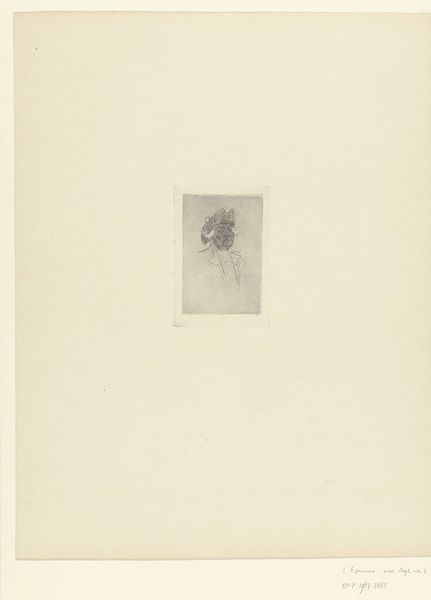
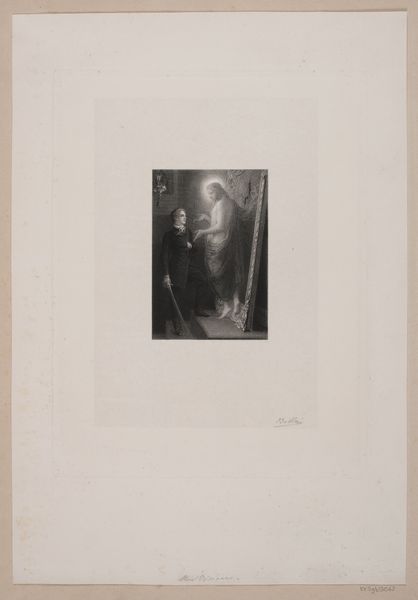
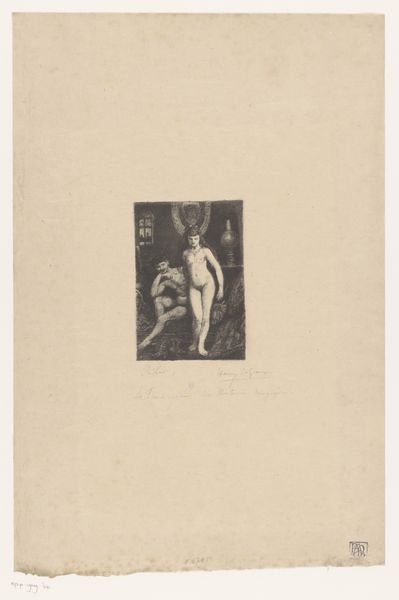
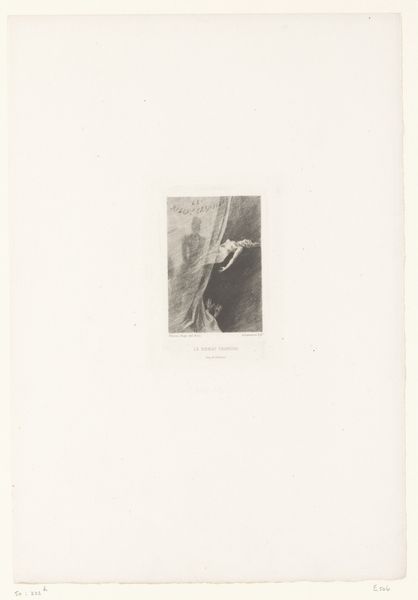
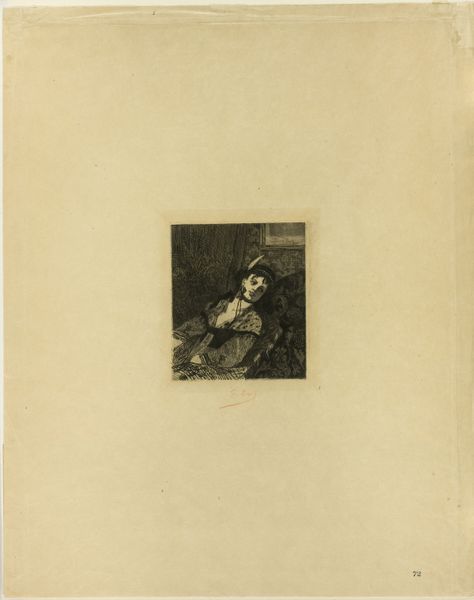
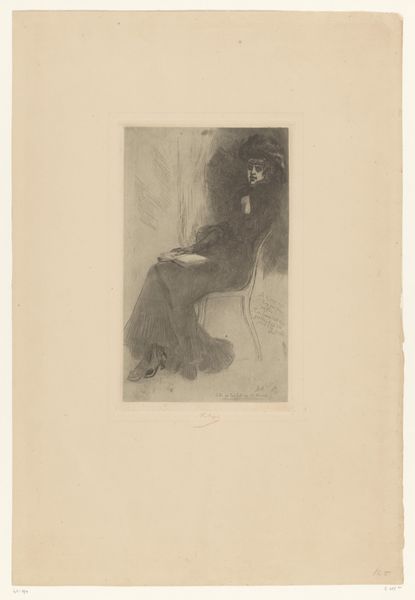
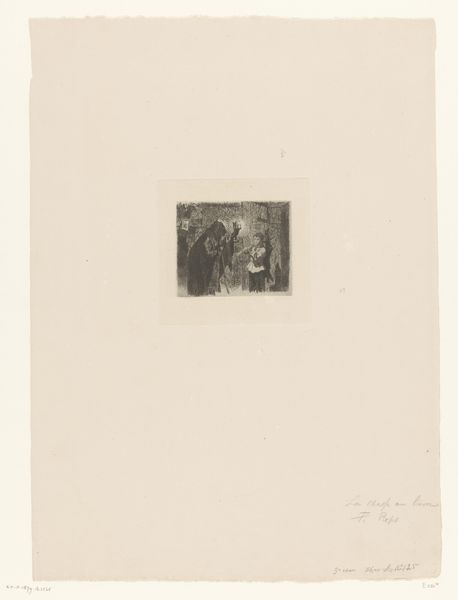
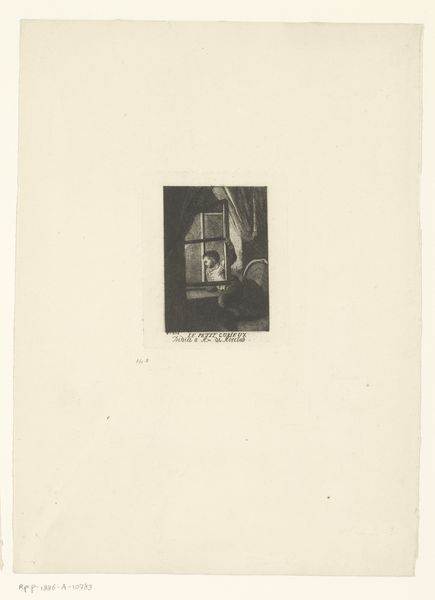
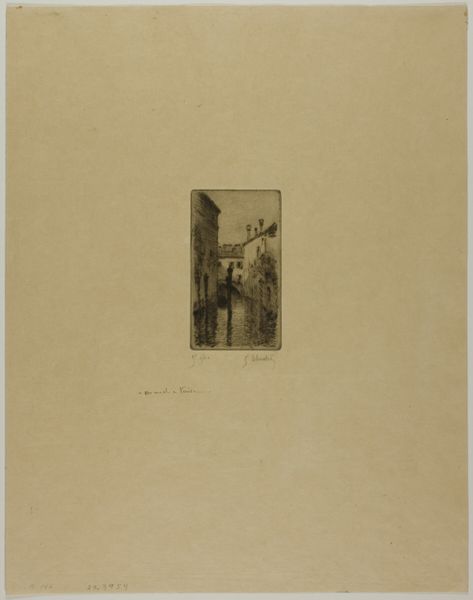
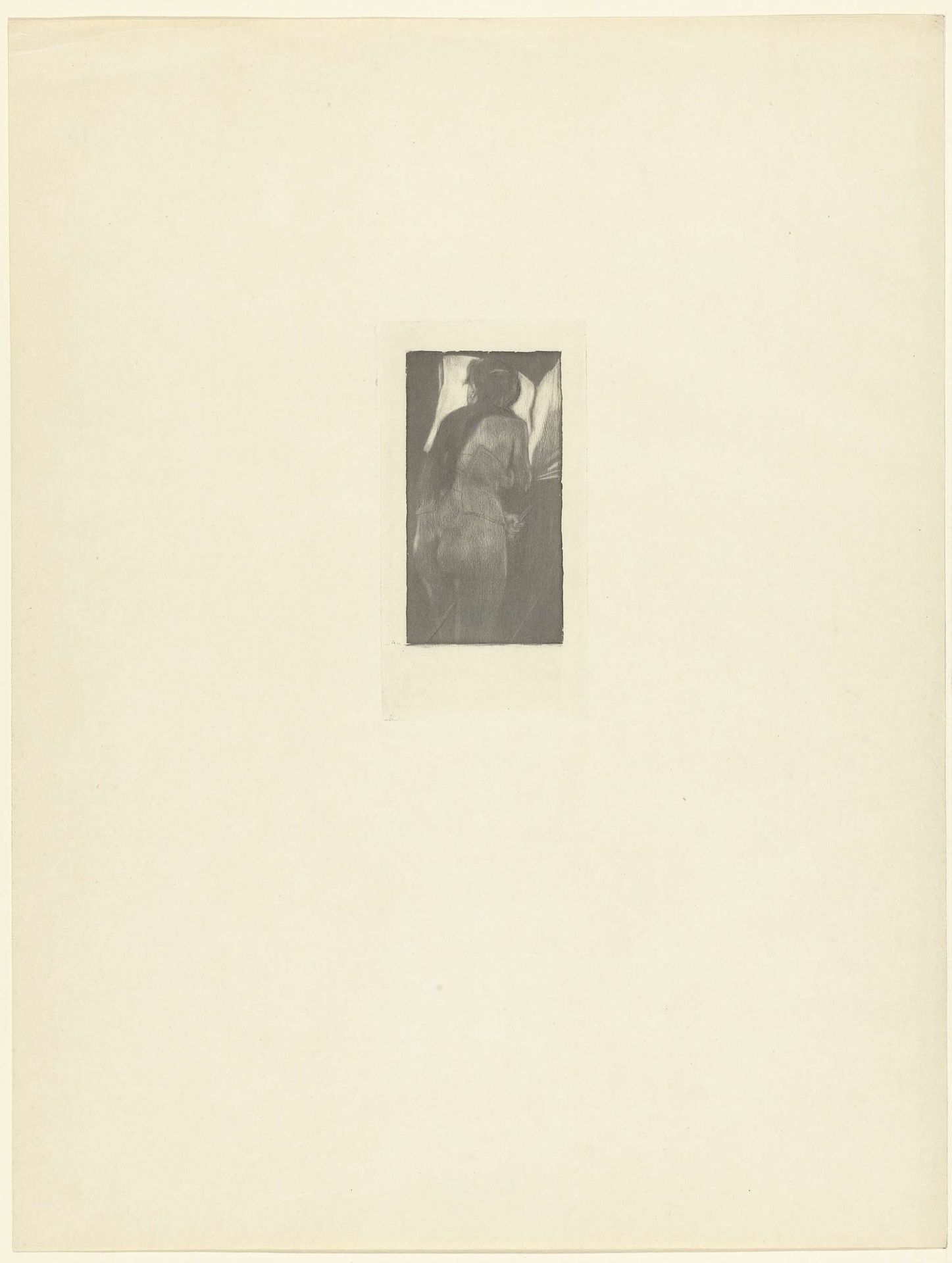
This work at the Rijksmuseum is by Felicien Rops, titled "Halfnaakte vrouw met stok leunt over groot boek". It is rendered in etching. The composition is defined by contrasts between the stark white background and the dense, dark area where the figure and book reside. This contrast creates a sense of isolation, directing our gaze to the central subject. The figure's body is rendered with delicate lines, yet its form is solid and present. The book looms large, its presence almost overwhelming. Rops' use of etching lends a stark quality to the image, underscoring a sense of tension between the subject and the object of her attention. This is a visual strategy reflecting the symbolist movement's fascination with the interplay between desire, knowledge, and the human condition, inviting us to contemplate the complex relationship between the viewer and the viewed.
Halfnaakte vrouw met stok leunt over groot boek Possibly 1893 - 1895

Felicien Rops
1833 - 1898Location
RijksmuseumArtwork details
- Medium
- print, paper, ink, engraving
- Dimensions
- height 121 mm, width 63 mm, height 373 mm, width 283 mm
- Location
- Rijksmuseum
- Copyright
- Rijks Museum: Open Domain
Tags
ink paper printed
paper
ink
symbolism
nude
engraving
Comments
No comments
About this artwork
This work at the Rijksmuseum is by Felicien Rops, titled "Halfnaakte vrouw met stok leunt over groot boek". It is rendered in etching. The composition is defined by contrasts between the stark white background and the dense, dark area where the figure and book reside. This contrast creates a sense of isolation, directing our gaze to the central subject. The figure's body is rendered with delicate lines, yet its form is solid and present. The book looms large, its presence almost overwhelming. Rops' use of etching lends a stark quality to the image, underscoring a sense of tension between the subject and the object of her attention. This is a visual strategy reflecting the symbolist movement's fascination with the interplay between desire, knowledge, and the human condition, inviting us to contemplate the complex relationship between the viewer and the viewed.
Comments
No comments