About this artwork
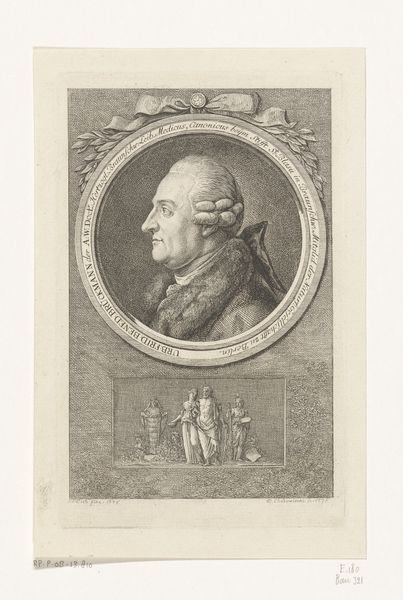
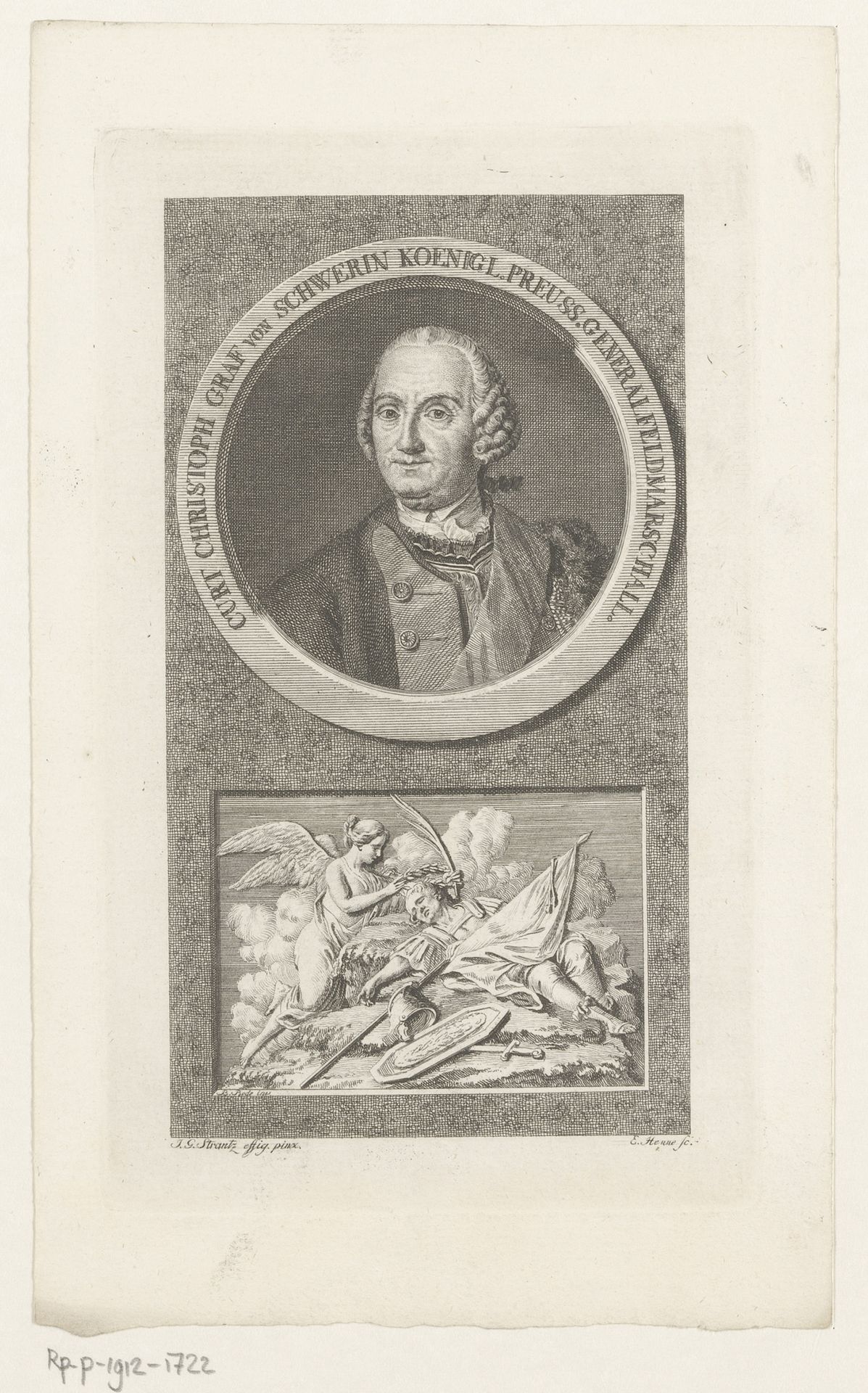
This print, made by Eberhard Siegfried Henne, presents a dual composition: above, a portrait of Kurt Christoph Graf von Schwerin, and below, an allegory of death on the battlefield. The formal arrangement immediately establishes a visual hierarchy, with the portrait encased in a circular frame, suggesting valor and honor. This circular form, however, is sharply contrasted by the rectangular panel below, depicting a chaotic scene of battle and demise. Henne uses line and form to create a binary between individual identity and collective fate. The allegory below, with its fragmented figures and obscured details, challenges fixed meanings of heroism. The angel crowning the fallen soldier introduces a tension between earthly suffering and divine recognition. We are thus confronted with art's capacity to destabilize notions of glory. The print's structural tension, between the composed portrait and the disordered battle scene, highlights art's role in mediating complex cultural narratives. This work invites us to question the values and representations embedded within historical depictions of conflict.
Portret van Kurd Christoph von Schwerin en een allegorie op sterven op het slagveld
1769 - 1828

Eberhard Siegfried Henne
1759 - 1828Location
RijksmuseumArtwork details
- Dimensions
- height 177 mm, width 108 mm
- Location
- Rijksmuseum
- Copyright
- Rijks Museum: Open Domain
Comments
Share your thoughts
About this artwork
This print, made by Eberhard Siegfried Henne, presents a dual composition: above, a portrait of Kurt Christoph Graf von Schwerin, and below, an allegory of death on the battlefield. The formal arrangement immediately establishes a visual hierarchy, with the portrait encased in a circular frame, suggesting valor and honor. This circular form, however, is sharply contrasted by the rectangular panel below, depicting a chaotic scene of battle and demise. Henne uses line and form to create a binary between individual identity and collective fate. The allegory below, with its fragmented figures and obscured details, challenges fixed meanings of heroism. The angel crowning the fallen soldier introduces a tension between earthly suffering and divine recognition. We are thus confronted with art's capacity to destabilize notions of glory. The print's structural tension, between the composed portrait and the disordered battle scene, highlights art's role in mediating complex cultural narratives. This work invites us to question the values and representations embedded within historical depictions of conflict.
Comments
Share your thoughts